
Treatment Overview
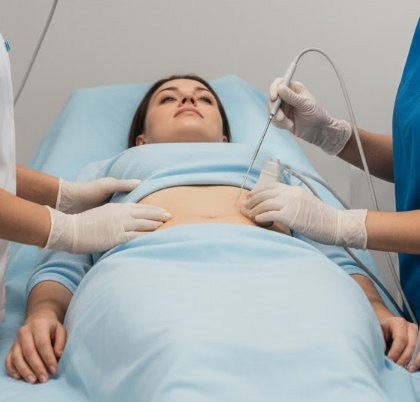
IUI with Ultrasound-Guided Timing is an advanced form of Intrauterine Insemination (IUI) that uses real-time ultrasound imaging to precisely determine the optimal insemination window. By tracking follicle growth and ovulation timing, ultrasound-guided IUI maximizes the likelihood that sperm and egg meet under ideal conditions for fertilization.
In Korea, fertility specialists have perfected this technique using high-resolution transvaginal ultrasound, AI-assisted ovulation prediction, and personalized hormonal tracking. These innovations ensure that insemination is performed at the exact moment of ovulation — significantly improving conception success rates while minimizing risk and stress.
Purpose & Benefits
The goal of ultrasound-guided IUI is to accurately synchronize insemination with ovulation for higher fertilization efficiency.
Key benefits include:
- Precise timing of insemination within the ovulatory window.
- Real-time visualization of follicular growth and rupture.
- Reduced risk of missed or premature ovulation.
- Enhanced pregnancy success rates compared to standard IUI.
- Improved safety and patient comfort through non-invasive monitoring.
- Lower medication use due to data-driven cycle control.
Korean fertility clinics use advanced ultrasound systems that allow continuous, detailed observation of ovarian and uterine changes, helping achieve more predictable and successful outcomes.
Ideal Candidates
IUI with Ultrasound-Guided Timing is recommended for:
- Couples undergoing IUI treatment for unexplained infertility.
- Women with irregular cycles or unpredictable ovulation patterns.
- Patients using ovulation induction medications (Clomiphene, Letrozole, or gonadotropins).
- Mild male-factor infertility cases requiring optimized timing.
- Women with polycystic ovarian syndrome (PCOS) or delayed ovulation.
- Individuals seeking precise, medically supervised conception cycles.
Korean fertility specialists carefully evaluate each patient’s hormonal and reproductive profile before designing a personalized ultrasound-guided insemination plan.
Possible Risks & Complications
Ultrasound-guided IUI is a low-risk and non-invasive procedure. However, mild and temporary effects can occur, such as:
- Slight pelvic discomfort during transvaginal scans.
- Mild bloating or tenderness due to follicular growth.
- Spotting or mild cramping after insemination.
- Rare risk of ovarian hyperstimulation (in stimulated cycles).
Korean fertility centers maintain strict medical monitoring protocols to ensure safe and comfortable treatment experiences.
Techniques & Technology Used in Korea’s Ultrasound-Guided IUI Programs
Korea’s reproductive medicine sector is globally recognized for integrating advanced imaging and precision technologies in fertility treatments.
Key components of ultrasound-guided IUI include:
- High-Resolution Transvaginal Ultrasound: Tracks follicular development, ovulation signs, and uterine lining growth.
- Color Doppler Flow Imaging: Evaluates blood flow to the ovaries and endometrium for implantation readiness.
- AI-Based Ovulation Timing Prediction: Uses hormonal and imaging data to forecast the ideal insemination period.
- 3D/4D Ultrasound Systems: Offer detailed visualization of ovarian activity.
- Endometrial Thickness Measurement: Ensures the uterine environment is optimal for embryo implantation.
- Ultrasound-Guided Catheter Placement: In some advanced programs, insemination itself is guided by ultrasound for accuracy and comfort.
These cutting-edge techniques, combined with Korea’s expertise in reproductive endocrinology, create an ideal balance of precision, safety, and effectiveness.
Recovery & Aftercare
Recovery after ultrasound-guided IUI is minimal, and patients can return to normal activities almost immediately.
Typical aftercare includes:
- Resting 10–15 minutes after the procedure.
- Avoiding vigorous activity or intercourse for 1–2 days.
- Taking prescribed luteal phase support medications (e.g., progesterone).
- Monitoring for early pregnancy symptoms.
- Performing a pregnancy test after 14 days.
Korean fertility centers often provide post-IUI care programs including nutrition, acupuncture, and emotional counseling, emphasizing both physical and psychological support.
Results & Success Rates
IUI success depends greatly on the precision of timing — which is why ultrasound-guided methods are considered the gold standard.
At top fertility centers in Korea:
- Pregnancy rates per cycle: 15–25% for women under 35.
- Cumulative success after 3–6 cycles: 40–60%.
- Reduced cycle cancellations due to real-time tracking.
- Improved outcomes in irregular or induced ovulation cycles.
The use of high-resolution ultrasound allows clinicians to optimize insemination timing, improving outcomes compared to hormone-only tracking methods.
IUI with Ultrasound-Guided Timing: Treatment Process in Korea
Korean fertility centers follow a structured and personalized approach for ultrasound-guided IUI:
1. Pre-Cycle Assessment
Comprehensive testing including baseline hormone levels (FSH, LH, AMH) and pelvic ultrasound to evaluate ovarian reserve and uterine condition.
2. Ovarian Stimulation (Optional)
Mild fertility medications may be prescribed to encourage one or more mature follicles.
3. Cycle Monitoring
Serial transvaginal ultrasounds track follicular growth and endometrial development. Blood hormone levels (E2, LH) are checked to correlate with imaging results.
4. Ovulation Trigger & Timing
Once the dominant follicle reaches 18–20 mm and hormone levels are optimal, an hCG or GnRH agonist trigger induces ovulation. Insemination is scheduled approximately 36 hours later — precisely determined through ultrasound confirmation.
5. Insemination Procedure
Prepared sperm (partner or donor) is gently inserted into the uterine cavity using a sterile catheter, sometimes under ultrasound visualization for enhanced precision.
6. Luteal Support & Pregnancy Testing
Progesterone supplementation is provided for two weeks. Pregnancy is confirmed via blood test thereafter.
Why Korea Excels in Ultrasound-Guided IUI
Korea is globally recognized for its integration of medical technology, patient care, and scientific precision in reproductive medicine.
Key advantages include:
- Cutting-edge ultrasound imaging for cycle tracking and insemination.
- Highly trained fertility specialists in reproductive endocrinology.
- Integration of AI-based hormonal analysis for enhanced accuracy.
- Comprehensive fertility programs combining Western and holistic medicine.
- World-class clinical standards and international patient services.
- Affordable treatment costs compared to Western fertility centers.
Korean clinics emphasize personalized, technology-driven fertility solutions, making ultrasound-guided IUI a reliable and effective treatment for couples seeking conception assistance.
Cost Range for IUI with Ultrasound-Guided Timing in Korea
The cost of ultrasound-guided IUI in Korea depends on the clinic, cycle complexity, and technology used.
- Basic IUI cycle with ultrasound monitoring: USD 800 – 1,500.
- Advanced ultrasound-guided IUI with AI-assisted ovulation prediction: USD 1,800 – 3,000.
- Package options for multiple cycles: Available with discounts and inclusive care services.
Additional costs may apply for medication, hormonal assays, and post-cycle follow-up. Overall, Korea offers excellent value for high-quality fertility care.
Leading Clinics Offering IUI with Ultrasound-Guided Timing in Korea
- CHA Fertility Center (Seoul & Bundang): Pioneer in AI-assisted and ultrasound-guided fertility treatment.
- Asan Medical Center – Reproductive Medicine Unit: Offers comprehensive ultrasound-based ovulation monitoring.
- MizMedi Women’s Hospital (Seoul): Specializes in ultrasound-driven cycle tracking and endometrial assessment.
- G Clinic (Seoul): Provides affordable, personalized IUI programs with ultrasound precision.
- Hamchoon Women’s Clinic: Focused on image-guided IUI and advanced fertility diagnostics.


