
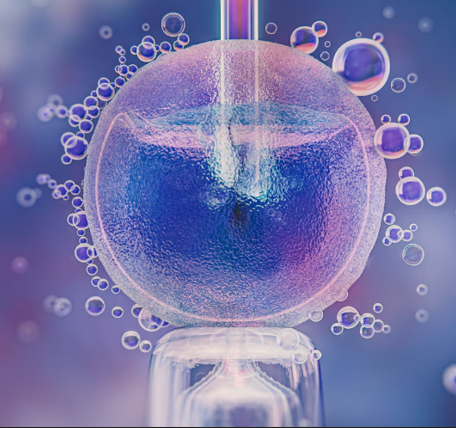
Treatment Overview
IVF with Donor Egg is one of the most advanced and successful fertility treatments offered in Korea. It involves fertilizing eggs from a carefully screened, healthy donor with the intended father’s sperm (or donor sperm) in a controlled laboratory environment, then transferring the resulting embryo to the recipient’s uterus. This method is ideal for women who cannot produce viable eggs due to age, ovarian failure, or genetic conditions.
Korean fertility centers are globally recognized for their world-class IVF laboratories, cutting-edge genetic testing, and high success rates. With advanced technology such as ICSI, AI-assisted embryo selection, and vitrification, Korea offers one of the most reliable and ethical donor egg IVF programs in Asia.
Purpose & Benefits
The purpose of IVF with Donor Egg is to enable women who cannot conceive naturally to achieve pregnancy using a donor’s eggs while maintaining a genetic connection through the father’s sperm.
Key benefits include:
- High pregnancy success rates (60–80%) across most Korean clinics.
- Access to young, healthy, and genetically screened donors.
- Comprehensive genetic testing (PGT-A) for chromosomal health assurance.
- Safe, ethical, and confidential donor matching programs.
- Option to freeze embryos for future pregnancies.
- Enhanced emotional and physical support for both local and international patients.
Korean fertility centers are also known for their holistic approach, combining high medical precision with compassionate care and cultural sensitivity.
Ideal Candidates
IVF with Donor Egg is recommended for:
- Women with diminished ovarian reserve or poor egg quality.
- Patients with premature ovarian failure or early menopause.
- Women over 40 years old seeking conception.
- Patients who have had multiple IVF failures.
- Individuals with hereditary or genetic disorders that may affect offspring.
- Single women or same-sex couples seeking to build a family through assisted reproduction.
International patients who value advanced fertility technology, ethical donor selection, and affordable care also frequently choose Korea for IVF with donor eggs.
Possible Risks & Complications
IVF with Donor Egg is considered very safe, but it carries minor risks similar to standard IVF, including:
- Multiple pregnancy if multiple embryos are transferred.
- Ovarian hyperstimulation (for donors, not recipients).
- Infection or bleeding (rare).
- Emotional stress during treatment.
Korean fertility clinics strictly adhere to international reproductive health standards, ensuring all risks are minimized through advanced monitoring, safe protocols, and continuous patient care.
Surgical Techniques Used
Korean fertility specialists employ a variety of state-of-the-art reproductive technologies for optimal outcomes:
- ICSI (Intracytoplasmic Sperm Injection): Guarantees precise fertilization.
- Blastocyst Culture: Embryos are cultured for 5–6 days to ensure optimal development.
- PGT-A / PGT-M: Preimplantation genetic testing for chromosomal and single-gene disorders.
- Vitrification (Rapid Freezing): Preserves donor eggs and embryos with nearly 100% survival rate.
- AI-Based Embryo Selection: Machine learning tools identify embryos with the highest implantation potential.
- Laser-Assisted Hatching (LAH): Enhances embryo implantation rates.
These innovations ensure that Korean IVF centers maintain among the highest success rates worldwide, even for complex fertility cases.
Recovery & Aftercare
For the recipient, recovery is simple and typically involves a short rest period after the embryo transfer. Clinics recommend avoiding strenuous activity for 24–48 hours. Aftercare includes:
- Hormone therapy to support the uterine lining.
- Regular ultrasound monitoring to track embryo implantation.
- Blood tests to confirm pregnancy.
- Nutritional and emotional support tailored to each patient.
Korean fertility centers also offer comprehensive post-transfer care packages for international patients, including online consultations and early pregnancy follow-up.
Results & Longevity
IVF with Donor Egg in Korea achieves outstanding success rates thanks to advanced donor selection, optimized lab conditions, and personalized treatment plans.
- Pregnancy rates: 65–80% per cycle.
- Live birth rates: Among the highest in Asia.
- Embryo survival after freezing: 95–98%.
The results are long-lasting, and many patients return to the same clinic for sibling pregnancies using frozen embryos from their initial cycle.
Treatment Process in Korea
The Korean process for IVF with Donor Egg is known for its efficiency, precision, and patient-centered coordination:
- Initial Consultation & Assessment – Comprehensive fertility evaluation and donor selection.
- Donor Matching & Screening – Donors undergo genetic, psychological, and medical testing.
- Synchronization & Hormone Preparation – Aligning the donor’s and recipient’s cycles or using frozen donor eggs.
- Egg Retrieval & Fertilization – Donor eggs are fertilized with sperm in the lab via ICSI.
- Embryo Culture & Genetic Testing – Culturing embryos to the blastocyst stage, with optional PGT screening.
- Embryo Transfer – Healthy embryo(s) are transferred to the recipient’s uterus.
- Pregnancy Confirmation & Support – Blood and ultrasound monitoring ensure healthy implantation.
Korean fertility programs integrate AI-driven monitoring, personalized embryo transfer timing, and international patient support systems, making the process seamless and efficient. Korea’s medical tourism infrastructure and English-speaking coordinators provide an exceptional level of care for overseas patients.
Cost Range
The cost of IVF with Donor Egg in Korea typically ranges between USD 15,000 and USD 30,000, depending on the clinic, donor selection, genetic testing, and embryo freezing options. Additional services like PGT testing or frozen embryo transfer (FET) may cost an extra USD 3,000–6,000.
Despite its high-end technology and global success rates, Korea remains 30–50% more affordable than similar fertility treatments in the U.S., Japan, or Western Europe.
Popular Clinics
- CHA Fertility Center (Seoul) – One of Asia’s top IVF centers, known for AI-integrated labs and donor egg expertise.
- Maria Fertility Hospital – Offers high success rates and personalized donor programs for local and international patients.
- MizMedi Women’s Hospital – Specializes in donor egg IVF and genetic testing with full English-speaking support.
- GynART Reproductive Center – Renowned for customized IVF plans and advanced embryo selection systems.
- Seoul National University Hospital – Reproductive Medicine Unit – Provides research-backed fertility treatments and global-standard IVF programs.


