
Treatment Overview
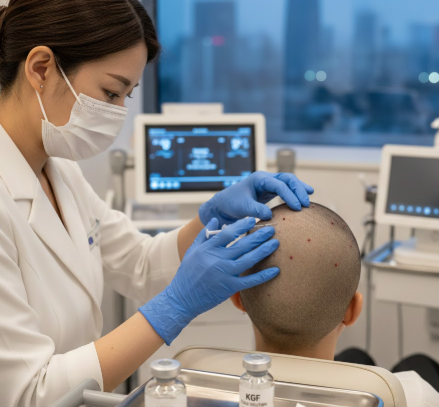
KGF (Keratinocyte Growth Factor) Scalp Injection is a highly specialized regenerative therapy widely used in Korea to stimulate hair follicle activity, promote new hair growth, and improve overall scalp health. KGF is a natural protein responsible for supporting the growth, repair, and differentiation of epithelial cells, including hair follicles. By injecting medical-grade KGF directly into the scalp, Korean dermatologists aim to strengthen the hair growth cycle, enhance follicular resilience, and restore hair density in both men and women.
Korea is globally recognized for leading innovation in hair regeneration science. Clinics in Seoul, Busan, and Daegu utilize pharmaceutical-grade KGF solutions derived from advanced biotech research. Many centers combine KGF injections with PRP, exosomes, or microneedling to maximize hair follicle activation. Medical tourists choose this therapy because it is safe, minimally invasive, and backed by years of clinical research in cell biology and dermatology.
Purpose & Benefits
KGF Scalp Injection therapy focuses on nourishing and activating the outer root sheath and follicular stem cells. The main purposes include:
- Rejuvenating weakened or miniaturized hair follicles
- Strengthening keratinocyte activity for healthier hair formation
- Enhancing density, thickness, and shine
- Improving scalp barrier function and hydration
- Accelerating recovery after hair transplant surgery
- Supporting regeneration in areas affected by chronic stress or nutritional deficiencies
- Reducing breakage and improving hair texture
Major benefits experienced by Korean patients and international visitors include:
- Noticeably thicker and stronger hair
- Reduced daily hair shedding
- Enhanced hair growth rate
- Healthier scalp environment with improved moisture balance
- Synergistic results when combined with PRP, peptides, or exosome therapy
- No downtime and minimal discomfort
This treatment is especially valued for its biological role in promoting the survival and proliferation of key scalp cells crucial for robust hair growth.
Ideal Candidates
KGF Scalp Injection in Korea is recommended for:
- Men and women with early to moderate thinning
- Patients with androgenetic alopecia (pattern hair loss)
- Individuals recovering from damage caused by chemical treatments or heat styling
- People experiencing telogen effluvium or stress-induced shedding
- Medical tourists seeking non-surgical solutions
- Patients with weakened scalp barrier or dryness
- Those who want a regenerative, medication-free treatment
KGF works best on follicles that are still active, making it ideal for those who are experiencing thinning rather than complete baldness.
Possible Risks & Complications
KGF scalp injections are considered safe due to the biocompatible, growth-factor-based formulation. However, possible minor side effects may include:
- Temporary redness or swelling
- Mild sensitivity or tenderness
- Pinpoint bruising at injection sites
- Itching or tingling sensation
- Rare allergic reactions depending on the formulation
- Very mild inflammation lasting a few hours
Korean clinics use high-precision micro-injectors and perform patch assessments when needed to minimize complications.
Techniques & Technology Used
Korea is a global leader in growth-factor-based aesthetic treatments. Clinics commonly use:
- Fine micro-injections to deliver KGF into the dermal layer around hair follicles
- Mesotherapy guns for even and controlled distribution
- Microneedling or derma-stamping to enhance absorption and stimulate natural healing
- Cold-preserved growth factor boosters to maintain purity and stability
- LED red-light therapy for improved recovery and enhanced cellular stimulation
- Digital scalp analysis tools to measure density, thickness, sebum levels, and follicular health
Many clinics combine KGF with PRP, exosomes, peptides, or stem-cell conditioned media to maximize follicular activation and scalp regeneration.
Treatment Process in Korea
KGF scalp injection therapy is delivered through a structured, comfortable, and tourist-friendly medical process:
- Consultation & Digital Scalp Scan:
The dermatologist analyzes hair thickness, shedding levels, and overall scalp condition using high-resolution scanners. - Customized Treatment Planning:
Korean clinics design personalized growth-factor plans based on the patient’s hair cycle, degree of thinning, and hormone sensitivity. - Scalp Cleansing & Numbing:
The scalp is thoroughly cleaned, and numbing cream may be applied for comfort. - KGF Injection Session:
Micro-injections or mesotherapy devices deliver KGF evenly across thinning areas. - Optional Microneedling:
Enhances growth-factor absorption and stimulates deeper follicular regeneration. - LED Phototherapy:
Helps soothe the scalp, reduce redness, and promote faster healing. - Post-Care Guidance:
Patients receive after-care instructions and product recommendations.
Sessions usually last 20–30 minutes, making this treatment ideal even for short medical trips. A typical treatment program consists of 4–8 sessions, spaced 1–2 weeks apart.
Recovery & After-Care
Recovery is minimal, allowing patients—especially medical tourists—to return to sightseeing or business activities the same day. After-care recommendations include:
- Avoid washing the scalp for 12–24 hours
- Refrain from hot saunas or steam rooms for 48 hours
- Use mild, non-irritating shampoos
- Avoid scratching or touching the scalp excessively
- Follow clinic advice for peptide or growth-factor serums
- Maintain regular hydration and a balanced diet
- Schedule maintenance sessions every 3–6 months for long-term results
Most side effects disappear within a few hours, making this treatment easy to integrate into a travel schedule.
Results & Longevity
Results appear gradually as follicles regain strength and re-enter an active growth phase.
Expected timeline:
- 4–6 weeks: Reduced shedding and improved scalp health
- 8–12 weeks: Noticeable increases in volume, texture, and shine
- 3–5 months: Visible improvement in density and thickness
- 6+ months: Full results with optimal maintenance
Longevity varies based on lifestyle, genetics, and after-care, but most patients enjoy improved density for 6–12 months. Maintenance sessions help prolong results.
Why Korea Is a Top Destination
Korea has become a global hub for hair restoration and regenerative dermatology due to:
- Leading research in growth factors, stem cells, and skin biology
- Extremely advanced dermatology clinics with top-tier medical equipment
- Affordable yet premium-quality medical treatments
- Multilingual medical staff specializing in serving international patients
- Highly personalized treatment plans based on precise diagnostics
- Safe, science-backed formulations of KGF and other growth factors
- Convenient medical tour packages in Seoul and Busan
Korea’s blend of biotechnology excellence, skilled specialists, and patient-friendly services makes it one of the best places in the world for growth-factor scalp treatments.
Cost Range
Pricing varies depending on the clinic, combination therapies, and number of sessions.
- Cost per session: $180 – $320 USD
- 4–8 session package: $720 – $1,600 USD
- Microneedling, exosomes, or PRP add-ons may increase overall cost.
Korea is significantly more cost-effective than Western countries for similar regenerative procedures.
Popular Clinics in Korea
Medical tourists can find KGF scalp therapy at many reputable clinics, including:
- Oracle Dermatology Clinic
- Gowoonsesang Dermatology
- Namu Hair & Skin Clinic
- ID Dermatology Clinic (Gangnam)
- Wonjin Dermatology Center
- ME Clinic (Hair Regeneration Unit)
- MOVE Clinic (scalp regeneration specialists)
Choosing a clinic with strong experience in growth-factor treatments ensures more reliable and long-lasting results.


