
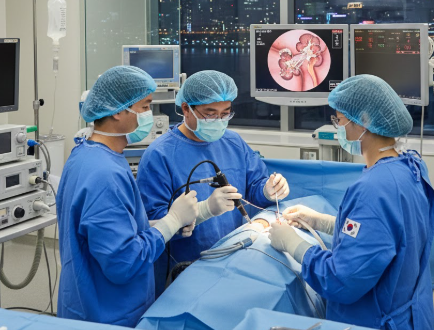
Treatment Overview
Kidney stone removal is a medical procedure aimed at eliminating kidney stones to restore normal urinary function and prevent complications. Kidney stones are hard deposits of minerals and salts that form inside the kidneys, causing severe pain, urinary blockage, or infection.
Korean hospitals are internationally recognized for advanced urological care, minimally invasive techniques, and state-of-the-art technology, making them a preferred destination for patients worldwide seeking safe and effective kidney stone removal.
Purpose & Benefits
The main goal of kidney stone removal is to relieve pain, restore normal kidney function, and prevent recurrence or complications.
Key benefits include:
- Immediate relief from severe pain caused by kidney stones
- Prevention of urinary tract obstruction and kidney damage
- Minimally invasive procedures with faster recovery
- Reduced risk of infection or recurrent stone formation
- Short hospital stay or outpatient treatment depending on procedure
- Improved overall urinary health and quality of life
Korea’s advanced techniques ensure effective removal while minimizing trauma and enhancing patient comfort.
Ideal Candidates
Kidney stone removal is suitable for patients who:
- Have kidney stones causing severe pain, blockage, or infection
- Have large stones unlikely to pass naturally
- Suffer from recurrent kidney stones affecting kidney function
- Require medical intervention due to associated complications
- Are in good general health for minimally invasive or surgical procedures
Korean urologists provide personalized evaluation and treatment planning, including options for international patients.
Possible Risks & Complications
Although generally safe, potential risks include:
- Infection or bleeding at the surgical site
- Injury to urinary tract structures
- Temporary pain, swelling, or urinary discomfort
- Residual stone fragments requiring additional procedures
- Anesthesia-related complications
Korean hospitals minimize risks with advanced imaging, microsurgical techniques, and comprehensive post-operative monitoring.
Techniques & Technology Used
Korean hospitals use state-of-the-art technologies for kidney stone removal:
- Extracorporeal Shock Wave Lithotripsy (ESWL): Non-invasive procedure using sound waves to break stones into small fragments
- Ureteroscopy with Laser Lithotripsy: Minimally invasive technique to remove or fragment stones in the ureter or kidney
- Percutaneous Nephrolithotomy (PCNL): Small incision surgery for large or complex kidney stones
- Flexible Endoscopic Tools: Provide precision and reduce trauma to surrounding tissues
- High-Resolution Imaging: CT scans and ultrasound for accurate stone localization and procedural guidance
- Advanced Laser Systems: Efficiently fragment stones with minimal heat damage to surrounding tissues
These techniques ensure safe, precise, and minimally invasive stone removal.
Treatment Process in Korea
The kidney stone removal process is structured for both local and international patients:
1. Consultation and Evaluation
Urologists perform imaging studies, urine analysis, and medical assessment to determine the optimal procedure.
2. Preoperative Preparation
Patients receive instructions regarding fasting, medications, and hydration. Coordination for international patients is provided, including language support and admission assistance.
3. Surgical or Minimally Invasive Procedure
Depending on stone size and location:
- ESWL may be performed on an outpatient basis
- Ureteroscopy or PCNL may require short hospital stay under general anesthesia
The procedure ensures complete stone removal while preserving kidney function.
4. Postoperative Monitoring
Patients are monitored for pain, bleeding, or infection. Imaging may be repeated to confirm complete stone removal.
5. Follow-Up Care
Patients receive guidance on hydration, dietary modifications, and medications to prevent recurrence. Telemedicine follow-up is available for international patients.
Recovery & After-Care
Recovery depends on the procedure type but generally includes:
- Mild pain managed with prescribed medications
- Temporary urinary discomfort or blood in urine for a few days
- Avoid strenuous activity and heavy lifting for 1–2 weeks (depending on procedure)
- Maintain adequate hydration to prevent new stone formation
- Follow dietary and medication recommendations to reduce recurrence risk
- Attend follow-up visits for imaging and kidney function monitoring
Korean hospitals provide comprehensive discharge instructions and remote support for international patients.
Results & Longevity
Kidney stone removal in Korea provides effective, long-lasting results:
- Immediate relief from pain and urinary obstruction
- Prevention of kidney damage and infection
- High success rate with minimally invasive techniques
- Long-term improvement in kidney function with proper lifestyle management
- Reduced risk of recurrence through preventive guidance
Korean urological expertise ensures reliable and durable outcomes for both domestic and international patients.
Why Korea Is a Top Destination
Korea is a preferred destination for kidney stone removal due to:
- Advanced imaging and minimally invasive surgical technologies
- Highly skilled urologists with extensive experience in stone management
- State-of-the-art operating theaters and infection control
- Short hospital stays and outpatient procedures for convenience
- Multilingual support for international medical tourists
- Competitive and transparent cost structures
- Comprehensive pre- and post-operative care
These factors make Korea an ideal destination for safe, efficient, and high-quality kidney stone removal.
Cost Range
Estimated costs for kidney stone removal in Korea:
- ESWL (Non-invasive): USD 1,500–3,000
- Ureteroscopy with laser lithotripsy: USD 3,000–6,000
- Percutaneous nephrolithotomy (PCNL): USD 4,500–7,500
- Consultation and preoperative imaging: USD 100–250
- Postoperative care and medications: USD 100–300
- Total package may vary depending on procedure type, hospital, and patient needs
International patients can access coordinated care packages including consultation, procedure, hospital stay, and follow-up.
Popular Clinics in Korea
Top hospitals and clinics providing kidney stone removal include:
- Seoul National University Hospital – Urology Department
- Asan Medical Center – Advanced Urology & Minimally Invasive Surgery
- Samsung Medical Center – Urology and Endourology Unit
- Severance Hospital – Urology & Stone Management
- Korea University Hospital – Minimally Invasive Urology
- Bundang CHA Medical Center – Endourology and Stone Clinic
These centers are known for expert surgeons, advanced technology, and comprehensive patient care, making them ideal for international medical tourists.


