
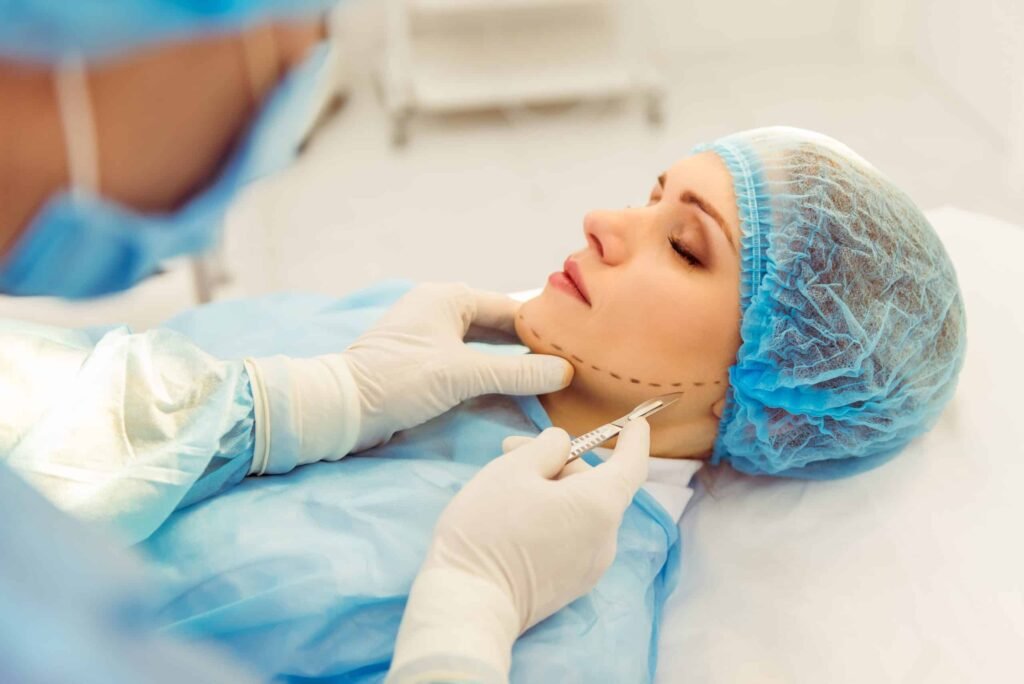
Treatment Overview
Knife-Assisted Submental Sculpting is a specialized cosmetic procedure aimed at redefining the submental region—the area beneath the chin, often referred to as the “double chin.” This technique uses precise surgical tools (notably scalpel or blade-based dissection rather than blunt instruments) to manually remove and sculpt fat and fibrous tissue in a controlled and effective manner. In Korea, where facial contouring is at the forefront of cosmetic innovation, this procedure is frequently performed to achieve a sharp, contoured jawline with high precision.
Purpose & Benefits
The main goal of this procedure is to sculpt and contour the area beneath the chin, improving the overall definition of the lower face. Key benefits include:
- Effective removal of submental fat
- More defined jawline and chin profile
- Correction of the appearance of a double chin
- Immediate and noticeable contouring results
- Long-lasting effects due to direct fat and tissue removal
- Boost in self-confidence from a more youthful, sculpted appearance
Unlike non-invasive treatments, knife-assisted sculpting offers more dramatic and permanent results, especially for those with significant fat or fibrous tissue under the chin.
Ideal Candidates
This procedure is ideal for individuals who:
- Have excess fat or fullness under the chin
- Are seeking a sharper and more defined jawline
- Are in generally good health with no major medical conditions
- Have good skin elasticity for optimal skin retraction post-surgery
- Prefer surgical precision and more noticeable results over non-invasive options
This technique is often recommended for patients who did not get sufficient results from liposuction alone or have denser tissue that requires more aggressive sculpting.
Possible Risks & Complications
While knife-assisted submental sculpting is safe when performed by experienced surgeons, there are risks, including:
- Swelling, bruising, and mild discomfort post-surgery
- Temporary numbness or tightness in the treated area
- Risk of infection if aftercare is not followed
- Uneven results or asymmetry (rare with skilled surgeons)
- Scar formation—though incisions are typically very small and well-hidden
Korean surgeons are known for minimizing risks through careful technique and high-standard surgical environments.
Surgical Techniques Used
Korean plastic surgeons use advanced and highly refined techniques to ensure optimal results:
- A small incision (often 1–2 cm) is made under the chin in a natural crease
- A scalpel or surgical blade is used to manually excise fat and fibrous tissue, offering greater control than liposuction
- The platysma muscle may be tightened or trimmed to enhance contour
- Can be combined with liposuction, platysmaplasty, or chin augmentation for more dramatic results
- Sutures are carefully placed to minimize scarring and promote healing
Knife-assisted techniques allow for precise shaping of the submental area, especially in patients with fibrotic or dense tissue.
Recovery & Aftercare
Recovery is generally manageable and involves:
- Mild to moderate swelling and bruising for 1–2 weeks
- Wearing a compression garment or chin strap to reduce swelling and support healing
- Limiting strenuous activities and head movements for the first 7–10 days
- Keeping the incision area clean and following prescribed antibiotics or medications
- Cold compresses and professional aftercare treatments (often provided by Korean clinics) can help speed up recovery
Patients can typically return to work or light activities within 5–7 days.
Results & Longevity
Results from knife-assisted submental sculpting are visible almost immediately after swelling reduces—usually within 2–3 weeks. The final contour becomes clearer over the next 1–3 months. The results are long-lasting, especially with a healthy lifestyle and weight maintenance, since the removed fat and tissue do not regenerate.
Treatment Process in Korea
Korea is a leading destination for submental sculpting due to its:
- Expertise in Facial Contouring: Surgeons specialize in procedures that enhance jawline and chin aesthetics.
- Advanced Preoperative Imaging: 3D scanning and facial analysis ensure tailored surgical planning.
- Minimally Invasive, Precise Techniques: Use of fine surgical tools for detailed fat and tissue removal.
- Sterile and Modern Facilities: Ensuring safety, hygiene, and patient comfort.
- Personalized Aftercare: Clinics provide one-on-one post-op support, skincare treatments, and follow-up monitoring.
- Services for International Patients: Translation, transportation, and virtual consultations are often included.
Korea’s focus on subtle, elegant results and safe procedures makes it a preferred destination for patients worldwide.
Cost Range
The cost of knife-assisted submental sculpting in Korea generally ranges between ₩3,500,000 and ₩7,000,000 KRW (approximately $2,600 to $5,300 USD), depending on the clinic, complexity, and whether combined with other procedures.
Popular Clinics
Some of Korea’s most trusted clinics for this procedure include:
- ID Hospital – Specializes in jawline and neck contouring surgeries.
- Banobagi Plastic Surgery – Known for its precision and high patient satisfaction.
- GNG Hospital – Offers advanced imaging and surgical planning for neck and chin aesthetics.
- The Plus Plastic Surgery – Experts in combining submental sculpting with full facial contouring.


