
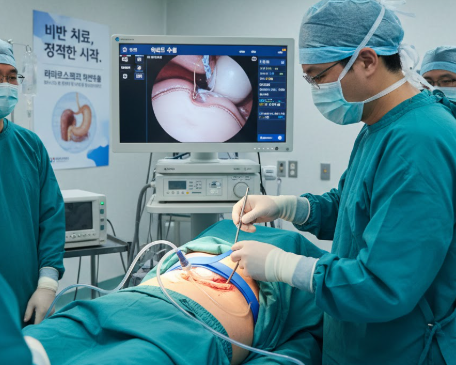
→ Treatment Overview
Lap Band Surgery for BMI ≥35 in Korea is a minimally invasive bariatric procedure specifically designed for patients with severe obesity. The surgery involves laparoscopic placement of an adjustable silicone band around the upper portion of the stomach, creating a small pouch to limit food intake and promote early satiety.
Korean bariatric centers provide a comprehensive approach, combining surgical precision with nutritional counseling, metabolic evaluation, and long-term follow-up to optimize weight-loss outcomes for patients with BMI ≥35.
→ Purpose & Benefits
The primary purpose is to support significant and sustainable weight loss while reducing the risks associated with severe obesity.
Key benefits include:
→ Gradual and controlled weight loss
→ Improvement in obesity-related comorbidities such as type 2 diabetes, hypertension, and sleep apnea
→ Adjustable and reversible procedure with minimal invasiveness
→ Enhanced quality of life and physical mobility
→ Structured follow-up care for long-term success
Korean programs emphasize safe and effective management for patients with high BMI.
→ Ideal Candidates
This surgery is ideal for patients with BMI ≥35, particularly those with obesity-related health conditions.
Ideal candidates include:
→ Adults with BMI ≥35 struggling with severe obesity
→ Patients with type 2 diabetes, hypertension, dyslipidemia, or sleep apnea
→ Those who have failed to achieve weight loss through diet and exercise
→ Individuals seeking a minimally invasive, adjustable bariatric solution
→ International patients committed to lifestyle changes and follow-up care
Pre-operative evaluation ensures safety and personalized treatment planning.
→ Possible Risks & Complications
Although minimally invasive, Lap Band Surgery carries potential risks.
Possible risks include:
→ Band slippage or migration
→ Port-site infection or discomfort
→ Vomiting or difficulty swallowing if the band is over-tightened
→ Nutritional deficiencies if dietary guidelines are not followed
→ Need for band adjustment, revision, or removal
Korean clinics mitigate these risks through skilled surgical teams and structured post-operative care.
→ Techniques & Technology Used
Korean bariatric centers employ advanced technology for safe and precise surgery.
Common techniques include:
→ High-definition laparoscopic imaging systems
→ Minimally invasive surgical instruments
→ FDA-approved adjustable gastric band devices
→ Pre- and post-operative metabolic assessment
→ Digital monitoring tools for weight, diet, and health tracking
These technologies improve surgical outcomes and patient safety.
→ Treatment Process in Korea
The Lap Band Surgery pathway in Korea ensures safety and patient convenience.
Typical process includes:
→ Online or in-person consultation with a bariatric surgeon
→ Pre-operative evaluation including BMI assessment, medical tests, and nutritional counseling
→ Laparoscopic placement of the adjustable gastric band
→ Short hospital stay (usually 1–2 days)
→ Post-operative monitoring, band adjustments, and dietary guidance
International patient coordinators assist with logistics, translation, and scheduling.
→ Recovery & After-Care
Recovery is generally quicker due to the minimally invasive approach.
After-care includes:
→ Gradual diet progression under dietitian supervision
→ Regular band adjustments to optimize satiety and weight loss
→ Nutritional counseling and lifestyle coaching
→ Monitoring for complications and long-term maintenance
Structured after-care ensures safe recovery and sustained weight-loss results.
→ Results & Longevity
Patients typically experience significant and sustainable weight loss.
Expected outcomes include:
→ Loss of 40–60% of excess body weight over 2–3 years
→ Improvement in obesity-related health conditions
→ Enhanced physical mobility and quality of life
→ Long-term results dependent on adherence to diet, exercise, and follow-up care
Korean clinics emphasize structured programs for steady and safe weight reduction.
→ Why Korea Is a Top Destination
Korea is a leading destination for Lap Band Surgery for patients with BMI ≥35.
Key reasons include:
→ Experienced bariatric surgeons with expertise in high-BMI patients
→ Advanced laparoscopic surgical infrastructure
→ Multidisciplinary support including nutrition, psychology, and lifestyle coaching
→ Competitive pricing compared to Western countries
→ Strong international patient support including telemedicine and language assistance
These factors make Korea ideal for patients seeking safe and effective bariatric surgery.
→ Cost Range
The cost of Lap Band Surgery for BMI ≥35 in Korea is competitive and transparent.
Estimated cost range:
→ USD 8,500 – USD 14,000
This typically includes surgery, anesthesia, hospital stay, pre-operative assessment, and follow-up care. Additional costs may apply for long-term monitoring or band adjustments.
→ Popular Clinics in Korea
Several Korean centers specialize in Lap Band Surgery for patients with high BMI.
Common options include:
→ Bariatric centers in Seoul with multidisciplinary teams
→ University-affiliated hospitals offering integrated obesity programs
→ Private clinics providing personalized care and multilingual support
These clinics are known for advanced technology, professional expertise, and structured post-operative care.


