
Treatment Overview
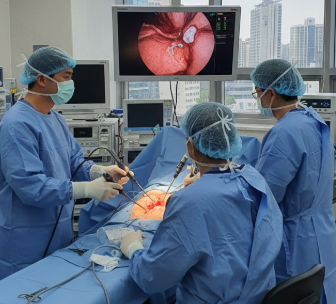
Laparoscopic bladder cancer surgery is a minimally invasive procedure used to remove bladder tumors with the assistance of small incisions and specialized instruments. Instead of traditional open surgery, Korean surgeons employ high-definition laparoscopic cameras that provide enhanced visualization and precision. This approach minimizes surgical trauma and accelerates recovery. Korea is recognized for its advanced laparoscopic urologic cancer programs, integrating multidisciplinary cancer care, precision imaging, and fast-track patient management. The procedure may involve tumor resection, partial cystectomy, lymph node dissection, or bladder-preserving techniques depending on tumor stage and location.
Purpose & Benefits
The goal of laparoscopic bladder cancer surgery is to remove cancerous tissue while minimizing complications and preserving urinary function. Key benefits include:
– Smaller incisions and less postoperative pain
– Reduced blood loss
– Lower infection risk
– Shorter hospitalization
– Faster return to normal routine
– Better cosmetic outcomes
– High surgical precision supported by advanced imaging
Patients choosing Korea benefit from highly standardized protocols, modern oncology infrastructure, and superior continuity of care.
Ideal Candidates
Laparoscopic bladder cancer surgery is suitable for:
– Patients with non-muscle-invasive or early muscle-invasive bladder cancer
– Individuals with localized tumors suitable for minimally invasive resection
– Candidates eligible for bladder-preserving partial cystectomy
– Patients who prefer faster recovery compared to open surgery
– Individuals without extensive tumor spread or metastasis
A full diagnostic workup—cystoscopy, CT scan, MRI, and tissue biopsy—is required to confirm eligibility.
Possible Risks & Complications
Despite its high safety profile, the procedure may still involve risks such as:
– Bleeding or infection
– Urinary leakage from bladder repair sites
– Damage to surrounding structures
– Temporary difficulty in urination
– Bladder capacity reduction
– Tumor recurrence
– Blood clots or anesthesia-related complications
Korean hospitals maintain low complication rates due to advanced technology, strict infection control, and highly experienced surgical teams.
Techniques & Technology Used
Korean medical centers utilize world-class laparoscopic cancer treatment systems. Key technologies include:
– High-definition laparoscopic towers with enhanced optics
– Narrow-band imaging and fluorescence-guided tumor mapping
– 3D laparoscopic visualization for complex dissection
– Nerve-sparing and bladder-preserving instruments
– Laser-assisted tumor removal systems
– Intraoperative frozen section analysis to confirm tumor-free margins
Some hospitals combine laparoscopy with robotic systems depending on tumor complexity.
Treatment Process in Korea
International patients follow a streamlined and well-coordinated care pathway:
- Consultation & Diagnostic Assessment: Includes cystoscopy, MRI or CT scan, urine cytology, and biopsy.
- Customized Treatment Planning: A multidisciplinary board reviews tumor staging and determines the optimal laparoscopic approach.
- Preoperative Preparation: Monitoring, lab tests, counseling, and anesthesia evaluation.
- Surgery: Small incisions are made to insert the laparoscope and instruments. Tumor removal or bladder segment resection is performed with precision.
- Postoperative Care: Pain control, infection prevention, urinary function monitoring, and bladder training.
- Discharge: Patients typically leave within 3–5 days depending on recovery.
- Follow-Up: Regular cystoscopy, imaging, and oncologic monitoring to prevent recurrence.
Recovery & After-Care
Recovery after laparoscopic bladder cancer surgery is significantly faster compared to open procedures. Patients typically experience:
– Mild discomfort managed with medication
– Removal of urinary catheter within 7–14 days
– Ability to walk within 24 hours
– Return to soft foods within 1–2 days
– Functional recovery in 2–3 weeks
– Full recovery within 4–6 weeks
After-care includes hydration management, bladder rehabilitation, infection prevention, and scheduled follow-up visits to ensure long-term health.
Results & Longevity
Laparoscopic techniques in Korea demonstrate excellent oncologic outcomes, with high tumor control rates when performed by experienced surgeons. Patients typically maintain good bladder function and quality of life. Recurrence is significantly reduced when surgery is combined with regular monitoring and adjuvant therapies when needed. Longevity results are comparable to open surgery but with fewer complications and faster functional recovery.
Why Korea Is a Top Destination
Korea is one of the leading destinations for minimally invasive cancer surgery due to:
– Extensive experience with advanced laparoscopic urology procedures
– Cutting-edge imaging, surgical instruments, and cancer treatment facilities
– Board-certified urologic oncologists with international training
– Comprehensive medical tourism support, including translators and coordinators
– High patient satisfaction rates and excellent cancer outcomes
– Standardized fast-track recovery programs
The country’s ability to deliver precision surgery with reduced costs compared to Western hospitals makes it highly attractive for medical tourists.
Cost Range
Costs vary based on tumor complexity, hospital choice, and surgical approach. Typical pricing includes:
– USD 7,000 – 15,000 for standard laparoscopic tumor resection
– USD 10,000 – 20,000 for laparoscopic partial cystectomy
– USD 12,000 – 25,000 for laparoscopic lymph node dissection or complex bladder surgery
Fees commonly include diagnostics, surgery, hospital stay, postoperative care, medications, and follow-up.
Popular Clinics in Korea
Top Korean hospitals offering advanced laparoscopic bladder cancer surgery include:
– Samsung Medical Center
– Asan Medical Center
– Seoul National University Hospital
– Severance Hospital (Yonsei University Health System)
– St. Mary’s Hospital
– Korea University Anam Hospital
– Specialized urologic cancer centers with minimally invasive surgery units
These institutions are known for high surgical volumes, excellent outcomes, and full support for international patients.


