
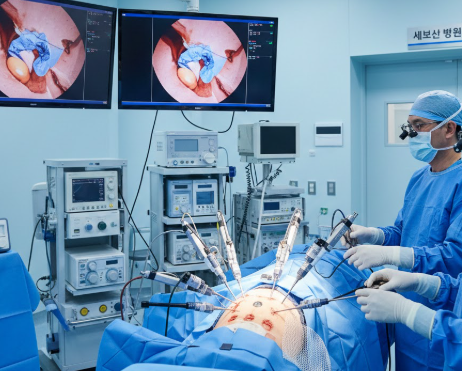
Treatment Overview
Laparoscopic cystocele repair is a minimally invasive surgical procedure to correct bladder prolapse, a condition where the bladder descends into the vaginal canal due to weakened pelvic floor tissues. Unlike traditional open surgery, laparoscopic repair involves small incisions and the use of a laparoscope—a thin tube with a camera and surgical instruments—allowing surgeons to restore bladder support with high precision.
Korea is recognized globally for its expertise in laparoscopic pelvic reconstructive surgery. Hospitals offer advanced technology, highly skilled surgeons, and comprehensive care for medical tourists seeking effective, minimally invasive cystocele repair with faster recovery and reduced postoperative discomfort.
Purpose & Benefits
The primary purpose of laparoscopic cystocele repair is to reposition the bladder, reinforce weakened pelvic tissues, and restore normal pelvic anatomy.
Key benefits include:
• Relief from vaginal bulging, pelvic pressure, and discomfort
• Improved urinary function and reduced incontinence
• Minimally invasive procedure with smaller incisions and reduced scarring
• Faster recovery and shorter hospital stay compared to traditional surgery
• Lower risk of infection and postoperative complications
Korean hospitals emphasize evidence-based techniques that maximize both anatomical and functional outcomes while prioritizing patient comfort.
Ideal Candidates
Ideal candidates for laparoscopic cystocele repair are women with symptomatic anterior vaginal wall prolapse. These include:
• Women experiencing pelvic pressure, heaviness, or visible vaginal bulging
• Patients with urinary incontinence, frequent UTIs, or difficulty emptying the bladder
• Women who have not responded to nonsurgical treatments such as pelvic floor exercises or pessary use
• Postmenopausal women with weakened pelvic tissues
• Women who are not planning future pregnancies
Korean specialists conduct comprehensive pelvic exams, imaging studies, and urodynamic testing to determine candidacy and create personalized treatment plans.
Possible Risks & Complications
Although laparoscopic cystocele repair is minimally invasive and generally safe, potential risks may include:
• Bleeding or infection
• Urinary retention or bladder injury
• Scar tissue formation
• Painful intercourse
• Recurrence of prolapse
Korean hospitals minimize these risks through advanced surgical techniques, high-resolution laparoscopic visualization, and meticulous tissue handling. Close postoperative monitoring ensures that complications are promptly addressed.
Techniques & Technology Used
Korea is at the forefront of laparoscopic pelvic reconstructive surgery, employing state-of-the-art techniques and technology:
• Laparoscopic anterior colporrhaphy for precise tissue repair
• Robotic-assisted laparoscopic repair using Da Vinci systems for enhanced accuracy
• Site-specific defect repair targeting areas of weakened tissue
• Mesh-free and native tissue techniques to reduce foreign material complications
• High-definition laparoscopes, micro-instruments, and intraoperative imaging for optimal visualization
These advanced techniques ensure superior anatomical restoration, reduced operative trauma, and long-lasting results.
Treatment Process in Korea
International patients undergoing laparoscopic cystocele repair in Korea typically follow a structured pathway:
- Initial Evaluation: Pelvic examination, imaging, and urodynamic testing
- Personalized Surgical Planning: Surgeons develop a customized plan based on the prolapse severity and patient needs
- Preoperative Preparation: Blood tests, anesthesia consultation, and lifestyle guidance
- Surgery: Performed under general anesthesia, usually lasting 1–2 hours
- Hospital Stay: Typically 1–2 days for postoperative monitoring, catheter care, and early mobilization
- Follow-Up: Scheduled visits to assess healing and provide pelvic floor rehabilitation instructions
Korean hospitals provide medical tourism support, including English-speaking coordinators, transportation, and accommodation arrangements.
Recovery & After-Care
Recovery after laparoscopic cystocele repair is generally faster than traditional surgery. Key after-care guidelines include:
• Avoiding heavy lifting and strenuous activities for 4–6 weeks
• Maintaining pelvic hygiene and following medication instructions
• Gradual return to daily activities and gentle walking for circulation
• Avoiding sexual intercourse and tampon use until cleared by the surgeon
• Participating in pelvic floor physiotherapy to strengthen support tissues
Korean hospitals provide detailed recovery plans and ongoing monitoring to ensure optimal long-term outcomes.
Results & Longevity
Patients undergoing laparoscopic cystocele repair in Korea experience durable results, including:
• Relief from pelvic pressure and vaginal bulging
• Improved bladder function and reduced incontinence
• Minimal scarring and faster recovery
• Enhanced sexual comfort and daily activity performance
With advanced laparoscopic techniques and dedicated postoperative care, recurrence rates are low and patient satisfaction is high.
Why Korea Is a Top Destination
Korea is recognized worldwide for excellence in laparoscopic pelvic reconstructive surgery due to:
• Highly skilled surgeons with extensive experience in minimally invasive techniques
• State-of-the-art laparoscopic and robotic surgical technology
• Internationally accredited hospitals with high safety standards
• Competitive, transparent pricing for international patients
• Comprehensive support services for medical tourists, including coordination, translation, and accommodation
These factors make Korea an ideal destination for women seeking advanced, safe, and efficient cystocele repair.
Cost Range
The cost of laparoscopic cystocele repair in Korea ranges from USD 5,000 to USD 12,000, depending on:
• Type of laparoscopic procedure (traditional vs. robotic-assisted)
• Hospital and surgeon expertise
• Preoperative diagnostics and imaging
• Length of hospital stay
This price typically includes consultation, surgery, anesthesia, hospitalization, medications, and follow-up care.
Popular Clinics in Korea
• Seoul National University Hospital – Urogynecology Center
• Asan Medical Center – Pelvic Floor Reconstruction Department
• Samsung Medical Center – Urogynecology Unit
• Yonsei Severance Hospital – Pelvic Organ Prolapse Clinic
• Ewha Womans University Medical Center – Women’s Pelvic Health Center
• CHA Gangnam Medical Center – Minimally Invasive Gynecologic Surgery Center


