
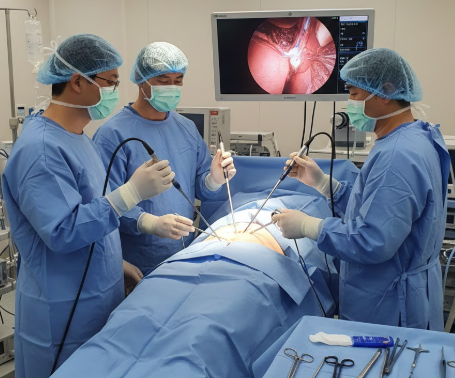
Treatment Overview
Laparoscopic Radical Prostatectomy (LRP) is a minimally invasive surgical procedure for the removal of the prostate gland in patients with localized prostate cancer. Unlike traditional open surgery, LRP uses small incisions and specialized instruments, guided by high-definition cameras, to precisely excise the prostate. This approach reduces trauma to surrounding tissues and promotes faster recovery. Korean hospitals combine skilled urologists with advanced laparoscopic technology to ensure optimal outcomes for both local and international patients.
Purpose & Benefits
The primary goal of Laparoscopic Radical Prostatectomy is to remove cancerous prostate tissue while minimizing complications. Key benefits include:
- Minimally invasive surgery with smaller incisions and less postoperative pain.
- Reduced blood loss during the procedure.
- Faster recovery time and shorter hospital stay.
- Preservation of urinary and sexual function through nerve-sparing techniques.
- Lower risk of infection and surgical complications compared to traditional open surgery.
Ideal Candidates
Laparoscopic Radical Prostatectomy is suitable for:
- Men diagnosed with early-stage or localized prostate cancer.
- Patients seeking a minimally invasive alternative to open surgery.
- Individuals who wish to minimize hospitalization and recovery time.
- Patients in good general health and with life expectancy of over 10 years.
Possible Risks & Complications
While LRP is generally safe, potential risks include:
- Temporary or, in rare cases, long-term urinary incontinence.
- Erectile dysfunction, depending on the ability to perform nerve-sparing surgery.
- Bleeding or infection at incision sites.
- Injury to nearby organs, such as the bladder or rectum, although rare.
- Complications related to anesthesia.
Techniques & Technology Used
Korean hospitals performing LRP use cutting-edge laparoscopic equipment and techniques:
- High-definition cameras for enhanced visualization of the prostate and surrounding tissues.
- Precision laparoscopic instruments for delicate tissue dissection.
- Nerve-sparing techniques to maintain erectile function and urinary control.
- Energy devices for precise cutting and coagulation, reducing blood loss.
Treatment Process in Korea
The process of Laparoscopic Radical Prostatectomy in Korea typically involves:
- Initial Consultation & Evaluation: Comprehensive assessment including PSA tests, MRI, and biopsy review.
- Preoperative Preparation: Health optimization, pre-op counseling, and planning for minimally invasive surgery.
- Surgical Procedure: Performed under general anesthesia, usually lasting 2–4 hours.
- Postoperative Care: Short hospital stay of 1–3 days, early mobilization, and monitoring for complications.
- Follow-up Visits: PSA monitoring and imaging to ensure cancer has been successfully removed and to track recovery progress.
Recovery & After-Care
Recovery after LRP focuses on minimizing complications and accelerating return to daily life:
- Hospital Stay: Typically 1–3 days.
- Catheter Management: Catheter usually removed 1–2 weeks post-surgery.
- Pain Management: Pain is mild and managed with oral medications.
- Physical Activity: Light activity encouraged after one week; normal activities resumed in 4–6 weeks.
- Long-Term Care: Continence exercises and sexual function rehabilitation; regular PSA monitoring for cancer surveillance.
Results & Longevity
Laparoscopic Radical Prostatectomy offers excellent outcomes:
- Cancer Control: High success rate for complete removal of localized prostate cancer.
- Functional Recovery: Many patients regain urinary continence within months; nerve-sparing approaches improve chances of preserving sexual function.
- Durability: Long-term cancer control is comparable to open surgery, with fewer complications and quicker recovery.
Why Korea Is a Top Destination
Korea is a preferred destination for LRP due to:
- Advanced Medical Technology: Hospitals equipped with high-definition laparoscopic systems.
- Experienced Surgeons: Highly trained urologists with extensive experience in minimally invasive prostate surgery.
- Comprehensive Care: Complete care including pre-op counseling, surgery, and post-op rehabilitation.
- Cost-Effective Treatment: High-quality surgery at competitive prices for international patients.
- Medical Tourism Support: English-speaking coordinators, assistance with travel and accommodation, and seamless hospital navigation for foreigners.
Cost Range
The cost of Laparoscopic Radical Prostatectomy in Korea typically ranges from $8,000 to $15,000, depending on the hospital, surgeon’s expertise, and additional services such as accommodation and post-op care. This makes Korea a highly attractive option for international patients seeking affordable, high-quality treatment.
Popular Clinics in Korea
Top hospitals offering LRP for international patients include:
- Samsung Medical Center, Seoul – Renowned for advanced minimally invasive prostate surgery.
- Asan Medical Center, Seoul – High-volume center for prostate cancer treatment.
- Severance Hospital, Seoul – Specialized in urology and laparoscopic surgery.
- Seoul St. Mary’s Hospital – Cutting-edge technology for minimally invasive procedures.
- CHA Bundang Medical Center – Excellent support for international patients and expertise in laparoscopic prostatectomy.


