
Treatment Overview
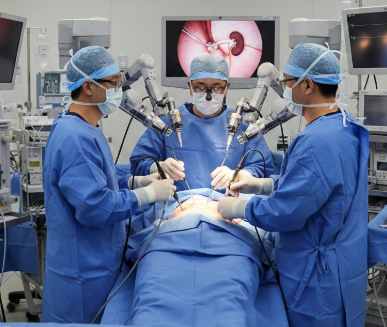
Laparoscopic Robotic Hybrid Urologic Surgery in Korea is an advanced surgical approach that merges the benefits of traditional laparoscopy with the precision and articulation of robotic-assisted systems. This hybrid technique allows surgeons to perform complex urologic procedures—including kidney, prostate, bladder, ureter, and adrenal surgeries—with enhanced control, minimal invasiveness, and superior visualization.
Korean hospitals are globally recognized for pioneering hybrid robotic-laparoscopic methods, especially for complex reconstructive and oncologic urologic operations. This approach enables surgeons to transition seamlessly between robotic instruments and conventional laparoscopic tools, optimizing outcomes and reducing surgical time.
Purpose & Benefits
The primary purpose of laparoscopic robotic hybrid urologic surgery is to provide patients with the most precise and least invasive option for treating various urologic disorders. This technique offers the combined advantages of laparoscopy’s minimal invasiveness and robotics’ highly controlled movements.
Key benefits include:
- Reduced blood loss and smaller incisions
- Faster postoperative recovery
- Better surgical accuracy for tumor removal
- Enhanced dexterity for complex reconstructive tasks
- Shorter hospital stays
- Reduced postoperative pain
- Higher organ preservation rates in kidney and ureter surgeries
- Improved cosmetic outcomes
The hybrid model is particularly effective for procedures where robotics alone may have limitations but combining manual laparoscopic tools increases efficiency.
Ideal Candidates
Laparoscopic Robotic Hybrid Urologic Surgery is ideal for individuals diagnosed with conditions that require precise surgical intervention. These include:
- Kidney tumors (partial nephrectomy, complex masses)
- Prostate cancer requiring precise excision
- Ureteral strictures needing reconstruction
- Adrenal gland tumors
- Bladder cancer (partial or radical cystectomy)
- Severe hydronephrosis requiring pyeloplasty
- Complex kidney stone disease requiring combined approaches
- Male infertility requiring targeted surgical repair
- Pediatric patients needing minimally invasive solutions
Candidates should generally be in stable health, able to undergo anesthesia, and cleared after imaging and blood tests.
Possible Risks & Complications
Although hybrid laparoscopic-robotic surgery is safe and widely practiced in Korea, potential risks remain, including:
- Bleeding during or after surgery
- Infection around surgical incisions
- Injury to adjacent organs or blood vessels
- Urinary leakage (in reconstructive surgeries)
- Short-term numbness or nerve irritation
- Hernia formation at incision sites
- Rare risk of anesthesia-related complications
- Need for conversion to open surgery in complex cases
Korean hospitals maintain extremely low complication rates thanks to experienced surgeons and state-of-the-art surgical systems.
Techniques & Technology Used
Korea is at the forefront of surgical technology, using:
- Da Vinci Xi/X robotic platforms for superior mobility
- 3D high-definition imaging systems
- Advanced laparoscopic energy devices (Harmonic scalpel, LigaSure)
- Mini-laparoscopic tools (3–5 mm) for reduced scarring
- Intraoperative ultrasound for real-time tumor boundary identification
- Fluorescence-guided surgery (Firefly technology) for vascular mapping
- High-precision suturing systems for reconstructive procedures
Hybrid technique allows surgeons to alternate between robotic and manual laparoscopic tools to achieve maximum precision and adaptability.
Treatment Process in Korea
International medical tourists experience a streamlined and well-organized treatment pathway:
- Initial Consultation (Online or In-Person):
Medical history review, diagnostic imaging (CT, MRI, ultrasound), and preoperative blood tests. - Personalized Surgical Planning:
Korean surgeons decide which parts of the procedure require robotic assistance and which benefit from laparoscopy. - Surgery Day:
Patients undergo general anesthesia. Small incisions are created for laparoscopic access, and the robotic arms are connected. The hybrid method is implemented strategically based on the procedure. - Postoperative Monitoring:
Patients are transferred to a recovery ward where pain management and mobility guidance begin. - Short Hospital Stay:
Most patients stay 1–3 days depending on procedure complexity. - Discharge & Follow-Up:
Patients receive medication, wound care instructions, and follow-up appointments (in-person or online).
Recovery & After-Care
Recovery after hybrid laparoscopic-robotic surgery is typically faster than open surgery. General recovery guidelines include:
- Returning to light activities within 3–5 days
- Minimal scarring with rapid healing of 5–10 mm incisions
- Low postoperative pain managed with oral medication
- Avoiding heavy lifting for 3–4 weeks
- Wearing supportive garments if advised
- Monitoring for fever, swelling, or unusual pain
- Follow-up appointment within 7–14 days
Most international patients can travel back home within one week after surgery, depending on their health and surgeon’s advice.
Results & Longevity
The hybrid technique provides long-lasting results due to superior accuracy and reduced tissue trauma. Key outcome highlights:
- High cancer-free survival rates for urologic cancers
- Excellent functional preservation (kidney function, continence, sexual function)
- Long-term resolution of ureteral or renal obstructions
- Lower recurrence rates for strictures and tumors
- Very high patient satisfaction due to minimal scarring and fast recovery
Results are durable and sustained for many years when combined with proper follow-up monitoring.
Why Korea Is a Top Destination
Korea is globally recognized for excellence in minimally invasive and robotic urologic surgery due to:
- Surgeons who perform thousands of robotic-laparoscopic procedures annually
- Cutting-edge robotic platforms and laparoscopic systems
- International patient-focused hospitals with English-speaking care teams
- Transparent and affordable medical pricing
- Short waiting times and highly coordinated care
- High surgical success rates with global-quality safety standards
Korea is one of the few countries where hybrid robotic-laparoscopic surgery is routinely performed at such an advanced level.
Cost Range
The cost of Laparoscopic Robotic Hybrid Urologic Surgery in Korea varies depending on the specific operation and case complexity:
- USD 6,000 – 18,000 for standard procedures
- USD 12,000 – 28,000 for complex robotic-assisted or reconstructive surgeries
- Prices include surgeon fees, anesthesia, facility charges, postoperative care, and basic medications.
Compared to the United States, Japan, and Europe, Korea offers significantly better value with equivalent or superior outcomes.
Popular Clinics in Korea
Some of the leading centers known for hybrid robotic-laparoscopic urologic surgery include:
- Seoul National University Hospital
- Asan Medical Center
- Severance Hospital (Yonsei)
- Samsung Medical Center
- Konkuk University Medical Center
- Catholic University Seoul St. Mary’s Hospital
- Bundang Seoul National University Hospital
- Urology-focused specialty hospitals in Seoul and Busan
These institutions serve thousands of international patients each year seeking advanced urologic procedures.


