
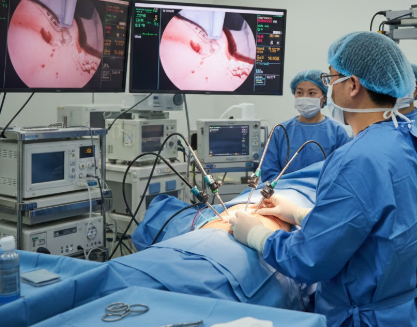
Treatment Overview
Laparoscopic Ureteral Stricture Surgery is a minimally invasive reconstructive procedure performed to treat ureteral narrowing that blocks urine flow from the kidneys to the bladder. A ureteral stricture can arise from stone disease, surgical injury, infection, endoscopic procedures, congenital abnormalities, or inflammatory conditions. When untreated, it may lead to hydronephrosis, recurrent infections, flank pain, and long-term kidney damage.
In Korea, laparoscopic reconstruction has become a gold-standard option for moderate to long strictures or cases unsuitable for endoscopic incision. Korean hospitals specialize in advanced laparoscopic techniques, including ureteral reimplantation, ureteroureterostomy, and ureteral reconstruction using healthy tissue segments. With high surgical precision, 3D visualization systems, low complication rates, and enhanced recovery pathways, Korea provides one of the most reliable environments globally for ureteral stricture repair.
Purpose & Benefits
The goal of laparoscopic ureteral stricture surgery is to restore normal urine flow, preserve kidney function, and prevent future complications. The minimally invasive approach delivers several advantages:
- Small incisions with minimal scarring
- Less postoperative pain compared to open surgery
- Faster recovery and shorter hospital stay
- Reduced risk of infection and bleeding
- High long-term success rates
- Definitive reconstruction for complex or lengthy strictures
- Excellent visualization and precision using 3D laparoscopy or robotic assistance
- Prevention of kidney function deterioration
Because Korea is equipped with advanced laparoscopic and robotic systems, patients benefit from highly accurate suturing, optimal anatomical restoration, and more durable results.
Ideal Candidates
Laparoscopic ureteral stricture surgery is suitable for patients who:
- Have long or recurrent ureteral strictures
- Are not good candidates for endoscopic laser incision
- Have strictures caused by trauma, surgery, or severe inflammation
- Experience persistent flank pain or frequent infections
- Show hydronephrosis or reduced kidney drainage on imaging
- Have failed prior endoscopic treatments (such as laser ureterotomy)
- Require complete reconstruction to preserve renal function
Medical tourists who require a definitive, long-lasting solution often choose Korea due to the country’s high surgeon expertise and advanced laparoscopic capabilities.
Possible Risks & Complications
Although laparoscopic surgery in Korea is widely recognized for its safety, potential risks may include:
- Bleeding during or after surgery
- Infection
- Urinary leakage from the reconstruction site
- Narrowing of the ureter again (rare with Korean techniques)
- Injury to nearby organs
- Temporary urinary stent discomfort
- Pain at incision sites
- Anesthetic-related complications
Korean hospitals follow strict protocols, including intraoperative imaging and precision suturing, to keep complication rates very low.
Techniques & Technology Used
Korean medical centers employ cutting-edge techniques and equipment, ensuring highly accurate and durable outcomes. Common techniques include:
- Laparoscopic ureteroureterostomy (removal of narrowed segment and reconnection)
- Laparoscopic ureteral reimplantation (reattaching ureter to bladder)
- Psoas hitch or Boari flap reconstruction for long strictures
- Robotic-assisted laparoscopic ureteral reconstruction (optional at premium hospitals)
- High-definition 4K and 3D visualization systems
- Real-time ureteral stent guidance
- Intraoperative ultrasound or fluorescence imaging
- Enhanced recovery protocols (ERAS)
Korea’s precision-focused approach reduces trauma to surrounding tissues and optimizes ureteral alignment to prevent recurrence.
Treatment Process in Korea
Korea’s structured and efficient medical system ensures reliable treatment pathways for international patients.
- Initial Consultation and Evaluation
A detailed review of medical history, symptoms, and imaging is performed. CT urography, renal scans, ultrasound, and endoscopic assessment may be included. - Preoperative Planning
The surgical team outlines the best reconstruction method based on stricture length, location, and underlying cause. - Laparoscopic Surgery
Small incisions are made to access the abdominal cavity. Surgeons remove the diseased ureteral segment and reconstruct the ureter using advanced laparoscopic suturing. A ureteral stent is placed to support healing. - Postoperative Hospital Stay
Most patients stay 2–4 days depending on healing and pain control. - Stent Removal
The stent is typically removed 4–6 weeks after surgery. - Follow-Up Imaging
Ultrasound or CT scan ensures proper kidney drainage and confirms surgical success.
Korean hospitals also provide multilingual coordinators, airport pickup options, personalized treatment scheduling, and telemedicine for international patients.
Recovery & After-Care
Recovery after laparoscopic ureteral stricture surgery in Korea is typically smooth and faster than open surgery. Patients can expect:
- Light walking within one day
- Return to normal activities within 2–3 weeks
- Limited discomfort at incision sites
- Temporary urinary symptoms related to the stent
- Pain management with minimal medication
- Dietary guidance for faster healing
- Avoidance of heavy lifting for 4–6 weeks
Korean facilities also provide detailed after-care manuals, follow-up schedules, and remote monitoring support for medical tourists.
Results & Longevity
Laparoscopic ureteral reconstruction provides long-lasting results and is considered one of the most definitive solutions for ureteral strictures worldwide. Patients typically experience:
- Complete restoration of urine flow
- Resolution of flank pain and hydronephrosis
- Protection and preservation of kidney function
- Extremely low recurrence rates
- Excellent cosmetic results due to small incisions
Korea’s high expertise in laparoscopic urology ensures that outcomes remain stable for many years, even in complex or previously treated strictures.
Why Korea Is a Top Destination
Korea is recognized as a global leader in minimally invasive urologic surgery due to:
- Surgeons with high case volumes and subspecialty expertise
- Access to advanced laparoscopic and robotic equipment
- Internationally accredited hospitals offering premium care
- Rapid scheduling and short waiting times
- Comprehensive support for medical tourists
- Competitive treatment pricing compared to Western nations
- Exceptional long-term clinical outcomes
Patients from the Middle East, Southeast Asia, Europe, and North America frequently travel to Korea for definitive ureteral stricture repair.
Cost Range
The approximate cost for Laparoscopic Ureteral Stricture Surgery in Korea is:
USD 7,000 – 18,000
Factors influencing cost include hospital tier, diagnostic imaging, length of hospital stay, surgeon specialization, and whether robotic assistance is used. Even at top-tier hospitals, Korea offers excellent value compared with the US or Europe.
Popular Clinics in Korea
- Seoul National University Hospital
- Asan Medical Center
- Severance Hospital (Yonsei University Health System)
- Samsung Medical Center
- Gangnam Severance International Clinic
- Chung-Ang University Hospital
- Korea University Hospital – Urology Department
- Wooridul Urology Center
These institutions are known for their expertise in complex ureteral reconstruction and high success rates.


