
Treatment Overview
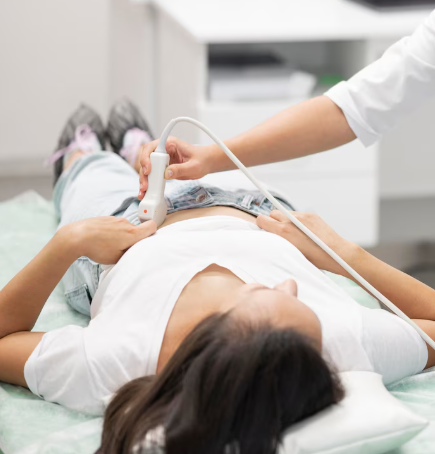
The Laparoscopy-Guided Pelvic Ultrasound in Korea is a cutting-edge diagnostic and surgical evaluation procedure that combines laparoscopy with advanced ultrasound imaging to deliver the most precise pelvic assessment available. This innovative technique allows gynecologists to directly visualize and assess pelvic organs—including the uterus, ovaries, fallopian tubes, and surrounding tissues—in real time during minimally invasive surgery.
Korea is at the forefront of gynecologic innovation, offering this procedure with advanced imaging systems that integrate high-resolution ultrasound, 3D/4D imaging, and Doppler technology. This fusion of laparoscopic precision and ultrasound accuracy enables doctors to detect subtle abnormalities that may not be visible with standard imaging, making it an invaluable tool in both diagnosis and treatment planning.
Laparoscopy-guided pelvic ultrasound is particularly useful for infertility evaluation, endometriosis diagnosis, pelvic pain investigation, and surgical treatment planning.
Purpose & Benefits
This technique is designed to provide real-time, high-precision imaging during minimally invasive pelvic surgery, improving diagnosis and surgical outcomes.
Key benefits include:
- Accurate identification of pelvic pathology such as endometriosis, adhesions, ovarian cysts, or fibroids.
- Enhanced surgical precision by providing live imaging during operative laparoscopy.
- Improved detection of subtle abnormalities that may not appear on conventional ultrasound or MRI scans.
- Detailed assessment of blood flow and tissue condition using Doppler ultrasound.
- Better planning for fertility treatments by assessing the reproductive environment directly.
- Minimally invasive with reduced recovery time compared to traditional surgical exploration.
- Reduced surgical complications due to superior imaging guidance.
This combined approach ensures that Korean women and international patients receive a comprehensive, safe, and highly effective pelvic evaluation that integrates diagnostic imaging with therapeutic intervention when necessary.
Ideal Candidates
Laparoscopy-guided pelvic ultrasound is recommended for women who:
- Have unexplained infertility despite prior evaluation.
- Experience chronic pelvic pain or dysmenorrhea.
- Have suspected or diagnosed endometriosis.
- Have a history of pelvic adhesions, ovarian cysts, or fibroids requiring surgical investigation.
- Need surgical confirmation of a suspected pelvic abnormality.
- Require real-time imaging for precise surgical intervention.
Korean gynecologic centers tailor this procedure to each patient’s medical history and reproductive goals, making it highly personalized.
Possible Risks & Complications
While laparoscopy-guided pelvic ultrasound is considered safe, it is an invasive procedure and carries the risks associated with laparoscopy. These may include:
- Minor bleeding at the incision site.
- Temporary pelvic pain or discomfort.
- Risks related to anesthesia.
- Infection at incision points.
- Rare injury to nearby organs.
These risks are significantly reduced in Korea due to the use of state-of-the-art laparoscopic systems and highly experienced surgeons who specialize in minimally invasive gynecologic surgery.
Techniques Used
This advanced procedure involves a combination of laparoscopy and real-time ultrasound imaging for the most accurate pelvic evaluation:
- Laparoscopic Inspection: Small incisions allow insertion of a laparoscope with a camera for direct visualization of pelvic organs.
- Transvaginal or Transabdominal Ultrasound: Performed simultaneously to provide enhanced imaging of pelvic structures.
- 3D/4D Ultrasound Imaging: Offers volumetric visualization of pelvic organs during laparoscopy.
- Color Doppler Ultrasound: Assesses blood flow to help evaluate organ viability and detect subtle lesions.
- AI-Enhanced Imaging: Digital processing assists in detecting abnormalities and improving surgical accuracy.
This integration of surgical visualization with ultrasound imaging gives Korean medical centers a unique advantage in diagnosing complex pelvic conditions and providing optimal treatment.
Recovery & Aftercare
Recovery from laparoscopy-guided pelvic ultrasound generally follows the same process as minimally invasive laparoscopic surgery. Patients may require:
- A brief hospital stay (often same-day or overnight).
- Rest and limited physical activity for several days following the procedure.
- Avoidance of strenuous activity or heavy lifting for up to two weeks.
Aftercare includes:
- Follow-up consultations to review ultrasound findings and surgical results.
- Recommendations for further treatment or fertility planning based on the findings.
- Guidance on post-operative care, pain management, and recovery timelines.
Korean hospitals provide comprehensive aftercare services to ensure optimal recovery and sustained pelvic health.
Results & Longevity
One of the most significant advantages of laparoscopy-guided pelvic ultrasound is the immediate availability of diagnostic and surgical results. Surgeons can:
- Visualize pelvic organs in real time.
- Identify and treat abnormalities during the same procedure.
- Generate detailed imaging and measurement reports.
This dual diagnostic-surgical approach often eliminates the need for multiple procedures, ensuring a quicker path to treatment and recovery.
The longevity of the benefits depends on the underlying condition treated, but the precision of this method ensures long-term improvements in reproductive health, pain relief, and surgical outcomes.
Treatment Process in Korea
Korea’s medical system follows a streamlined approach for laparoscopy-guided pelvic ultrasound:
- Initial Consultation: Detailed review of medical history, symptoms, and prior diagnostic results.
- Pre-Operative Preparation: Includes blood tests, anesthesia evaluation, and patient education.
- Procedure: Conducted in an operating room using advanced laparoscopic and ultrasound imaging equipment.
- Image Analysis: Real-time interpretation by a multidisciplinary team of gynecologists and radiologists.
- Post-Procedure Consultation: Review of findings, discussion of results, and formulation of follow-up care plans.
Korea’s integration of advanced laparoscopic technology, AI-enhanced ultrasound, and specialized surgical expertise makes this a leading procedure in the world of gynecology.
Cost Range
The cost of laparoscopy-guided pelvic ultrasound in Korea generally ranges between ₩2,500,000 and ₩5,000,000 KRW (approximately $1,900–$3,800 USD).
Costs vary depending on the complexity of the case, hospital choice, and whether the procedure includes therapeutic interventions.
Korean hospitals often offer bundled packages that include the procedure, hospitalization, anesthesia, and follow-up care, providing value and clarity for international patients.
Popular Clinics
- CHA Fertility Center Seoul – Known for integrating laparoscopy with high-resolution ultrasound for infertility and pelvic pain evaluation.
- Seoul National University Hospital (OBGYN Department) – Offers world-class laparoscopy-guided ultrasound procedures.
- Banobagi Women’s Clinic – Specializes in minimally invasive gynecologic surgery with advanced imaging.
- Mirae Women’s Hospital – Combines laparoscopic expertise with high-end diagnostic ultrasound.
- Samsung Women’s Health Clinic – Incorporates AI and 3D ultrasound for enhanced surgical accuracy.
- Ewha Womans University Medical Center – A leader in innovative gynecologic diagnostics and surgery.


