
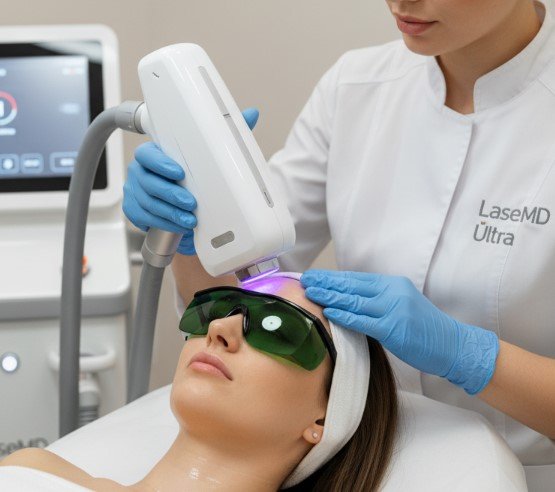
Treatment Overview
LaseMD Ultra is a non-ablative fractional thulium laser (1927 nm) widely used in Korean dermatology clinics for treating sunspots (solar lentigines), age spots, freckles, and other UV-induced pigmentation.
The device creates microthermal channels in the upper layers of the skin, stimulating cell renewal and enhancing the penetration of brightening serums such as Vitamin C or tranexamic acid. It is gentler than ablative lasers like CO₂, making it suitable for Asian skin prone to PIH while still providing effective pigment reduction.
Purpose & Benefits
- Sunspot Reduction: Targets and fades solar lentigines effectively.
- Skin Brightening: Evens skin tone and restores clarity.
- Photodamage Repair: Improves sun-damaged texture and pigmentation.
- Minimal Downtime: Faster recovery compared to traditional ablative lasers.
- Combination-Friendly: Often paired with pigment lasers or whitening drips.
Ideal Candidates
LaseMD Ultra in Korea is recommended for:
- Adults with UV-induced pigmentation like sunspots and age spots.
- Patients seeking gradual pigment clearance with low downtime.
- Individuals with sensitive or PIH-prone skin who cannot undergo aggressive treatments.
- Those looking for skin rejuvenation + brightening alongside pigment removal.
Possible Risks & Complications
- Redness & Warmth: Temporary, fades in 1–2 days.
- Mild Dryness or Flaking: As skin renews.
- Temporary Darkening: Pigment may darken before peeling.
- Rare Risks: PIH rebound or hypopigmentation if treated too aggressively.
Surgical Techniques Used
- 1927 nm Fractional Thulium Laser: Creates microchannels for pigment clearance and serum absorption.
- Serum Infusion: Often combined with Vitamin C, tranexamic acid, or antioxidants.
- Fractional Mode: Stimulates collagen and improves skin quality.
Protocol: Typically 3–5 sessions, spaced 3–4 weeks apart.
Recovery & Aftercare
Immediately: Mild redness and tingling.
2–5 Days: Dryness, bronzing, or flaking.
1 Week: Brighter, clearer skin with lighter sunspots.
Aftercare Tips:
- Apply SPF 50+ sunscreen daily.
- Keep skin moisturized with barrier creams.
- Avoid exfoliants, acids, and retinoids for 5–7 days.
- Protect from direct sunlight during treatment cycles.
Results & Longevity
- After 1 Session: Fresher glow, early pigment fading.
- After 2–3 Sessions: Noticeable lightening of sunspots.
- After 4–5 Sessions: Significant clearance of sunspots and overall rejuvenation.
- Long-Term: Results can last many months; maintenance suggested every 6–12 months.
Treatment Process in Korea
Consultation & Skin Analysis
- Dermatologist evaluates pigmentation depth and skin type.
Preparation
- Gentle cleansing; optional numbing cream.
LaseMD Ultra Session
- Step 1: Fractional thulium laser applied.
- Step 2: Infusion of brightening serums into microchannels.
- Step 3: Cooling or hydrating mask applied.
- Duration: 20–30 minutes.
Post-Treatment Care
- Hydrating cream and sunscreen applied before leaving the clinic.
Follow-Up
- 3–5 sessions usually recommended for visible sunspot clearance.
Unique Korean Advantages
- Asian Skin Protocols: Low-intensity, multi-session approach reduces PIH risk.
- Serum Integration: Many clinics pair LaseMD Ultra with customized brightening serums.
- Combination Therapy: Often bundled with Pico or Alexandrite for stubborn spots.
- Cost-Effective Packages: Multi-session programs are affordable compared to Western clinics.
Cost Range (Estimated)
- Single Session (Full Face): USD 300 – 500
- 3–5 Session Package: USD 900 – 1,500
- Premium Program (LaseMD Ultra + Whitening Serums/Boosters): USD 1,500 – 2,500
Additional Costs:
- Consultation: USD 20 – 50
- Add-ons (Glutathione or Vitamin C drips, TXA serums): USD 100 – 200
- Boosters (PRP, exosomes, Rejuran): USD 200 – 500
Example Korean Packages:
- Basic LaseMD Ultra (3 sessions): USD 900–1,100
- Advanced Sunspot Program (LaseMD Ultra + Whitening Drips): USD 1,200–1,500
- Premium Package (LaseMD Ultra + Pico/Alexandrite + Boosters): USD 2,000–2,500
Popular Clinics in Seoul
- Oracle Dermatology: LaseMD Ultra for solar lentigines and freckles.
- Banobagi Dermatology: LaseMD Ultra + Pico combo for stubborn UV spots.
- Renewme Skin Clinic: LaseMD Ultra with Vitamin C/TXA serums.
- View Plastic & Dermatology: LaseMD Ultra + Fractional resurfacing for pigment + texture.
- Chaum Anti-Aging Center: Premium pigment programs with LaseMD Ultra + regenerative boosters.


