
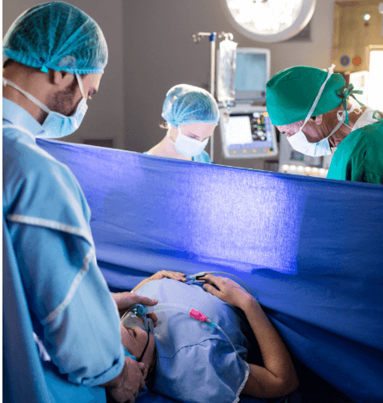
Treatment Overview
Laser-Assisted Polyp Removal is an advanced minimally invasive uterine surgery that uses high-precision CO₂ or Diode laser energy to remove endometrial (uterine) polyps safely and effectively. The laser vaporizes or excises polyps from the endometrial lining with extreme accuracy, preserving the surrounding healthy tissue.
In Korea, this procedure is a hallmark of modern Women’s Health / OBGYN – Surgical Gynecology, performed by highly skilled gynecologic endoscopists using state-of-the-art laser systems integrated with hysteroscopic visualization. Korean hospitals are internationally known for their adoption of CO₂ and Diode laser technology, providing scar-free, painless, and fertility-preserving outcomes for patients seeking the most advanced uterine polyp removal techniques.
Purpose & Benefits
- Precisely removes uterine polyps causing irregular bleeding, pelvic pain, or infertility.
- Minimally invasive, performed without incisions or extensive tissue damage.
- Preserves fertility by protecting healthy endometrial tissue.
- Offers bloodless surgery with minimal risk of postoperative bleeding.
- Reduces recurrence rates due to complete and clean tissue removal.
- Provides faster healing and shorter downtime compared to electrosurgical methods.
- Ideal for patients sensitive to traditional cauterization or mechanical resection.
Ideal Candidates
- Women diagnosed with endometrial or cervical polyps via ultrasound, hysterosonography, or hysteroscopy.
- Patients experiencing abnormal uterine bleeding, spotting, or postmenopausal discharge.
- Women undergoing fertility treatments (IVF/IUI) where uterine abnormalities affect implantation.
- Patients seeking non-invasive and fertility-sparing surgical options.
- Women with sensitive endometrial lining or prior uterine surgeries seeking a gentle removal method.
Possible Risks & Complications
Laser-assisted polyp removal is considered one of the safest uterine procedures, but minimal risks may include:
- Light vaginal spotting for a few days.
- Temporary cramping or mild discomfort post-procedure.
- Rare infection or endometritis.
- Minimal thermal injury if not properly controlled (rare in advanced Korean hospitals).
- Possible recurrence if underlying hormonal imbalance persists.
Surgical Techniques Used
Korean hospitals utilize the latest laser-integrated hysteroscopic systems for precision-guided procedures. The two main technologies used are:
- CO₂ Laser Polypectomy: Uses a focused carbon dioxide laser beam for high-precision vaporization of polyps, ensuring smooth tissue healing. Ideal for delicate or fertility-focused cases.
- Diode Laser Polypectomy: Uses fiber-optic laser energy to excise polyps with excellent coagulation control, minimizing bleeding and tissue trauma.
- Hybrid Laser-Electrosurgical Systems: Combine laser precision with bipolar energy for enhanced cutting and coagulation.
- Saline Distension & High-Definition Hysteroscopy: Expands the uterine cavity and provides clear visualization for safe and accurate laser application.
The result is a clean, scar-free surgical site and improved uterine health.
Recovery & Aftercare
- Procedure time: 20–40 minutes, performed under local or sedation anesthesia.
- Same-day discharge — patients can usually go home within hours.
- Mild cramping or light bleeding may occur for 2–3 days.
- Avoid sexual intercourse, tampon use, and strenuous activity for about one week.
- Pain relief medication or antibiotics may be prescribed as needed.
- Follow-up visit scheduled 7–10 days post-procedure for healing assessment and pathology review.
- Most women resume normal activities within 24–48 hours.
Results & Longevity
- Immediate improvement in symptoms such as irregular bleeding or pelvic discomfort.
- High success rate in achieving complete removal and preventing recurrence.
- Fertility outcomes often improve as the uterine cavity is restored to normal condition.
- Minimal scar tissue formation due to laser’s precision and low thermal spread.
- Long-lasting results and enhanced uterine function with regular follow-ups.
Treatment Process in Korea
South Korea leads globally in laser-assisted gynecologic surgery, known for its precision, safety, and patient-centered approach. The procedure is typically performed in specialized women’s hospitals or OBGYN centers equipped with CO₂ or Diode laser systems, under the care of expert gynecologic endoscopists.
Most advanced and popular surgical techniques performed in Korea:
- CO₂ Laser Hysteroscopy: Delivers micrometer-level accuracy for delicate polyp removal.
- Diode Laser-Assisted Hysteroscopic Surgery: Allows simultaneous cutting and coagulation with minimal heat transfer.
- 3D and 4K Endoscopic Imaging Systems: Provide enhanced visualization for complete polyp removal.
- AI-Guided Hysteroscopic Imaging: Used in select Korean centers for improved detection of small or hidden polyps.
- Hybrid Hystero-Laparoscopic Systems: For complex or combined uterine pathologies.
Unique Korean methods or technology:
- Integration of AI-based diagnostic mapping for targeted laser excision.
- One-day laser surgery programs offering consultation, imaging, procedure, and recovery in a single visit.
- Fertility-focused laser protocols designed to protect endometrial function.
- Pain-free sedation systems for maximum comfort during outpatient treatment.
- Multilingual medical coordinators and streamlined medical tourism services for international patients.
Why Korea is a top destination for this surgery:
- Globally accredited hospitals with ultramodern laser systems.
- Internationally trained OBGYN surgeons specializing in minimally invasive surgery.
- Affordable pricing with premium care and short hospital stays.
- Strong reputation for fertility-preserving laser gynecology.
- Exceptional post-surgery follow-up and recovery programs.
Cost Range
The cost of Laser-Assisted Polyp Removal (CO₂ / Diode) in Korea varies depending on technology and hospital type:
- Typical Range: USD 2,500 – 6,000
- Simple Outpatient Laser Polypectomy: USD 1,000 – 2,500
- Comprehensive Laser Surgery Package (Sedation, Pathology, Follow-Up): USD 3,500 – 6,000
- CO₂ Laser (Premium Fertility Cases): Up to USD 7,000 – 8,000
Korean hospitals offer transparent, all-inclusive medical packages for both domestic and international patients, often including consultation, imaging, anesthesia, procedure, pathology, and post-op care.
Popular Clinics with Advanced Laser-Assisted Polyp Removal in Korea
- Seoul Miz Hospital – Specialized in laser gynecologic surgery and fertility-preserving uterine treatments.
- MizMedi Hospital (Seoul) – Offers CO₂ and Diode laser systems for minimally invasive uterine surgery.
- Yoonho OB/GYN Hospital (Gangnam) – Known for precision laser-assisted hysteroscopic and fertility treatments.
- Gangnam Women’s Clinic – Provides one-day laser polyp removal with comfort-focused sedation.
- Asan Medical Center (Seoul) – Tertiary hospital with advanced CO₂ laser gynecologic units.
- Samsung Medical Center (Seoul) – Globally recognized for robotic and laser-assisted surgical gynecology.
- Kyung Hee University Hospital at Gangdong – University hospital offering modern laser and hysteroscopic systems for uterine care.


