
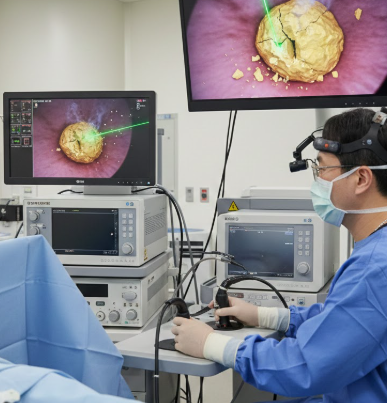
Treatment Overview
Laser bladder stone removal is a minimally invasive procedure that uses high-precision Holmium or Thulium lasers to fragment bladder stones into small pieces, which are then removed via the urethra. This technique avoids open surgery, reduces complications, and preserves bladder function. In Korea, leading hospitals provide advanced laser lithotripsy technology combined with expert urologists, ensuring effective, safe, and fast treatment for both local and international patients.
Purpose & Benefits
The main purpose of laser bladder stone removal is to completely remove bladder stones while minimizing trauma to surrounding tissues. Key benefits include:
- Safe and effective stone fragmentation
- Minimally invasive with no large incisions
- Short hospital stay and rapid recovery
- Minimal postoperative pain and bleeding
- Reduced risk of infection and urinary complications
- Suitable for multiple or recurrent bladder stones
Ideal Candidates
Ideal candidates for laser bladder stone removal include:
- Patients with bladder stones causing urinary pain, infection, or obstruction
- Individuals who prefer minimally invasive procedures
- Patients with recurrent or multiple bladder stones
- Those seeking faster recovery and reduced hospital stay
- International patients seeking advanced urological care in Korea
Possible Risks & Complications
While generally safe, potential risks include:
- Bleeding or hematuria (blood in urine)
- Urinary tract infection
- Temporary difficulty urinating
- Rare injury to the bladder or urethra
- Retained stone fragments that may require follow-up procedures
Korean hospitals minimize these risks with precise laser technology, imaging guidance, and experienced urologists.
Techniques & Technology Used
Korea utilizes advanced technology for laser bladder stone removal:
- Holmium and Thulium Laser Lithotripsy: High-precision lasers fragment stones efficiently
- Cystoscopic Guidance: Ensures accurate targeting and safe removal
- Endoscopic Tools: Minimally invasive instruments to extract stone fragments
- Ultrasound or X-Ray Imaging: Used preoperatively for accurate stone localization
- Advanced Minimally Invasive Protocols: Reduce pain, hospital stay, and recovery time
Treatment Process in Korea
The typical process for international patients includes:
- Initial Consultation: Evaluation of symptoms, imaging, and medical history
- Preoperative Testing: Blood work, urinalysis, and imaging studies
- Laser Procedure: Performed under general or spinal anesthesia using endoscopic laser techniques
- Hospital Stay: Usually 1–2 days depending on stone size and complexity
- Follow-Up: Imaging and urinalysis to ensure complete stone removal and monitor recovery
Recovery & After-Care
Recovery after laser bladder stone removal includes:
- Short hospital stay and quick return to normal activities
- Pain management as needed
- Increased fluid intake to prevent recurrence
- Monitoring for urinary tract infection or bleeding
- Routine follow-up visits for imaging and urinalysis
- Guidance for international patients on post-discharge care and preventive measures
Results & Longevity
Patients benefit from:
- Complete removal of bladder stones
- Relief from pain, urinary obstruction, and infection
- Minimal complications and rapid recovery
- Preservation of bladder function
- Long-term urinary health with preventive care and lifestyle management
Why Korea Is a Top Destination
Korea is a leading destination for laser bladder stone removal because:
- Hospitals have highly skilled urologists experienced in laser lithotripsy
- Advanced laser and endoscopic technologies provide precise and safe treatment
- Minimally invasive procedures reduce hospital stay and recovery time
- Comprehensive international patient care, including translation and concierge services
- Competitive and transparent treatment costs compared to Western countries
Cost Range
Approximate costs for laser bladder stone removal in Korea:
- Laser Lithotripsy (Holmium/Thulium): $3,000–$6,000 USD
Costs generally include the procedure, anesthesia, hospital stay, and preoperative tests; additional consultations may incur extra fees.
Popular Clinics in Korea
Top hospitals for laser bladder stone removal include:
- Samsung Medical Center, Seoul: Expertise in laser and endoscopic stone removal
- Asan Medical Center, Seoul: Advanced minimally invasive urology care
- Severance Hospital, Seoul: High-precision laser bladder stone procedures
- Seoul National University Hospital: Comprehensive urological services including laser stone removal
- CHA Bundang Medical Center: State-of-the-art facilities for international medical tourists


