
Treatment Overview
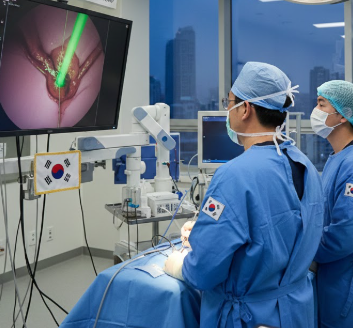
Laser Transurethral Resection of the Prostate (Laser TURP) is a modern minimally invasive procedure used to treat benign prostatic hyperplasia (BPH). This procedure uses high-powered laser energy, commonly holmium or GreenLight lasers, to precisely remove excess prostate tissue that blocks urine flow. Unlike traditional monopolar or bipolar TURP, laser TURP reduces bleeding, shortens catheterization time, and often allows faster recovery.
In Korea, laser TURP is widely performed at leading urology centers equipped with advanced laser systems, high-definition endoscopic cameras, and modern operating theaters. This approach provides safe, effective, and reliable relief of lower urinary tract symptoms (LUTS) caused by prostate enlargement.
Purpose & Benefits
The primary purpose of laser TURP is to relieve urinary obstruction caused by an enlarged prostate and improve quality of life.
Key benefits include:
- Minimally invasive with reduced bleeding risk
- Shorter catheterization time and hospital stay
- Rapid recovery and return to daily activities
- High precision in removing excess prostate tissue
- Lower risk of TUR syndrome compared to monopolar TURP
- Effective for medium to large prostate glands
Laser TURP is especially beneficial for patients seeking a modern, safe, and efficient treatment option in Korea.
Ideal Candidates
Ideal candidates include:
- Men with moderate to severe LUTS due to BPH
- Patients with urinary retention, recurrent urinary tract infections, or bladder stones secondary to BPH
- Individuals not responding adequately to medication
- Patients with higher bleeding risk or on anticoagulant therapy
- Those preferring minimally invasive surgery with faster recovery
Final candidacy is determined after clinical evaluation, imaging, and consultation with a Korean urology specialist.
Possible Risks & Complications
Laser TURP is generally very safe, but potential risks may include:
- Temporary hematuria (blood in urine)
- Urinary tract infection
- Irritative urinary symptoms postoperatively
- Rare urethral stricture formation
- Temporary urinary incontinence
- Rare complications such as bladder perforation
Korean hospitals minimize risks using precise laser energy control, advanced monitoring, and careful surgical techniques.
Techniques & Technology Used
Korean urology centers use cutting-edge technology for laser TURP:
- Holmium or GreenLight laser systems with adjustable power settings
- High-definition endoscopic cameras for precise visualization
- Continuous irrigation to maintain a clear surgical field
- Advanced laser fiber delivery systems
- Postoperative bladder irrigation systems if needed
These technologies ensure accurate tissue removal, minimal bleeding, and efficient surgery.
Treatment Process in Korea
The procedure begins with preoperative assessment including urinalysis, imaging, and lab tests. Laser TURP is performed under spinal or general anesthesia.
A resectoscope is introduced through the urethra to access the prostate. The laser energy vaporizes or resects excess tissue while maintaining precise control. Catheterization is typically required for 12–24 hours postoperatively, after which patients are usually discharged.
International patient services assist with scheduling, translation, and postoperative follow-up.
Recovery & After-Care
Recovery after laser TURP is generally smooth and rapid:
- Mild urinary discomfort or temporary burning may occur
- Catheter is removed usually within 1 day
- Patients should avoid heavy lifting or strenuous activity for a few weeks
- Adequate hydration and medications help prevent infection
- Follow-up appointments and imaging ensure proper healing
Remote follow-up is often available for international patients.
Results & Longevity
Laser TURP provides durable relief of urinary symptoms with high success rates. Many patients experience long-term improvement in urinary flow and quality of life. Preventive measures and regular monitoring help maintain lasting results.
Why Korea Is a Top Destination
Korea is a leading destination for laser TURP due to:
- Highly skilled urologists specializing in minimally invasive BPH surgery
- Advanced laser technology and endoscopic equipment
- High clinical success rates with minimal complications
- Short hospital stays and efficient outpatient pathways
- Comprehensive support for international medical tourists
These factors make Korea ideal for patients seeking safe, efficient, and modern BPH treatment.
Cost Range
The cost of laser TURP in Korea typically ranges from USD 4,000 to USD 8,000. Costs depend on hospital category, surgeon expertise, anesthesia, prostate size, and length of hospital stay.
This pricing provides high-quality, modern surgical care at competitive rates.
Popular Clinics in Korea
Reputable hospitals for laser TURP in Korea include:
- University-affiliated tertiary hospitals
- Specialized urology and BPH centers
- International patient-focused hospitals in Seoul and Gangnam
- Multispecialty hospitals with advanced endourology units
Selection should prioritize surgeon experience, technology availability, and international patient services.


