
Treatment Overview
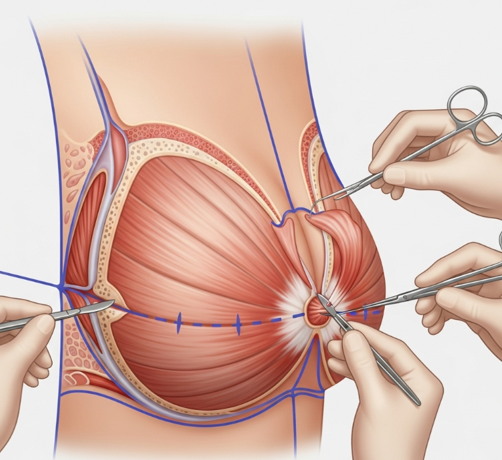
Latissimus Dorsi Flap Breast Reconstruction in Korea is a surgical procedure in which the latissimus dorsi muscle from the upper back, along with skin and fat, is transferred to the chest to reconstruct the breast. Often combined with an implant, this technique is ideal for patients who have insufficient breast tissue or require additional volume after mastectomy.
Korean plastic surgeons are highly regarded for their expertise in flap reconstruction, precise surgical planning, and natural aesthetic results, making Korea a top destination for this procedure.
Purpose & Benefits
The primary goal of latissimus dorsi flap reconstruction is to restore breast volume and contour using the patient’s own tissue, reducing reliance on synthetic implants alone.
Key Benefits:
- Restores natural breast shape and symmetry
- Can provide additional soft tissue coverage over implants
- Avoids implant-only reconstruction complications
- Minimizes risk of implant exposure in thin or post-radiation tissue
- Can improve overall chest contour and aesthetics
- Long-lasting, natural results with minimal foreign body reaction
Ideal Candidates
Latissimus dorsi flap reconstruction is suitable for patients who:
- Have undergone mastectomy or lumpectomy with insufficient breast tissue
- Require implant coverage or additional volume
- Desire natural breast reconstruction with autologous tissue
- Are healthy and able to undergo microsurgery
- Prefer long-lasting aesthetic results with minimal donor site morbidity
Possible Risks & Complications
While generally safe, potential risks include:
- Donor site complications such as scarring or mild back weakness
- Swelling, bruising, or tenderness at donor or breast site
- Minor asymmetry or contour irregularities
- Infection or delayed wound healing
- Temporary changes in shoulder mobility
- Rare complications related to anesthesia
Surgical Techniques Used
Korean surgeons use advanced techniques to optimize outcomes:
- Latissimus Dorsi Flap Harvesting: Muscle, skin, and fat carefully dissected and rotated to the chest
- Combination with Implant: Optional implant placement under the flap for enhanced volume
- Microvascular Techniques: Ensures blood supply for flap survival in complex cases
- Scar Minimization: Strategic incision placement and advanced suturing reduce visible scarring
- Optional Fat Grafting: Improves contour, symmetry, and soft tissue aesthetics
Recovery & Aftercare
- Hospital stay typically 3–5 days for monitoring flap and wound healing
- Light activities resume after 2–3 weeks
- Avoid strenuous exercise, heavy lifting, or back strain for 6–8 weeks
- Compression garments recommended at donor and breast sites
- Regular follow-ups to monitor flap viability, symmetry, and healing
Results & Longevity
- Immediate improvement in breast contour and volume
- Natural-feeling breast with durable, long-lasting results
- Minimal risk of implant exposure when combined with autologous tissue
- Korean surgeons focus on symmetry, natural softness, and minimal scarring
- Can be combined with secondary fat grafting for refinement
Treatment Process in Korea
Korea is renowned for advanced flap reconstruction techniques, microsurgical expertise, and patient-centered care:
- Consultation & Assessment: Evaluate chest wall, donor site, and reconstruction goals
- Customized Surgical Plan: Determine flap size, need for implant, and optional fat grafting
- Surgical Procedure: Harvest latissimus dorsi muscle, rotate to chest, and secure flap; implant added if needed
- Post-Operative Monitoring: Flap perfusion, donor site care, and early complication management
- Rehabilitation & Aftercare: Compression garments, gradual activity resumption, and shoulder mobility exercises
- Medical Tourism Support: English-speaking coordinators, accommodations, and guidance for international patients
- Follow-Up Assessments: Ensure symmetry, flap health, and donor site recovery
Cost Range
The cost of latissimus dorsi flap breast reconstruction in Korea varies based on complexity, surgeon experience, and combination procedures:
- Standard Latissimus Dorsi Flap Reconstruction: ₩15,000,000 – ₩25,000,000 KRW
(Approx. $11,500 – $19,000 USD) - With Implant and/or Fat Grafting: ₩20,000,000 – ₩35,000,000 KRW
(Approx. $15,200 – $26,600 USD)
Additional Costs:
- Pre-operative assessments and imaging: ₩200,000 – ₩500,000 KRW ($150 – $380 USD)
- Hospital stay and medications: ₩2,000,000 – ₩5,000,000 KRW ($1,500 – $3,800 USD)
- Follow-up consultations and secondary procedures: ₩200,000 – ₩800,000 KRW ($150 – $610 USD)
Popular Clinics
Top clinics in Korea for latissimus dorsi flap breast reconstruction include:
- Banobagi Plastic Surgery Clinic – advanced flap reconstruction with aesthetic expertise
- JK Plastic Surgery Center – internationally accredited, skilled in post-mastectomy reconstruction
- ID Hospital Seoul – precision flap techniques and implant integration
- View Plastic Surgery Hospital – emphasizes natural contours and donor site preservation
- Regen Plastic Surgery – combines flap reconstruction with fat grafting for optimal results


