
Treatment Overview
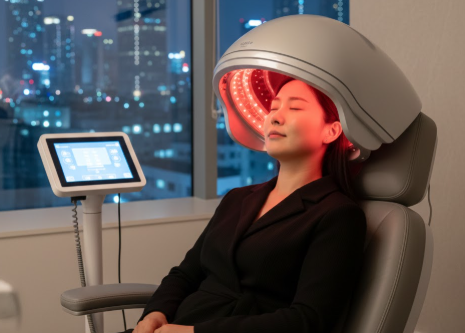
Low-Level Laser Therapy (LLLT) for hair loss is a non-invasive, light-based treatment that uses low-level wavelengths to stimulate weakened hair follicles, increase blood flow, and promote healthy, thicker hair growth. This therapy is widely used across Korean dermatology and hair-restoration clinics because it offers safe, painless, and scientifically supported improvement in hair density. In Korea, LLLT is often delivered through advanced in-clinic laser domes, helmet devices, or high-precision diode applicators optimized for medical-grade results.
Purpose & Benefits
The purpose of LLLT is to rejuvenate hair follicles and slow down progressive thinning by enhancing cellular energy (ATP production) and improving microcirculation. The main benefits include:
- Stimulation of weak or miniaturized hair follicles
- Increased blood flow and nutrient delivery to the scalp
- Thicker, denser hair growth over time
- Reduction in overall shedding
- Non-invasive, painless, and comfortable treatment
- Zero downtime—normal activities can resume immediately
- Works for both men and women
Korean clinics often combine LLLT with PRP, exosomes, mesotherapy, or medical therapies for maximized results.
Ideal Candidates
LLLT is ideal for:
- Men and women with mild to moderate hair thinning
- Early-stage Androgenic Alopecia (Male or Female Pattern Hair Loss)
- Individuals experiencing stress-induced shedding
- Patients undergoing post-transplant recovery (to support graft survival)
- People who want a non-surgical, painless solution
- Those who want long-term hair maintenance
Not recommended for those with complete baldness or severe follicle loss where regrowth potential is minimal.
Possible Risks & Complications
LLLT is one of the safest hair-loss treatments available, but minor issues may include:
- Temporary scalp warmth or tingling
- Mild redness in sensitive individuals
- Limited results if used inconsistently
- Reduced effectiveness in advanced hair loss
Korean clinics ensure safe light dosage and proper protocols, minimizing any risk of irritation or misuse.
Techniques & Technology Used
Korea is known for using cutting-edge laser systems specifically designed for hair restoration. Common technologies include:
- Medical-grade diode lasers (630–680 nm) for follicle stimulation
- Korean LED laser domes used in clinical settings
- Laser helmet devices designed based on Korean research
- Fractional laser stimulation for deeper follicle activation
- Photobiomodulation protocols that optimize cellular energy
Korean devices often outperform generic LLLT products due to superior wavelength stability, evenly distributed laser density, and stronger medical-grade power output.
Treatment Process in Korea
- Scalp Diagnosis
Specialists analyze follicle density, miniaturization, and scalp health using magnified imaging or AI-based diagnostic tools. - Customized Treatment Plan
Depending on hair-loss severity, the clinic recommends an LLLT schedule—typically 2–3 sessions per week in the beginning. - In-Clinic LLLT Session
Patients sit comfortably under a medical-grade laser dome or wear a laser helmet for 15–30 minutes. The session is painless and relaxing. - Optional Combination Therapies
Korean clinics often enhance LLLT results with:- PRP injections
- Exosome therapy
- PDRN (salmon DNA) scalp repair
- Hair-growth boosters (mesotherapy cocktails)
- Prescription medications
- Regular Progress Monitoring
Scalp photos and imaging allow the clinic to track improvements in thickness, density, and reduced shedding.
Recovery & After-Care
There is no downtime with LLLT. Patients can immediately return to daily activities. After-care guidelines typically include:
- Maintaining a consistent LLLT schedule (since results are cumulative)
- Avoiding harsh chemical treatments on the scalp
- Integrating gentle shampoos and scalp tonics
- Following recommended combination therapies for optimal results
LLLT is frequently used as long-term maintenance to preserve hair density.
Results & Longevity
Results depend on consistency and the individual’s underlying causes of hair loss. Typical progress includes:
- Reduced shedding within 4–8 weeks
- Early signs of follicle activation by 8–12 weeks
- Noticeably thicker hair by 3–6 months
- Significant density improvement within 6–12 months
Many Korean clinics recommend 6–12 months of continuous use for best results, followed by maintenance sessions. Results are long-lasting as long as treatment is continued regularly, especially for genetic hair loss.
Why Korea Is a Top Destination
Korea is globally recognized for excellence in hair-restoration technology and dermatology. Reasons medical tourists choose Korea for LLLT include:
- Advanced, research-backed lasers and photobiomodulation systems
- Highly trained dermatologists specializing in hair disorders
- Clinics offering full diagnostic screening, personalized plans & progress tracking
- Combination protocols that maximize regrowth beyond LLLT alone
- Clean, safe, and patient-centered facilities with English-speaking staff
- Cost-effective compared to Western countries, despite higher technology standards
Korean clinics remain at the forefront of hair-loss innovation, making LLLT especially effective when performed in Korea.
Cost Range
The cost of LLLT in Korea varies by clinic, technology used, and treatment duration. Typical pricing:
- Single Session: ₩50,000 – ₩150,000 KRW
- Monthly Packages: ₩200,000 – ₩500,000 KRW
- 3–6 Month Programs: ₩600,000 – ₩1,800,000 KRW
(Approx. $150 – $1,300 USD)
Some premium clinics offering combined regenerative treatments may charge more for enhanced protocols.
Popular Clinics in Korea
Korea has many reputable dermatology and scalp-care centers offering LLLT. Popular options include:
- Mojelim Hair Clinic – comprehensive hair-restoration solutions, PRP + LLLT programs
- Hanmo Dermatology Clinic – specializes in laser-based regrowth therapy
- Oracle Dermatology Network – widely trusted chain offering medical-grade LLLT
- Wonjin Dermatology Center – advanced hair regrowth treatments & diagnostics
- DR. Hair Clinic (Gangnam) – LLLT, mesotherapy, and exosome protocols combined
These clinics are known for high-quality equipment, skilled specialists, and excellent care for international patients.


