
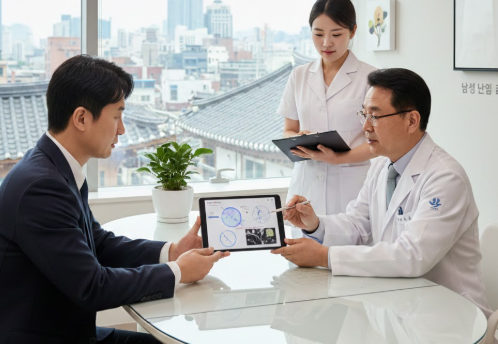
Treatment Overview
Male infertility consultation in Korea focuses on identifying the exact cause of infertility through advanced diagnostics, personalized hormonal analysis, and cutting-edge reproductive technologies. With rising global interest in fertility treatments, Korea has become a trusted destination for men seeking accurate evaluation and high-success-rate solutions. Korean urologists and reproductive specialists collaborate to provide comprehensive testing such as semen analysis, hormone profiling, genetic assessment, scrotal ultrasound, and advanced sperm function tests.
Korean fertility centers offer world-class laboratories, state-of-the-art equipment, and fast results. This allows international patients to complete evaluations within a short visit and receive a clear treatment plan that may include lifestyle guidance, medication, surgical correction, or assisted reproductive technologies (ART) like IVF or ICSI.
Purpose & Benefits
The purpose of male infertility consultation is to diagnose the root cause of infertility and provide the most effective treatment pathway. Korea’s advanced healthcare system allows patients to access specialists who use precision-driven, evidence-based methods.
Major benefits include:
- Comprehensive and accurate diagnosis
- Same-day semen analysis results
- Hormonal and genetic evaluations for deeper insights
- Customized treatment plans based on individual needs
- Early detection of underlying issues such as varicocele, hormonal imbalance, or sperm abnormalities
- Collaboration between top urologists and fertility specialists
- Access to world-leading fertility labs for advanced procedures
This approach significantly improves chances of natural conception or successful assisted reproductive treatment.
Ideal Candidates
A male infertility consultation in Korea is ideal for:
- Men who have been trying to conceive for 6–12 months without success
- Couples undergoing fertility evaluation
- Individuals with a history of low sperm count or poor sperm motility
- Men experiencing erectile dysfunction or ejaculation issues
- Men with previous infections, undescended testicles, or infertility-related surgeries
- Individuals exposed to lifestyle risks such as smoking, obesity, stress, or heat exposure
- Medical tourists seeking accurate diagnosis with modern technology
Men with chronic medical conditions such as diabetes, thyroid disorders, or hormonal issues can also benefit from specialized evaluation.
Possible Risks & Complications
While consultations and tests themselves carry minimal risks, untreated male infertility can lead to emotional stress, relationship strain, and long-term reproductive issues. Potential complications or underlying conditions include:
- Varicocele (enlarged veins in the scrotum)
- Hormonal imbalances (low testosterone, high prolactin)
- Genetic abnormalities affecting sperm production
- Obstruction in the reproductive tract
- Chronic infections
- Erectile or ejaculation disorders
- Secondary complications like testicular damage if untreated
Understanding these risks early helps patients take the right steps toward effective treatment.
Techniques & Technology Used
Korea is renowned for its advanced reproductive medicine technology. Clinics use a combination of urological assessment and fertility lab testing to provide complete insights.
Common techniques include:
- Comprehensive semen analysis using advanced computer-assisted sperm analysis (CASA) systems
- Hormone profiling (testosterone, LH, FSH, prolactin)
- Genetic testing for Y-chromosome microdeletion, karyotyping, and CFTR mutation
- Scrotal ultrasound to detect varicocele or blockages
- Sperm DNA fragmentation testing for detailed sperm quality evaluation
- Post-ejaculation urinalysis to identify retrograde ejaculation
- Advanced sperm retrieval techniques (TESA, PESA, micro-TESE)
- Microsurgical varicocele repair
- Collaboration with IVF and ICSI labs using the latest embryo culture systems and micromanipulation tools
Korean fertility centers combine precision diagnostics with high-level lab technology to improve conception outcomes.
Treatment Process in Korea
Korea offers a highly efficient treatment pathway designed for medical tourists who want quick, reliable results:
1. Initial Consultation
A urologist or reproductive specialist reviews medical history, lifestyle factors, and previous fertility attempts. This helps identify initial areas of concern.
2. Semen Analysis
Most clinics provide same-day semen testing using CASA technology, offering detailed results on sperm count, motility, morphology, and vitality.
3. Hormonal & Genetic Testing
Hormone levels are checked to identify endocrine-related infertility. Genetic tests may be recommended for severe abnormalities or repeated IVF failure.
4. Ultrasound & Physical Examination
Scrotal ultrasound helps detect varicocele, obstruction, or structural irregularities.
5. Diagnosis & Treatment Recommendation
Based on findings, specialists may recommend:
- Medication for hormonal imbalance
- Varicocele surgery
- Antibiotics for infections
- Lifestyle modification
- Supplements for sperm health
- Assisted reproductive treatments such as IUI, IVF, or ICSI
- Sperm retrieval procedures for azoospermia
6. Follow-Up
A follow-up consultation evaluates treatment progress and ensures long-term reproductive health.
Korean clinics typically complete the full evaluation within 1–2 days, making the process ideal for international patients.
Recovery & After-Care
Recovery depends on the chosen treatment type:
- Medication-based treatments: minimal to no downtime
- Varicocele repair surgery: 1–2 weeks of light activity, full recovery within 4–6 weeks
- Sperm retrieval procedures: typically mild discomfort for 2–3 days
- Hormonal therapy: regular follow-up blood tests
General after-care recommendations include:
- Maintaining a healthy diet
- Regular exercise
- Avoiding alcohol, smoking, and heat exposure
- Taking prescribed supplements and medications
- Managing stress
- Monitoring weight, sleep, and hormonal balance
Korean clinics also provide remote follow-up support for international patients.
Results & Longevity
Korea has some of the highest fertility success rates in Asia, particularly for treatments involving ICSI, IVF, and varicocele repair. After appropriate treatment:
- Many men achieve improved sperm parameters within 3–6 months
- Couples often see increased natural conception chances
- Surgical treatments like varicocele repair provide long-lasting improvements
- ART treatments performed in Korea offer high embryo quality thanks to advanced labs
Long-term results depend on patient lifestyle, genetics, and adherence to medical recommendations.
Why Korea Is a Top Destination
Korea is considered one of the best destinations for male infertility treatment due to:
- Highly experienced reproductive urologists
- State-of-the-art fertility labs and technologies
- Fast and accurate diagnostic systems
- High success rates with IVF, ICSI, and sperm retrieval
- Comfortable environment for international patients
- Affordable pricing compared to the US, Europe, or Japan
- Strong privacy and patient-centered care
Korea’s medical tourism infrastructure ensures smooth communication and efficient treatment planning.
Cost Range
Male infertility evaluation and treatment in Korea offer excellent value:
- Consultation: USD 30–60
- Semen analysis: USD 40–80
- Hormone tests: USD 50–150
- Genetic testing: USD 150–400
- Scrotal ultrasound: USD 60–120
- Varicocele surgery: USD 1,500–3,500
- TESA/PESA: USD 500–1,200
- Micro-TESE: USD 3,000–6,000
- IVF/ICSI programs: USD 4,000–8,000
Total evaluation typically costs USD 150–400, depending on the tests required.
Popular Clinics in Korea
Several leading fertility and urology centers offer world-class care:
- CHA Fertility Center Seoul Station
- Severance Hospital Reproductive Medicine Center
- Seoul National University Hospital Fertility Clinic
- Samsung Medical Center – Andrology Department
- Asan Medical Center – Fertility Program
- Maria Fertility Hospital
- Hamchoon Women’s Clinic (with male infertility services)
- Hansol Urology Clinic (Gangnam)
These facilities are known for excellent diagnostic accuracy, experienced specialists, and international-friendly services.


