
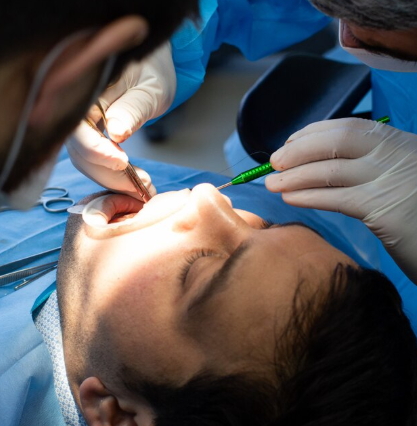
Treatment Overview
Maxillary Bone Grafting in Korea is an advanced regenerative procedure that rebuilds and strengthens the upper jaw (maxilla) to support stable, long-lasting dental implants.
When upper jawbone loss occurs due to missing teeth, periodontal disease, or sinus expansion, maxillary bone grafting restores the necessary volume and density for full-mouth implant placement.
Korean dental specialists are world leaders in digital regenerative implantology, combining AI-guided surgery, 3D CBCT imaging, CAD/CAM modeling, PRF (Platelet-Rich Fibrin) healing, and Piezoelectric microsurgery to achieve safe, precise, and predictable results.
This procedure is critical for patients undergoing full-mouth reconstruction, All-on-X implant systems, or sinus augmentation in the upper jaw.
Korea’s mastery of digital bone regeneration, biologic enhancement, and aesthetic implant placement defines global excellence in modern maxillofacial restoration.
Purpose & Benefits
The Maxillary Bone Graft System enhances the bone structure and strength of the upper jaw, ensuring successful and stable implant integration for life.
Purpose
- Rebuild bone volume and height in the upper jaw (maxilla).
- Restore support for dental implants and facial contours.
- Correct bone loss from sinus pneumatization or resorption.
- Provide stability for full-mouth or full-arch implant restorations.
- Enable long-term implant function and natural smile aesthetics.
Benefits
- AI-Guided Precision: Digital planning ensures perfect graft design and placement.
- Enhanced Bone Volume: Allows secure implant anchorage.
- Biocompatible Materials: Safe, natural bone integration.
- Minimally Invasive Approach: Piezoelectric and PRF-assisted surgery.
- Predictable Outcomes: 3D visualization guarantees surgical accuracy.
- Aesthetic Restoration: Improves facial symmetry and support.
- Long-Term Success: Over 98% graft integration rate in Korean clinics.
Ideal Candidates
Maxillary Bone Grafting is ideal for patients who have insufficient upper jawbone for implant placement or full-mouth restoration.
Ideal Candidates Include
- Individuals with severe bone loss in the upper jaw.
- Patients with sinus expansion reducing implant space.
- Those seeking full-arch or full-mouth implant restoration.
- Individuals requiring ridge augmentation in the posterior maxilla.
- Patients seeking digital, minimally invasive bone regeneration.
Possible Risks & Complications
While maxillary bone grafting is a safe and standardized procedure, minor, temporary side effects may occur:
- Mild swelling or tenderness for 2–3 days.
- Temporary sinus congestion or nasal pressure.
- Minor bleeding at the graft site.
- Rare graft resorption or membrane exposure (minimized with PRF).
Korean clinics minimize risks using AI navigation, Piezoelectric microsurgery, sterile environments, and PRF regenerative membranes to ensure smooth recovery and long-term success.
Surgical Techniques Used
Korea’s Maxillary Bone Grafting Procedures combine digital planning, robotic precision, and biological innovation to restore bone safely and efficiently.
Common Techniques Include
- 3D CBCT Bone Mapping: Evaluates maxillary bone height and sinus anatomy.
- AI Virtual Simulation: Digitally plans graft shape, size, and position.
- Sinus Lift Procedures (Lateral or Crestal): Increases vertical bone height for posterior implants.
- Autogenous Bone Grafts: Uses patient’s bone for high compatibility.
- Allogenic / Xenogenic Grafts: Biocompatible substitutes for regeneration.
- Guided Bone Regeneration (GBR): Uses barrier membranes to protect and guide bone growth.
- PRF Healing Enhancement: Natural growth factors accelerate healing.
- CAD/CAM Surgical Templates: Ensure accurate graft and implant placement.
Recovery & Aftercare
Recovery from Maxillary Bone Grafting in Korea is typically quick and comfortable thanks to Korea’s digital precision and biologically guided healing systems.
Aftercare Guidelines
- Eat soft foods for 3–5 days after surgery.
- Avoid smoking and alcohol during healing.
- Use saline spray and antibacterial mouth rinse daily.
- Brush gently around the surgical area.
- Attend follow-up visits for 3D scan verification.
Most patients return to normal activities within 2–4 days, and full bone healing occurs over 4–6 months before implants are placed.
Results & Longevity
Expected Results
- Restored bone height and width in the upper jaw.
- Strong and stable implant foundation.
- Balanced bite alignment and improved facial structure.
- Natural aesthetic integration for a confident smile.
Longevity
- Bone graft integration: Permanent once healed.
- Implant success rate post-grafting: 98–99%.
- Healing period: 4–6 months before implant placement.
Korea’s biologically enhanced systems ensure lifelong implant stability, functional excellence, and facial harmony.
Treatment Process in Korea
Korea’s Maxillary Bone Grafting Workflow uses AI-assisted planning, digital simulation, and regenerative technologies for precise and comfortable outcomes.
Step-by-Step Process
- Consultation & 3D CBCT Scan: Evaluate sinus and maxillary bone structure.
- AI Planning: Simulate graft volume, implant alignment, and healing pathway.
- Surgical Preparation: Microsurgical incision with Piezoelectric tools.
- Bone Graft Placement: Insert autogenous or synthetic graft beneath the sinus or ridge.
- PRF & Membrane Application: Protects graft and accelerates regeneration.
- Healing Phase (4–6 months): Bone integrates naturally with graft.
- Implant Placement: Digital implants installed with guided navigation.
- Final Restoration: CAD/CAM prosthetics attached for full-mouth function.
Why Korea Is a Top Destination
Korea is the world’s leading hub for digital bone regeneration, implant precision, and biologic healing technology.
- AI & Robotic Implant Systems: Real-time accuracy for bone and implant placement.
- Full Digital Workflow: From 3D diagnostics to prosthetic completion.
- Biocompatible Graft Materials: Straumann®, Geistlich®, Osstem®, Dentium®.
- PRF & Laser Integration: Ensures natural regeneration and minimal discomfort.
- Piezoelectric Microsurgery: Gentle and precise bone handling.
- Affordable Excellence: 40–60% lower cost than Western dental clinics.
Korea’s balance of technology, safety, and artistry makes it the top global destination for maxillary bone grafting and full-mouth reconstruction.
Unique Korean Methods & Technology
- AI-Guided 3D Navigation & Robotic Surgery.
- CAD/CAM Digital Graft Modeling.
- PRF (Platelet-Rich Fibrin) Healing Membrane Integration.
- Piezoelectric Bone Surgery for Minimal Trauma.
- Laser-Assisted Sterilization & Regeneration.
- Real-Time CBCT Verification During Surgery.
These technologies ensure Maxillary Bone Grafting in Korea is safe, efficient, and biologically advanced.
Cost Range
| Type of Maxillary Bone Graft Procedure | Cost (KRW) | Approx. USD |
|---|---|---|
| Localized Maxillary Bone Graft | ₩1,800,000 – ₩2,800,000 | $1,330 – $2,070 |
| Sinus-Integrated Bone Graft | ₩3,500,000 – ₩5,000,000 | $2,590 – $3,700 |
| Full Maxillary Ridge Reconstruction | ₩6,000,000 – ₩8,000,000 | $4,400 – $5,900 |
| Full Digital Maxillary Graft + Implant Package | ₩9,000,000 – ₩12,000,000 | $6,700 – $8,900 |
Packages typically include: consultation, 3D CBCT imaging, AI planning, grafting surgery, PRF membrane, and follow-up CBCT verification.
Popular Clinics
- Seoul National University Dental Hospital: Experts in maxillary regeneration and digital implant systems.
- Yonsei University Dental Hospital: Leaders in 3D-guided sinus and ridge grafting.
- Asan Medical Center Dental Clinic: Specialists in PRF-assisted biologic bone reconstruction.
- Samsung Medical Dental Center: Innovators in CAD/CAM digital implant design and bone augmentation.
- JK Dental Implant Center (Gangnam): Premium aesthetic implant center with advanced maxillary grafting technology.


