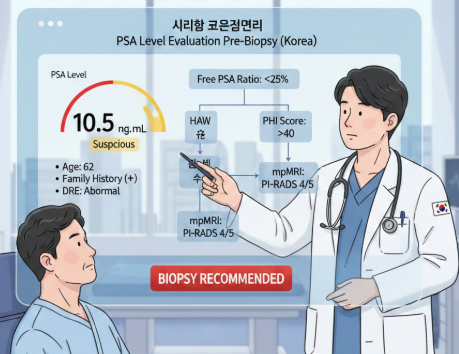
PSA Level Evaluation Pre-Biopsy in Korea
Treatment Overview PSA level evaluation pre-biopsy is an essential diagnostic step performed before a prostate biopsy to assess the risk of prostate cancer. By measuring

Treatment Overview PSA level evaluation pre-biopsy is an essential diagnostic step performed before a prostate biopsy to assess the risk of prostate cancer. By measuring

Treatment Overview PSA recurrence surveillance is a critical follow-up process for men who have undergone prostate cancer treatment, such as surgery or radiation therapy. It

Treatment Overview PSA trend analysis is a specialized diagnostic approach that monitors the pattern and changes in prostate-specific antigen (PSA) levels over time. Rather than

Treatment Overview A routine PSA checkup is a preventive health measure to monitor prostate-specific antigen (PSA) levels in men, helping detect early signs of prostate

Treatment Overview PSA testing combined with a Digital Rectal Exam (DRE) is a comprehensive approach for prostate cancer screening and early detection. While PSA measures

Treatment Overview PSA screening for high-risk men is a proactive diagnostic approach to detect early-stage prostate cancer in men with increased risk factors. High-risk individuals

Treatment Overview Post-prostatectomy PSA monitoring is a specialized follow-up procedure for patients who have undergone surgical removal of the prostate (prostatectomy). This monitoring measures PSA

Treatment Overview PSA velocity assessment is a diagnostic approach that measures the rate of change in prostate-specific antigen (PSA) levels over time. This method helps
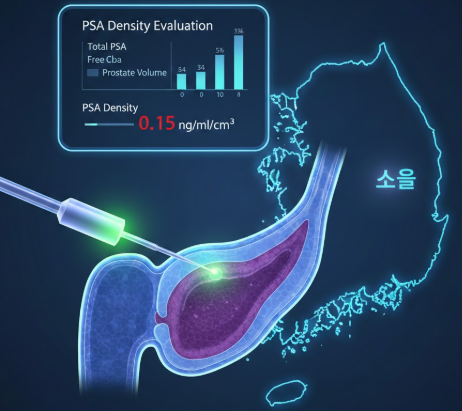
Treatment Overview PSA density evaluation is an advanced diagnostic method that measures the ratio of total PSA levels to prostate volume. This assessment helps distinguish
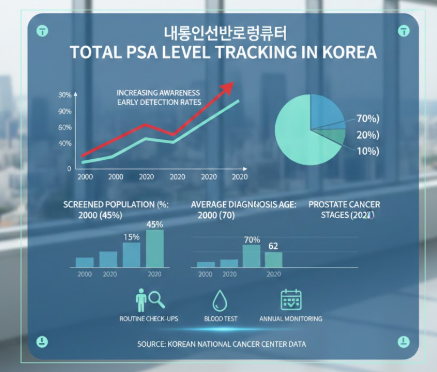
Treatment Overview Total PSA level tracking is a diagnostic approach used to monitor the amount of prostate-specific antigen (PSA) in the blood over time. It

Treatment Overview Free PSA monitoring is an advanced diagnostic tool used to differentiate between benign prostatic conditions and prostate cancer. Free PSA measures the unbound

Treatment Overview A PSA (Prostate-Specific Antigen) Blood Test is a key diagnostic tool for assessing prostate health. It measures the level of PSA in the

Treatment Overview Cancer risk stratification in Korea is a comprehensive evaluation to categorize patients based on their likelihood of developing or progressing with prostate cancer.

Treatment Overview Prostate volume measurement is a diagnostic procedure that evaluates the size of the prostate gland, which is important for assessing conditions such as

Treatment Overview Hormone level assessment for screening in Korea evaluates key male hormones, primarily testosterone, dihydrotestosterone (DHT), luteinizing hormone (LH), and follicle-stimulating hormone (FSH), to

Treatment Overview Screening for urinary symptoms in Korea involves a comprehensive evaluation of men experiencing lower urinary tract symptoms (LUTS), such as frequent urination, weak

Treatment Overview Active Surveillance Evaluation is a comprehensive monitoring program for men diagnosed with low-risk or early-stage prostate cancer. Instead of immediate treatment, patients are
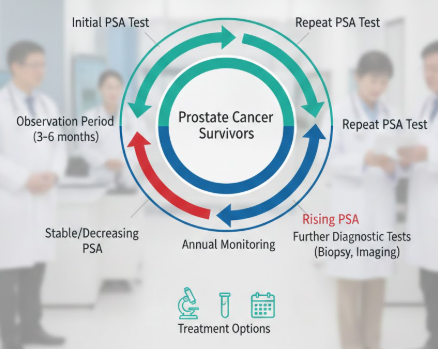
Treatment Overview Repeat PSA Monitoring is a follow-up blood test strategy used to track prostate-specific antigen (PSA) levels over time. This method helps assess prostate

Treatment Overview High-Risk Patient Screening for prostate cancer in Korea is a comprehensive diagnostic approach for men with elevated risk factors, such as family history,

Treatment Overview Targeted Biopsy Planning is a precision approach to diagnosing prostate cancer. It involves using advanced imaging techniques, such as multiparametric MRI (mpMRI) or

Treatment Overview Early Detection Screening for prostate cancer in Korea involves a combination of tests and examinations aimed at identifying prostate abnormalities at the earliest
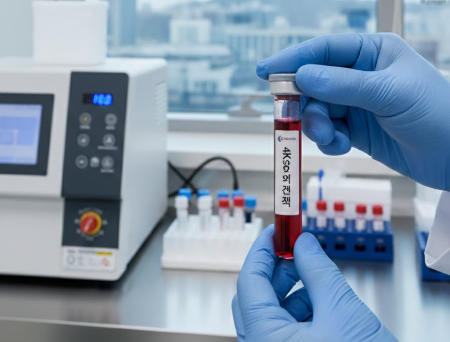
Treatment Overview The 4Kscore Test is an advanced blood test that evaluates a man’s risk of aggressive prostate cancer. It measures four prostate-specific kallikrein protein

Treatment Overview The Prostate Health Index (PHI) Test is an advanced blood test that combines total PSA, free PSA, and [-2]proPSA levels to assess a

Treatment Overview Genetic Risk Assessment for prostate cancer involves analyzing specific genes and family history to evaluate an individual’s predisposition to developing prostate cancer. This

Treatment Overview MRI/Ultrasound Fusion Screening is an advanced prostate diagnostic procedure that combines multiparametric MRI (mpMRI) imaging with real-time ultrasound guidance. This technique allows urologists

Treatment Overview Multiparametric MRI (mpMRI) is an advanced imaging technique used to evaluate the prostate gland in detail. It combines multiple imaging sequences, such as

Treatment Overview A Digital Rectal Exam (DRE) is a quick, simple, and minimally invasive procedure used to assess the size, shape, and texture of the
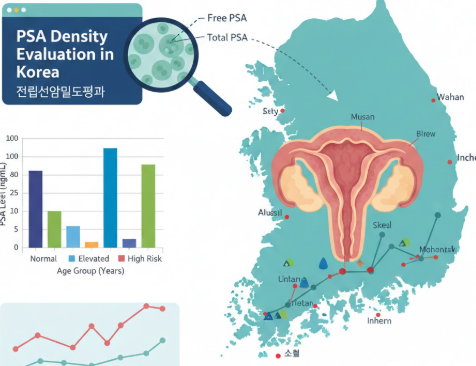
Treatment Overview PSA Density (PSAD) Evaluation is a diagnostic approach that measures the level of prostate-specific antigen (PSA) relative to the size of the prostate