
Treatment Overview
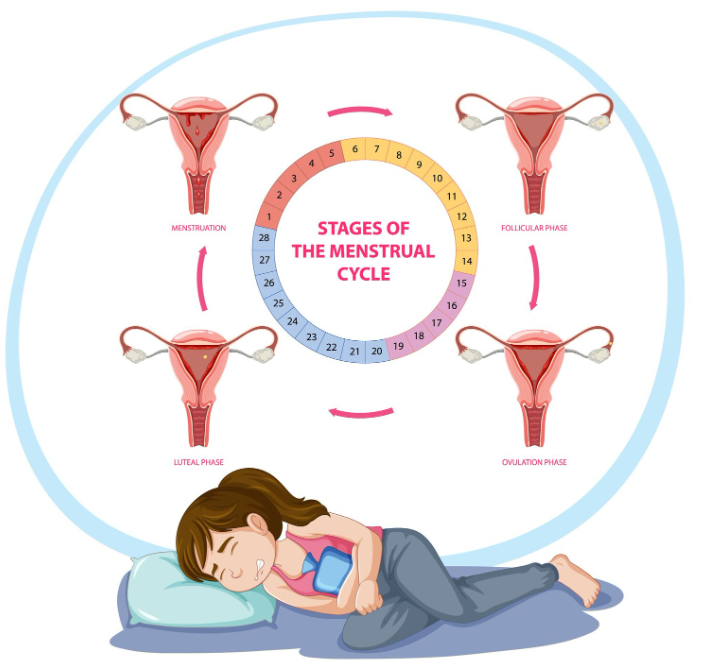
Menstrual Cycle Hormone Mapping is a detailed diagnostic protocol that tracks hormonal fluctuations over the course of one—or sometimes multiple—menstrual cycles. Rather than relying on a few static hormone measurements, mapping captures the dynamics of FSH, LH, estradiol, progesterone, and sometimes additional markers (AMH, prolactin, thyroid, adrenal hormones) at defined phases (early follicular, mid-cycle, luteal). In fertility settings, this detailed mapping helps identify subtle ovulatory defects, luteal phase deficiencies, hormonal imbalances, and timing mismatches that might undermine conception or IVF success.
In Korea, fertility and reproductive medicine centers often integrate hormone mapping with serial ultrasounds, AI or algorithmic cycle tracking systems, and high-precision laboratory assays. This integrated approach provides a more nuanced “hormonal fingerprint” of each patient’s cycle and enables personalized fertility planning and customized intervention.
Purpose & Benefits
The objectives and advantages of menstrual cycle hormone mapping include:
- Understanding the true temporal profile of reproductive hormones in an individual (not just snapshot values)
- Detecting ovulation timing (LH surge, estradiol rise) and confirming luteal progesterone rise
- Identifying luteal phase defects (low or short progesterone window) that might impair implantation
- Revealing subtle endocrine irregularities (e.g. prematurely rising progesterone, delayed E2 peak, suppressed LH surge)
- Informing and optimizing fertility interventions such as IUI, timed intercourse, or IVF cycle scheduling
- Tailoring stimulation protocols, trigger timing, and luteal support based on each patient’s unique hormonal behavior
- Reducing treatment “shock” by understanding baseline hormone dynamics and avoiding protocol mismatch
- Offering deeper insight especially in patients with unexplained infertility, irregular cycles, or prior IVF failures
By combining hormonal data with imaging and algorithmic analytics, Korean fertility centers aim to reduce guesswork and optimize each phase of fertility treatment.
Ideal Candidates
Hormone mapping is particularly valuable for:
- Women with irregular menstrual cycles, unpredictable periods, or suspected anovulation
- Patients who have had failed fertility treatment cycles or implantation failures despite “normal” standard hormone tests
- Individuals with symptoms suggestive of luteal deficiency (short cycles, spotting, premenstrual symptoms)
- Women preparing for IVF or IUI who want precise timing guidance
- Patients with endocrine disorders (PCOS, thyroid dysfunction, adrenal imbalance) where hormone dynamics may be abnormal
- Women with borderline or low ovarian reserve, where small deviations matter
- Couples seeking maximal personalization of fertility strategy rather than standard protocols
If a woman’s cycles are very regular and previous hormone tests have been stable, mapping may offer marginal additional benefit—but often still yields useful refinements.
Possible Risks & Challenges
Because hormone mapping is primarily diagnostic (blood draws, ultrasound), the risks are minimal. But challenges and considerations include:
- Frequent venipuncture: multiple blood draws can cause discomfort, bruising, or minor irritation
- Emotional stress: patients may feel pressure or anxiety seeing day-to-day hormonal fluctuations
- Increased cost: more lab tests and imaging sessions lead to a higher diagnostic expense
- Overinterpretation risk: reacting to minor hormone variances that may lie within natural biological noise
- Logistic and scheduling burden: patients must visit clinics repeatedly at specific cycle days
- Lab variability concerns: controlling assay consistency, timing, and calibration is critical
Leading Korean fertility centers typically mitigate these risks by using high-quality labs, synchronized sampling protocols, algorithmic “guardrails” to avoid overreactive adjustments, and clear patient counseling.
Techniques & Diagnostic Methods Employed
Menstrual cycle hormone mapping in Korea often involves a blend of laboratory, imaging, and data integration techniques, including:
- Baseline/early-follicular testing (Cycle Day ~2–5): FSH, LH, estradiol, AMH, thyroid/adrenal markers
- Mid-cycle / ovulation window testing: LH surge detection (blood or possibly urinary), estradiol peak measurement
- Luteal phase testing (around Day 21–24 or cycle-specific timing): Progesterone level to confirm corpus luteum function
- Supplemental markers: prolactin, TSH, free T4, cortisol/adrenal panels, insulin, androgens in selected cases
- Serial ultrasound follicle tracking: correlation of follicle size and number with hormone curve
- Endometrial monitoring: thickness, pattern, or Doppler flow to link hormone milieu with uterine receptivity
- Cycle-tracking tools / apps / AI systems: integrating hormonal data, symptom logs, imaging results to model optimal timing and detect patterns
- High-precision assays: immunoassays or advanced analytic techniques to reduce measurement error
- Data analytics & modeling: applying trend analysis, smoothing, and predictive modeling to hormone curves to guide interventions
Some Korean fertility centers may offer “cycle mapping packages” combining hormone panels + imaging + algorithmic report generation for patients (e.g. Koreabeauty Guide lists “Menstrual Cycle Hormone Mapping in Korea” as a service) Koreabeauty Guide.
Recovery & Aftercare
Because mapping involves diagnostic steps only:
- No physical recovery is required
- Minor discomfort or bruising at blood draw sites is possible
- Patients are typically advised to maintain consistent sampling schedules, hydration, and symptom journaling
- After mapping, clinicians review the compiled hormone curves and imaging data, counsel patients on findings, and propose a tailored fertility plan (e.g. timing, protocol, support)
- Depending on mapping findings, patients may be asked to monitor subsequent cycles, implement hormone therapy, or proceed to assisted reproduction with greater precision
Results & Interpretation
- The outcome is a multi-point hormone curve that shows how FSH, LH, estradiol, and progesterone rise and fall across the individual’s cycle
- Interpretation includes detecting whether ovulation occurred (LH + progesterone rise), evaluating the adequacy of the luteal phase, and identifying abnormalities (e.g. blunted estradiol rise, early progesterone elevation)
- Mapping may reveal subtle endocrine patterns (e.g. subclinical LH suppression, delayed follicular growth, marginal luteal insufficiency) that single tests would miss
- Based on patterns, clinicians can adjust stimulation protocols, luteal support design, and trigger timing in subsequent treatments
- Over multiple cycles, mapping can help create a personalized hormonal “signature” for the patient, increasing predictive precision
Mapping is not “permanent”—changes (age, ovarian reserve, metabolic state) mean that repeating mapping or partial re-mapping in future cycles may be beneficial.
Process in Korea & Why Korea Is a Strong Choice
Below is a typical workflow in Korean fertility / OBGYN centers for carrying out menstrual hormone mapping, and strengths that make Korea an attractive destination for such advanced diagnostics.
Typical Workflow in Korea
- Initial Consultation: Patient history, cycle tracking, symptom review, reproductive goals
- Baseline Testing (Cycle Day 2–5): Hormone panel + ultrasound imaging
- Mid-cycle Monitoring: Blood draws timed around predicted ovulation (LH, estradiol) + ultrasound during the fertile window
- Luteal Phase Testing: Progesterone (and sometimes estradiol) at appropriate luteal day(s), with optional imaging
- Data Aggregation & Modeling: Combine hormone results, imaging, symptom logs into a cycle map
- Interpretation & Strategy Session: Clinician (often reproductive endocrinologist) reviews map with patient, proposes interventions or protocol optimizations
- Follow-up/Cycle Implementation: Use insights to guide subsequent cycles (e.g. IVF stimulation, IUI timing, luteal support)
Advantages & Features in Korea
- Many fertility clinics in Korea operate state-of-the-art laboratories, with rapid turnaround for hormone assays
- High integration of imaging, laboratory, and clinical systems allows real-time correlation of hormone and follicle data
- Some clinics offer AI-based cycle prediction or decision support tools, enhancing interpretation of hormone data
- International patient support is well-developed in top Korean fertility centers, facilitating mapping for foreign patients
- Clinical experience across large patient volumes improves pattern recognition and protocol refinement
- Relatively favorable cost structure vs many Western fertility centers, making more frequent diagnostics viable
- Korean centers are often listed in fertility directories and medical tourism guides (e.g. Koreabeauty Guide lists hormone mapping services)
- Clinics like Hamchoon Women’s Clinic are known for infertility/genetic & diagnostic services in Korea.
Because success in assisted reproduction is sensitive to timing and hormone-phase alignment, the ability to finely map a patient’s cycle offers a competitive advantage—and Korean reproductive medicine infrastructure supports that precision.
Cost Range (Details)
According to Korean fertility / health guide listings:
- A basic hormone mapping package (e.g. FSH, LH, estradiol, progesterone, plus a few timepoints) might cost around USD 150 – USD 250 in equivalent KRW
- A more comprehensive multi-phase mapping package (with additional hormones, imaging, multiple samples) may run USD 300 – USD 500
- If combined into a full fertility evaluation package (mapping + ultrasound + consultation), the bundle might cost USD 500 – USD 800, depending on clinic and inclusions
- International patients often receive packaged pricing, which can reduce incremental mapping cost within the full fertility path
Prices vary by clinic reputation, number of test points, inclusion of imaging, and algorithmic support in interpreting the map.
Popular Clinics & Providers
Here are some Korean clinics known for fertility, diagnostic, and hormone / infertility services, which may offer hormone mapping or integrated fertility diagnostics:
- Hamchoon Women’s Clinic (Seoul) — known for infertility, genetic testing, and diagnostic services.
- CHA Fertility Centers (Seoul and other branches) — major fertility network with diagnostic & IVF services; featured in fertility clinic guides for international patients.
- Maria Fertility Hospital — a multi-branch fertility network cited in Korean fertility clinic directories.
- MizMedi Women’s Hospital — women’s specialty hospital offering fertility / hormone services; often listed in fertility clinic directories.
- Clinics appearing in “Best Fertility Clinics in Korea” guides are good candidates to check for hormone mapping offerings.


