
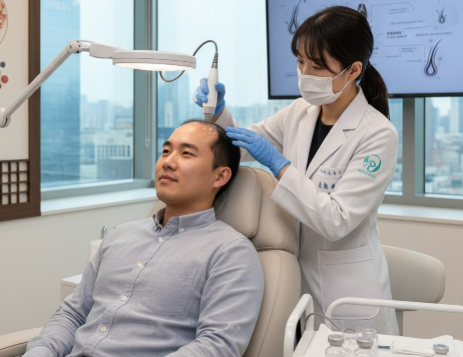
Treatment Overview
Mesotherapy for Early Androgenic Alopecia in Korea is a non-surgical, targeted treatment designed to slow down hair loss, strengthen hair follicles, and stimulate new growth in the early stages of male or female pattern baldness. Androgenic alopecia, also known as genetic hair loss, occurs due to sensitivity to DHT (dihydrotestosterone), which causes follicle miniaturization and thinning hair.
Korean clinics administer DHT-blocking mesotherapy cocktails, often combined with vitamins, peptides, amino acids, or growth factors, directly into the scalp using fine micro-needles or meso-gun devices. This approach nourishes follicles, reduces DHT-related damage, and creates an optimal environment for hair regeneration.
Purpose & Benefits
The main purpose is to prevent further hair loss, strengthen weakened follicles, and promote early regrowth.
Key Benefits:
- Reduces hair shedding caused by DHT sensitivity
- Strengthens fragile hair and prevents miniaturization
- Stimulates dormant or weakened follicles
- Improves scalp circulation and nutrient delivery
- Enhances keratin production for stronger hair shafts
- Safe, non-hormonal, and minimally invasive
- Can be combined with PRP, HA, or peptides for enhanced results
- Helps maintain existing hair density and prevent progression
Ideal Candidates
This treatment is ideal for:
- Individuals showing early signs of androgenic alopecia
- Men and women with thinning at the crown, frontal hairline, or temples
- Patients seeking non-surgical, regenerative hair therapy
- People wanting to strengthen existing hair and slow hair loss
It may not be suitable for advanced baldness where follicles are inactive.
Possible Risks & Complications
Mesotherapy for early androgenic alopecia is generally safe when performed in certified Korean clinics. Mild, temporary effects may include:
- Redness or swelling at injection sites
- Slight tenderness or itching
- Small bumps that disappear within hours
- Rare allergic reactions depending on solution used
- Very low risk of infection due to strict sterilization protocols
No serious long-term effects are typically observed.
Techniques & Technology Used
Korean clinics use advanced devices and techniques for precision and efficacy:
- Meso-gun devices for controlled and even injections
- Nano-needle or microneedling techniques to enhance absorption
- Customized DHT-blocking cocktails combined with vitamins, amino acids, peptides, or growth factors
- Digital scalp mapping to target areas of thinning accurately
- LED therapy post-treatment to stimulate follicles and reduce inflammation
- Optional topical anesthetic or cryotherapy for patient comfort
Treatment Process in Korea
1. Scalp Diagnosis
Dermatologists evaluate hair density, scalp condition, and miniaturization patterns using high-resolution imaging.
2. Scalp Cleansing
The scalp is cleansed to remove oils, debris, and dead skin cells, optimizing absorption.
3. Optional Numbing
Topical anesthetic or cold air devices are applied to reduce discomfort.
4. Mesotherapy Injection
DHT-blocking solution with supporting nutrients is injected into thinning areas using micro-needles or meso-gun devices.
5. Post-Treatment Care
Cooling masks or LED therapy are applied to minimize redness and inflammation.
6. Session Duration
Sessions typically last 20–30 minutes. Most patients undergo 4–8 sessions spaced 2–4 weeks apart, followed by maintenance every 2–3 months.
Recovery & After-Care
Recovery is minimal, and patients can resume daily activities immediately.
Aftercare Tips:
- Avoid washing hair for 12–24 hours
- Refrain from heavy exercise, sauna, or swimming for 24 hours
- Do not scratch or rub the scalp
- Use gentle, sulfate-free shampoos
- Apply any clinic-recommended topical serums
Mild redness or tenderness usually resolves within a few hours.
Results & Longevity
Timeline:
- 2–3 weeks: Reduced hair shedding and improved scalp health
- 4–6 weeks: Strengthened hair shafts and early regrowth
- 2–3 months: Noticeable improvement in density and thickness
- 4–6 months: Optimal results with slowed progression of androgenic alopecia
Longevity:
Results typically last 6–12 months, depending on scalp health and genetics. Maintenance sessions every 2–3 months help preserve hair density.
Why Korea Is a Top Destination
Korea is recognized worldwide for advanced hair restoration therapies:
- High-quality DHT-blocking mesotherapy solutions
- Skilled dermatologists specializing in hair regeneration
- Precision meso-gun and microneedling technology
- Personalized treatment protocols based on scalp analysis
- Combination therapies with PRP, HA, or peptides for enhanced outcomes
- Affordable and transparent treatment packages for international patients
- English-speaking coordinators and international patient support
Korean clinics focus on safe, natural, and effective early intervention for androgenic alopecia.
Cost Range
- Per session: 150,000 – 400,000 KRW
- Package (4–8 sessions): 500,000 – 1,200,000 KRW
Costs may vary depending on the cocktail combination and clinic reputation.
Popular Clinics in Korea
- Wonjin Dermatology – Gangnam
- Motion Clinic – Hair regeneration specialists
- Moaman Hair Clinic – Focused on DHT-blocking mesotherapy
- Oracle Dermatology – International-friendly clinics nationwide
- ID Dermatology – Advanced regenerative hair therapies
- BioHair Korea Clinic – Combines mesotherapy with peptides, HA, and PRP


