
Treatment Overview
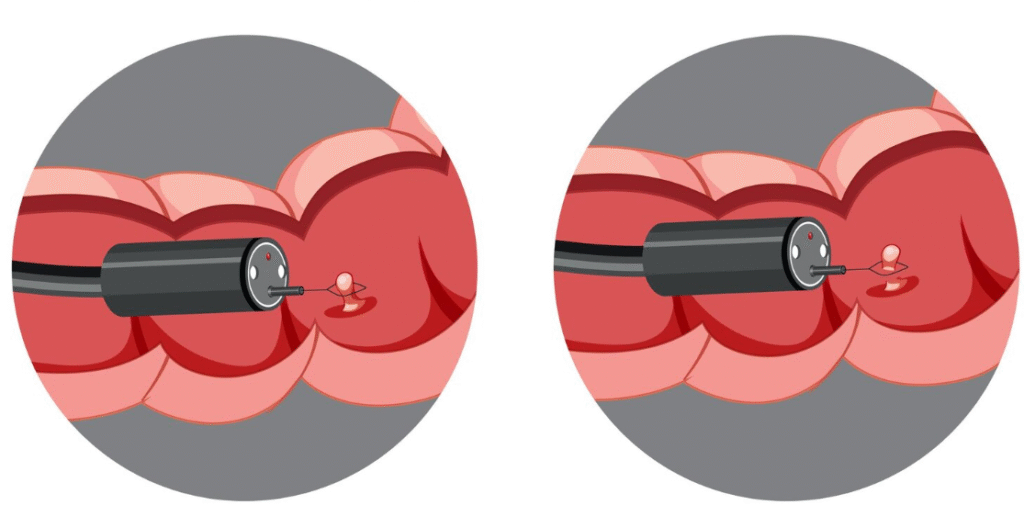
Micro-Hysteroscopy Polypectomy is one of the most advanced and minimally invasive techniques for removing uterine (endometrial) polyps. This innovative approach uses a micro-hysteroscope — an ultra-thin endoscopic device (usually 2–3 mm in diameter) — allowing surgeons to view and remove uterine polyps through the natural vaginal and cervical passage without the need for dilation or anesthesia in most cases.
In Korea, Micro-Hysteroscopy Polypectomy is performed within the Women’s Health / OBGYN – Surgical Gynecology specialty. Korean hospitals and fertility centers are pioneers in this technology, combining miniaturized optics, high-definition imaging, and precision micro-instruments to deliver pain-free, scar-free, fertility-preserving outcomes.
Purpose & Benefits
- Removes endometrial or cervical polyps that cause irregular bleeding, discharge, or fertility issues.
- No cervical dilation needed — minimal discomfort and reduced tissue trauma.
- Enables real-time diagnosis and treatment in a single session.
- Preserves fertility and protects healthy endometrial tissue.
- Often performed under local anesthesia or mild sedation — quick and comfortable.
- Same-day procedure with fast recovery and minimal downtime.
- Suitable for patients unable to undergo standard hysteroscopy due to cervical sensitivity or scarring.
Ideal Candidates
- Women diagnosed with small to medium uterine polyps on ultrasound or sonohysterography.
- Patients with irregular uterine bleeding, spotting, or fertility challenges.
- Women seeking pain-free, fertility-safe, and minimally invasive treatment options.
- Postmenopausal patients requiring gentle diagnostic and therapeutic procedures.
- Women with prior cervical surgeries or stenosis where standard hysteroscopy may be difficult.
Possible Risks & Complications
Micro-Hysteroscopy Polypectomy is very safe, but minimal risks may include:
- Mild spotting or cramping for 1–2 days.
- Transient uterine discomfort during or after the procedure.
- Rare infection (prevented through sterile technique and antibiotics if needed).
- Very rare uterine perforation (significantly lower risk than standard hysteroscopy).
- Minimal risk of recurrence if hormonal imbalance persists.
Surgical Techniques Used
Korean gynecologic surgeons use some of the most advanced micro-endoscopic instruments and visualization systems in the world. Techniques include:
- Micro-Hysteroscopic Polypectomy: Using 2–3 mm micro-scopes for direct visualization and excision.
- Cold-Loop or Micro-Scissor Removal: Non-thermal mechanical cutting for fertility preservation.
- Micro-Electrosurgical Devices: Deliver pinpoint energy to remove polyps with minimal bleeding.
- Micro-Grasper and Micro-Forceps Systems: For precision removal of tiny or sessile polyps.
- Saline Distension & HD Optics: Expand and illuminate the uterine cavity for crystal-clear visualization.
These techniques result in virtually no scarring, minimal pain, and superior accuracy compared to traditional hysteroscopic procedures.
Recovery & Aftercare
- Procedure time: 10–30 minutes, typically performed in an outpatient setting.
- Most patients return home within an hour of completion.
- Mild cramping or spotting may last 1–2 days.
- Avoid tampons, intercourse, and heavy exercise for about one week.
- Resume normal activities within 24 hours.
- Follow-up appointment within 7–10 days for pathology review and post-procedure assessment.
Results & Longevity
- Immediate improvement in uterine bleeding and menstrual irregularities.
- Fertility enhancement due to restored uterine cavity and improved endometrial environment.
- Long-term results with very low recurrence rates when hormonal balance is maintained.
- No visible scarring and faster healing compared to conventional hysteroscopy.
- Highly favorable patient satisfaction and minimal postoperative discomfort.
Treatment Process in Korea
South Korea is globally recognized for its leadership in micro-endoscopic gynecology, offering high-precision treatments with minimal patient discomfort.
Most advanced and popular surgical techniques performed in Korea:
- Micro-Hysteroscopic Polypectomy with high-definition imaging and saline distension.
- AI-assisted hysteroscopic diagnostics for detecting micro-polyps.
- 3D and 4K endoscopic visualization to enhance surgical precision.
- Hybrid Micro-Laser Systems (CO₂ or Diode) integrated with micro-hysteroscopic tools.
- Office-based micro-hysteroscopy enabling same-day diagnosis and treatment.
Unique Korean methods or technology:
- Pain-free sedation protocols for sensitive or anxious patients.
- Fertility-preserving micro-techniques for women planning pregnancy.
- One-day care systems including consultation, imaging, and treatment in a single visit.
- AI-guided imaging and robotic micro-endoscopy emerging in leading Seoul hospitals.
- Multilingual patient support and global medical tourism programs for international women’s health care.
Why Korea is considered a top destination for this surgery:
- Globally accredited hospitals specializing in advanced endoscopic gynecology.
- Internationally trained surgeons with expertise in fertility and minimally invasive surgery.
- High-tech infrastructure and world-leading infection control standards.
- Competitive cost with superior patient experience and clinical outcomes.
- Short hospital stays, fast recovery, and excellent follow-up systems.
Cost Range
The cost of Micro-Hysteroscopy Polypectomy in Korea depends on the clinic, anesthesia, and surgical complexity:
- Typical Range: USD 1,500 – 4,000
- Diagnostic + Polypectomy Package: USD 2,000 – 5,000
- Comprehensive Package (Sedation, Pathology, Follow-Up): USD 3,000 – 6,000
Korean hospitals offer transparent, all-inclusive pricing, covering consultation, procedure, anesthesia, pathology testing, and postoperative care. Medical tourism packages often include airport transfers, translation, and hotel partnerships for international patients.
Popular Clinics with Advanced Micro-Hysteroscopy Polypectomy in Korea
- Seoul Miz Hospital – Specialized in micro-endoscopic uterine surgery and fertility-preserving care.
- MizMedi Hospital (Seoul) – Offers advanced micro-hysteroscopic and reproductive surgery systems.
- Yoonho OB/GYN Hospital (Gangnam) – Known for office-based micro-hysteroscopy with high comfort standards.
- Gangnam Women’s Clinic – Provides minimally invasive and fertility-focused hysteroscopic procedures.
- Asan Medical Center (Seoul) – Premier tertiary hospital offering micro-endoscopic and robotic gynecology.
- Samsung Medical Center (Seoul) – World leader in micro-hysteroscopy and advanced gynecologic imaging.
- Kyung Hee University Hospital at Gangdong – University-level hospital with a dedicated endoscopic surgery department.


