
Treatment Overview
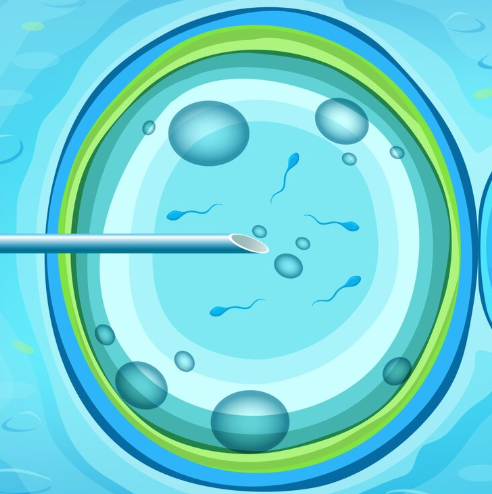
Minimal Injury Embryo Freeze is an advanced embryo cryopreservation technique intended to preserve embryos with the least possible structural or cellular damage during the freezing and thawing process. The concept builds on standard vitrification but applies refinements—gentler cryoprotectant exchange, careful handling, smoother temperature transitions, and enhanced monitoring—in order to reduce thermal stress, osmotic shock, and mechanical strain.
Under this approach, embryos obtained via IVF or ICSI are handled with extra care from the post-fertilization stage through cryoprotectant equilibration, freezing, storage, and warming. The goal is to maintain the embryo’s viability and developmental potential as close to the original state as possible, thereby improving survival after thaw, implantation potential, and subsequent pregnancy outcomes.
In Korea, fertility centers that adopt minimal injury embryo freezing combine high-precision laboratory infrastructure, experienced embryologists, and strict quality control standards. Their reputation is built on meticulous sample tracking, backup cryostorage systems, and integration with broader fertility planning protocols to ensure embryos remain in optimal state until transfer.
Purpose & Benefits
The rationale for a minimal injury freezing method is to optimize embryo integrity by reducing cumulative damage. Some of the key benefits include:
- Higher post-thaw survival rates: Because embryos are handled more delicately and temperature transitions are gentler, more cells remain intact after thawing.
- Improved developmental competence: Embryos that avoid sublethal stress may continue development more robustly, with better division kinetics and cell health.
- Greater implantation potential: Healthier thawed embryos may implant more reliably and sustain early embryonic development.
- Better preservation for marginal embryos: Embryos that are less ideal in morphology or development may benefit more from reduced-stress protocols.
- Long-term resilience: Over years or decades of storage, minimal injury handling might preserve embryo viability more faithfully.
- Enhanced safety when combined with genetic or diagnostic procedures: Especially after biopsy or handling, embryos may be more vulnerable to damage; a gentler freeze helps mitigate that risk.
For patients or clinics where embryo numbers are limited or quality margin is tight, minimal injury methods offer a way to maximize the chances that each embryo remains as viable as possible.
Ideal Candidates
Minimal injury embryo freeze is particularly applicable to:
- Patients with few available embryos, for whom maximizing survival of each one is critical.
- Embryos that show borderline quality or slower developmental trajectories, where added protection may make a difference.
- Cases involving preimplantation genetic testing (PGT) or embryo biopsy, which already introduce some stress.
- Patients planning long-term storage, where preservation integrity over many years is important.
- Those who have experienced previous thawing or survival failures under standard freezing protocols.
- Clinics or patients seeking cutting-edge cryopreservation standards and willing to invest in optimal outcomes.
While not strictly required for all IVF cases, minimal injury protocols are often preferred for high-stakes or delicate cases.
Technical Approaches & Laboratory Protocols
Implementing minimal injury embryo freezing demands precision, advanced lab capability, and rigorous protocols. Here are the core technical elements:
Cryoprotectant Equilibration
- Instead of abrupt exposure, embryos are introduced to cryoprotectant solutions via gradual gradients or microfluidic systems to reduce osmotic shock.
- The concentration steps may be finer, with more intermediate stages, to allow cellular membranes to adapt gradually.
Gentle Manipulation
- Embryos are handled with the absolute minimum of mechanical movement.
- Use of ultra-fine pipettes and minimal transfers, performed under laminar flow and gentle fluid dynamics, helps reduce shear stress.
Controlled Cooling and Warming Rates
- Temperature transitions (cooling to vitrification temperature, warming back) are managed with finely tuned ramp rates to avoid abrupt gradients.
- Thermal control is often more nuanced, with lesser extremes in the rate of change between temperature steps.
Optimized Carriers and Droplet Sizes
- Very small droplet volumes are used so that thermal exchange is more uniform, reducing internal differential stresses.
- Special carrier designs (ultra-thin straws or micro-carriers) may improve heat exchange and reduce ice nucleation risk.
Additive Protectants
- Protection supplements (membrane stabilizers, antioxidants) may be added to the cryoprotectant medium to buffer cells from osmotic or oxidative stress.
- These additives help reduce molecular-level injury during freezing and thawing.
Cryostorage Integrity
- Storage in cryotanks with redundant liquid nitrogen systems, multiple backup layers, real-time temperature monitoring, and automated alarm systems ensures that embryos remain in stable, safe conditions.
- Strict chain-of-custody labeling, digital tracking, and sample identification protocols guard against misplacement or confusion.
Gentle Warming (Thawing)
- Warming protocols mirror the gentle philosophy—staged rehydration and careful dilution of cryoprotectants are performed to avoid osmotic jolt.
- Temperature transitions are stabilized before moving to the next step, to let internal cellular gradients equilibrate.
Post-Thaw Assessment
- Once thawed, embryos are assessed (via microscopy, developmental markers, or time-lapse/AI analysis) before being considered for transfer.
- Only viable embryos (those showing normal morphology and growth indicators) are moved to transfer or further culture.
All these steps must be tightly controlled, with minimal deviation, and require skilled embryology personnel and robust infrastructure.
Challenges, Risks & Considerations
- Higher complexity and cost: The refined protocols, equipment, and monitoring put greater demands (time, financial, personnel) compared to standard vitrification.
- Marginal incremental gains in ideal cases: Embryos with excellent morphology under standard protocols already survive well; the benefit may be less dramatic in those.
- Sensitivity to slight errors: Because the margin for error is small, any deviation in temperature, timing, or handling can undermine the benefit.
- Limited widespread validation: While promising, some clinics may still be gathering long-term outcome data (live births, cumulative success rates) for minimal injury methods.
- Logistics and transport risk: Embryo transport or movement may pose additional stress; packaging and handling must maintain the minimal injury conditions.
- Not universally necessary: For many patients with robust embryos and adequate numbers, standard vitrification may suffice.
Clinics adopting minimal injury protocols often provide counseling to help patients weigh cost vs potential benefit.
Expected Outcomes & Longevity
In well-equipped, highly experienced Korean fertility centers, minimal injury embryo freezing may produce post-thaw survival rates almost on par with the best conventional vitrification methods (often in the high 90s percentage). Due to reduced sublethal damage, embryos may have stronger developmental potential, possibly resulting in better implantation and pregnancy outcomes, especially in sensitive cases.
Given stable cryogenic storage conditions, embryos can remain viable over long durations—often 15 to 20 years or more—without detectable decline in developmental capability.
Recovery & Patient Support
Because embryo cryopreservation is conducted entirely in the lab post-fertilization, the patient undergoes minimal invasive burden beyond standard IVF. After egg retrieval, patients typically rest for 24 hours and follow hormone support regimens.
During the interval until embryo transfer, patients may receive:
- Hormonal monitoring and endometrial preparation
- Nutritional and lifestyle guidance for reproductive health
- Periodic evaluation of uterine lining and reproductive markers
- Psychological support, counseling, and stress management services
Clinics offering minimal injury embryo freezing often integrate broader patient support components (nutrition, stress relief, fertility coaching) to maximize overall readiness and success.
Leading Clinics in Korea for Advanced Embryo Freezing
While the term “minimal injury embryo freeze” is specialized, some of Korea’s top fertility and reproductive medicine centers are highly likely to adopt or support such refined cryopreservation methods. Noteworthy clinics include:
- Hamchoon Women’s Clinic (Seoul) — Famous for its focus on infertility, genetic diagnostics, and personalized reproductive services; its specialized lab environment positions it to implement gentle embryo freezing strategies.
- CHA Fertility Center — As a major fertility network in Korea, CHA is commonly cited among top IVF and embryo freezing providers, and its scale supports advanced lab upgrades.
- MizMedi Women’s Hospital (Seoul) — Known for its concentration on women’s reproductive care and fertility services; often recognized among elite embryo banking centers.
- University-Affiliated ART Centers — Many university hospitals in Seoul and surrounding areas maintain advanced assisted reproduction units with research integration, and are able to push the frontier of embryo freezing protocols.
- Select boutique fertility clinics in Seoul / Gangnam — Specialized fertility clinics with strong reputations for high-end care often invest in the latest embryology technologies and can adopt minimal injury freezing in their service offerings.


