
Treatment Overview
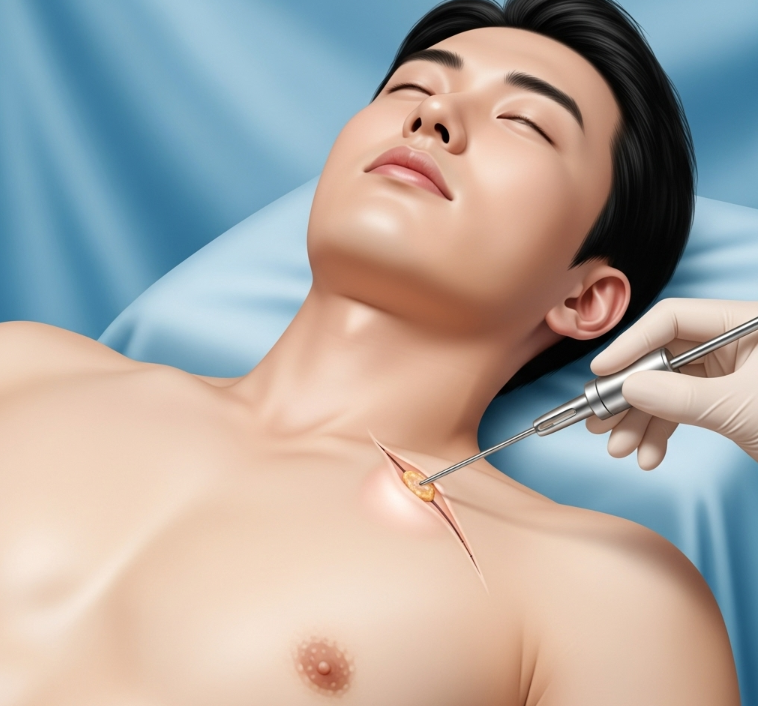
Minimally Invasive Gynecomastia Surgery in Korea is a modern approach to correcting male breast enlargement using techniques that require smaller incisions, less tissue trauma, and faster recovery compared to traditional open surgeries. This method is ideal for men with mild to moderate gynecomastia who want a flatter, masculine chest with minimal scarring.
Korean surgeons are globally recognized for their expertise in scar-minimized cosmetic surgery. They commonly use techniques such as microcannula liposuction, endoscopic-assisted gland removal, and laser-assisted lipolysis. These methods allow precise removal of fat and glandular tissue while preserving chest contour and keeping scars nearly invisible.
Purpose & Benefits
- Small Incisions: Tiny cuts hidden in areola borders or armpit creases.
- Faster Recovery: Less tissue damage means shorter downtime.
- Scar-Minimized: Advanced tools reduce visible scarring.
- Natural Masculine Chest: Smooth contouring with fat + gland removal.
- Reduced Pain & Swelling: Gentle techniques cause less trauma.
- Confidence Boost: Improves self-image in fitted clothing and shirtless situations.
Ideal Candidates
- Men with mild to moderate gynecomastia (Grade I–II).
- Patients with good skin elasticity.
- Adults in good health and stable body weight.
- Non-smokers with realistic expectations.
- Men seeking a discreet procedure with minimal scars.
Possible Risks & Complications
- Temporary swelling, bruising, and chest tenderness.
- Minor numbness or sensitivity changes in nipples.
- Small scars (faint and usually hidden).
- Rare cases of hematoma (blood pooling) or seroma (fluid buildup).
- Slight chest asymmetry (may require touch-up).
Surgical Techniques Used
- Microcannula Liposuction: Very fine cannulas used to suction out fat with minimal incisions.
- Endoscopic-Assisted Gland Removal: Uses a camera inserted through a tiny incision, usually in the armpit, to excise glandular tissue.
- Laser-Assisted Liposuction (SmartLipo): Melts fat and tightens skin simultaneously.
- Combination Approach: Liposuction for fat + small excision for gland, depending on severity.
- Customized Chest Sculpting: Tailored to patient anatomy for natural masculine definition.
Recovery & Aftercare
- 1–2 weeks: Swelling and bruising subside.
- Compression garment worn for 3–4 weeks to minimize swelling and support healing.
- 2–3 days: Resume light activities.
- 3–4 weeks: Return to exercise and weight training.
- 2–3 months: Final chest shape visible as swelling fully resolves.
Results & Longevity
- Flatter, firmer, and more masculine chest profile.
- Permanent results after gland removal (no regrowth).
- Minimal scarring compared to traditional gynecomastia surgery.
- Long-lasting outcome with stable weight and healthy lifestyle.
- Improved body confidence in all types of clothing.
Treatment Process in Korea
1. Initial Consultation & Assessment
- Surgeon examines chest and confirms if condition is fat-based (pseudogynecomastia) or glandular (true gynecomastia).
- Imaging such as ultrasound may be used.
2. Surgical Planning & Preparation
- Incision sites marked (areola border or armpit).
- Choice of anesthesia: local with sedation for smaller cases, general for moderate correction.
3. Surgery Day
- Microcannulas or endoscope inserted through tiny incisions.
- Fat suctioned out, glandular tissue excised if necessary.
- Laser or ultrasound may be used for fat breakdown + skin tightening.
- Sutures placed with nearly invisible scarring.
4. Post-Operative Monitoring
- Compression garment fitted immediately.
- Same-day discharge in most cases.
- Aftercare instructions for wound care and activity restrictions.
5. Follow-Up & Refinement
- Follow-up appointments at 1 week, 1 month, and 3 months.
- Touch-up procedures offered if contour refinement is needed.
Why Korea is a Top Destination
- Surgeons highly experienced in minimally invasive and hidden-scar chest surgery.
- Use of cutting-edge techniques (endoscopic, laser, microcannula).
- Strong focus on aesthetic precision and masculine chest contouring.
- Internationally accredited clinics with English-speaking staff.
- Affordable compared to Western countries with equal or higher standards of care.
Cost Range
The cost of Minimally Invasive Gynecomastia Surgery in Korea depends on severity, method used, and clinic reputation.
- Mild Cases (Liposuction Only): USD $2,500 – $3,800
- Moderate Cases (Laser + Liposuction + Small Gland Removal): USD $4,000 – $6,500
- Endoscopic-Assisted Gland Removal: USD $5,500 – $7,500
- Premium Clinics (3D Imaging, Laser, VIP Care Packages): USD $7,000 – $10,000
Additional Costs to Consider:
- Consultation & imaging: USD $100 – $300
- Compression garment: USD $50 – $150
- Medications & aftercare: USD $100 – $200
Popular Clinics
- Banobagi Plastic Surgery (Seoul): Specialists in minimally invasive male chest correction.
- ID Hospital (Seoul): Known for endoscopic and laser-assisted gynecomastia surgery.
- JK Plastic Surgery Center (Seoul): JCI-accredited, offering natural scar-minimized results.
- View Plastic Surgery Clinic (Seoul): Experts in SmartLipo and microcannula techniques.
- JW Plastic Surgery (Seoul): Experienced in hidden-scar gynecomastia correction.


