
Treatment Overview
Minoxidil is a widely used hair loss treatment available in both topical and oral formulations. Topical Minoxidil is applied directly to the scalp, while oral Minoxidil is taken as a low-dose systemic medication under medical supervision. In Korea, both forms are utilized in dermatology and hair restoration clinics to treat androgenetic alopecia, diffuse hair thinning, and other scalp conditions causing hair loss.
Korean clinics often combine Minoxidil with PRP (Platelet-Rich Plasma) injections, low-level laser therapy (LLLT), and mesotherapy to enhance treatment effectiveness. Medical tourists benefit from personalized treatment plans, expert guidance, and international patient support when seeking these advanced therapies.
Purpose & Benefits
The main goal of Minoxidil treatment is to stimulate hair regrowth, strengthen follicles, and slow down progressive hair loss. Success rates vary depending on the formulation, adherence, and individual factors.
Benefits include:
- Hair Regrowth: Reactivates dormant follicles and promotes new hair growth.
- Improved Hair Density: Increases hair thickness and scalp coverage.
- Non-Surgical: Provides an effective alternative to invasive procedures.
- Synergistic Therapy: Combining topical and oral forms or adding PRP/laser therapy may improve results.
- Personalized Plans: Korean clinics adjust treatment based on scalp condition, hair loss severity, and patient needs.
Ideal Candidates
Minoxidil treatment is suitable for:
- Men and women with mild to moderate hair loss.
- Patients experiencing receding hairlines or diffuse thinning.
- Individuals seeking non-invasive, medically supervised treatment.
- Patients who have not achieved satisfactory results from standard hair care products or monotherapy.
Korean dermatologists conduct thorough scalp and hair assessments to determine whether topical, oral, or combination therapy is most suitable.
Possible Risks & Complications
Although Minoxidil is generally safe, side effects may occur:
Topical Minoxidil:
- Scalp irritation, redness, or itching.
- Temporary hair shedding during initial weeks.
- Rare allergic reactions.
Oral Minoxidil:
- Systemic side effects such as dizziness, changes in blood pressure, or fluid retention.
- Unintended hair growth in non-scalp areas.
- Rare cardiovascular effects in sensitive patients.
Korean clinics provide careful monitoring, particularly for oral therapy, to minimize risks and ensure safe administration.
Techniques & Technology Used
Korean clinics use advanced methods to optimize Minoxidil success rates:
- Topical Minoxidil (Solution/Foam): Directly applied to affected scalp areas.
- Oral Minoxidil: Prescribed under medical supervision for systemic support.
- Combination Therapy: Integrated with PRP injections, LLLT, or mesotherapy.
- Scalp Analysis: Dermoscopy and imaging tools monitor hair density, follicle health, and treatment progress.
Treatment Process in Korea
Topical Minoxidil Process:
- Consultation and scalp analysis.
- Personalized concentration and application instructions.
- Daily home application with follow-up monitoring.
- Adjustments based on hair regrowth and patient tolerance.
Oral Minoxidil Process:
- Medical evaluation for safety.
- Prescribed dosage based on hair loss severity and health profile.
- Monitoring for side effects during treatment.
- Combination with topical Minoxidil or other therapies if needed.
Medical tourists benefit from multilingual support, treatment packages, and follow-up care.
Recovery & After-Care
- Minimal recovery is required as both treatments are non-surgical.
- Apply topical Minoxidil consistently, usually twice daily.
- Oral Minoxidil requires medical supervision for safe use.
- Maintain scalp hygiene and a healthy diet to support hair growth.
- Attend follow-ups to monitor progress and manage any side effects.
Results & Success Rates
Topical Minoxidil:
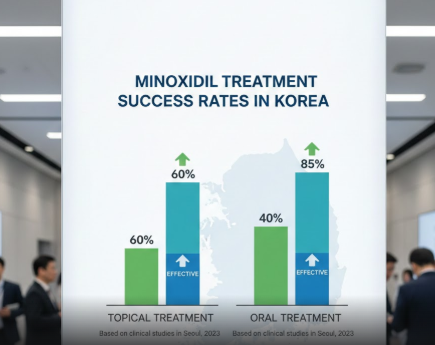
- Clinical studies and Korean clinic data suggest that over 60% of patients see visible improvement in hair density and regrowth after 6–12 months of consistent use.
- Early shedding may occur but is typically temporary.
Oral Minoxidil:
- Low-dose oral Minoxidil shows 35–70% of patients achieving measurable improvement within 6 months in Korean studies, particularly in women with female pattern hair loss (FPHL).
- Clinical improvement may include increased hair diameter, density, and scalp coverage.
- Oral Minoxidil often shows faster and more diffuse hair regrowth, especially when combined with topical treatment.
Why Korea Is a Top Destination
Korea is a preferred hub for hair loss treatments due to:
- Advanced Clinics: Modern technology and highly skilled specialists.
- Comprehensive Programs: Minoxidil combined with PRP, laser therapy, and mesotherapy.
- High Medical Standards: Focus on safety, hygiene, and patient-centered care.
- Medical Tourism Support: Travel assistance, accommodation, and translation services.
- Competitive Pricing: Affordable, high-quality hair restoration options for international patients.
Cost Range
- Topical Minoxidil (monthly supply): $30–$70 USD
- Oral Minoxidil (monthly supply): $50–$100 USD
- Combination Therapy Packages (Topical + Oral + PRP/Laser): $500–$1,500 USD
Packages for medical tourists typically include consultation, treatment, and follow-up care.
Popular Clinics in Korea
- Reviv Clinic, Seoul: Topical and oral Minoxidil combined with PRP therapy.
- K-Beauty Hair Clinic, Gangnam: Personalized hair regrowth packages.
- MediHair Clinic, Seoul: Specializes in advanced Minoxidil therapy.
- Banobagi Plastic & Dermatology Clinic: Integrates Minoxidil with laser scalp treatments.
- JK Hair Clinic: Offers male and female hair loss treatments with medical tourism support.


