
Treatment Overview
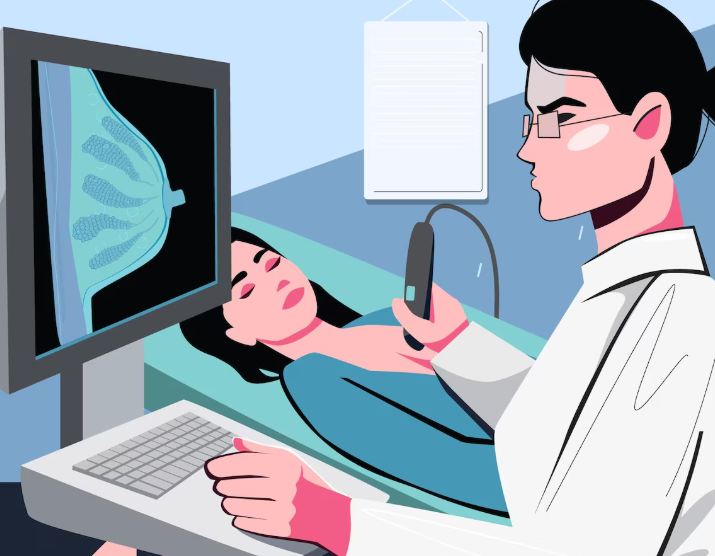
The MRI-Guided Breast Evaluation Program in Korea is a highly advanced diagnostic service designed to provide accurate detection and assessment of breast abnormalities using magnetic resonance imaging (MRI). Korea is recognized worldwide for its medical innovation, state-of-the-art imaging technology, and patient-focused care. This program offers women a precise, non-invasive method to evaluate breast tissue, particularly in cases where conventional mammography or ultrasound may be insufficient.
MRI-guided breast evaluation is particularly effective for high-risk patients, individuals with dense breast tissue, and those requiring detailed imaging for suspicious findings. Korean medical centers integrate MRI with AI-assisted image interpretation and expert radiological consultation to ensure the highest diagnostic accuracy. Leading hospitals such as Samsung Medical Center, Asan Medical Center, Severance Hospital, and CHA Bundang Women’s Hospital provide this program, supported by multidisciplinary teams of breast specialists, radiologists, and oncologists.
By offering superior imaging clarity and targeted assessment, Korea’s MRI-Guided Breast Evaluation Program ensures early detection and improved breast health outcomes.
Purpose & Benefits
The main goal of MRI-Guided Breast Evaluation is to provide highly detailed imaging for precise diagnosis, enabling early intervention and optimal treatment planning. This program is particularly valuable for cases where conventional screening methods are limited.
Key benefits include:
- High-Resolution Imaging: Offers superior visualization of breast tissue, including dense tissue and difficult-to-detect lesions.
- Early Detection of Abnormalities: Detects tumors and micro-lesions that may be missed by mammography or ultrasound.
- Non-Invasive and Safe: MRI uses no ionizing radiation, making it safe for repeated use.
- AI-Assisted Image Analysis: Enhances diagnostic accuracy and reduces interpretation errors.
- Comprehensive Breast Evaluation: Supports decision-making for treatment or further diagnostic procedures.
- Detailed Risk Assessment: Especially beneficial for high-risk patients or those with inconclusive findings on other imaging methods.
Korea’s integration of advanced MRI technology with personalized care makes this program a global leader in breast health screening.
Ideal Candidates
MRI-Guided Breast Evaluation is especially recommended for women who require precise diagnostic imaging. Ideal candidates include:
- Women with dense breast tissue.
- Patients with suspicious findings on mammography or ultrasound.
- High-risk patients with BRCA1, BRCA2, or other genetic mutations.
- Women with a personal or family history of breast cancer.
- Patients needing preoperative evaluation of breast lesions.
Korean hospitals also recommend MRI breast evaluation for cases where conventional imaging produces inconclusive results, ensuring clarity and confidence in diagnosis.
Possible Risks & Limitations
MRI breast evaluation is generally safe, but there are certain considerations patients should be aware of:
- Claustrophobia: MRI requires lying in a narrow tube for extended periods.
- Contrast Agent Use: May cause mild allergic reactions in rare cases.
- High Cost: MRI is generally more expensive than conventional imaging.
- Limited Availability: Requires specialized equipment and trained radiologists.
Korean medical centers minimize these concerns through patient education, sedation options for claustrophobic patients, and advanced MRI facilities that ensure comfort and efficiency.
Techniques Used
MRI-Guided Breast Evaluation in Korea uses a combination of advanced imaging technology and precise protocols:
- High-Resolution Breast MRI: Produces detailed images of breast tissue in multiple planes for accurate lesion evaluation.
- Dynamic Contrast-Enhanced MRI (DCE-MRI): Improves detection of subtle changes by assessing tissue vascularity.
- Diffusion-Weighted Imaging (DWI): Helps distinguish between benign and malignant lesions.
- AI-Enhanced Image Interpretation: Korean-developed AI tools analyze imaging data for improved accuracy.
- Fusion Imaging: Combines MRI data with ultrasound or mammography for precise localization and diagnosis.
This combination ensures that MRI-guided breast evaluation is among the most precise and reliable diagnostic tools available.
Recovery & Aftercare
MRI-Guided Breast Evaluation is a non-invasive procedure requiring no recovery time. Patients can resume daily activities immediately after imaging.
Aftercare includes:
- Detailed review of MRI results with a breast specialist.
- Follow-up recommendations based on findings, which may include biopsy, additional imaging, or routine monitoring.
- Lifestyle and health guidance for breast health optimization.
- Emotional support and counseling for patients diagnosed with abnormalities.
Korean hospitals prioritize patient comfort and understanding, ensuring patients leave with clarity about their diagnosis and next steps.
Results & Longevity
MRI breast evaluation results are typically available within 24–72 hours, with many hospitals providing online access through patient portals. MRI findings are highly detailed and can significantly impact treatment decisions, particularly for high-risk patients.
The longevity of MRI results depends on individual risk factors, with periodic follow-up recommended for ongoing monitoring. MRI-guided evaluation is a key component of comprehensive breast health management, ensuring early detection and improved outcomes over the long term.
Treatment Process in Korea
- Consultation: Initial review of medical history, prior imaging, and risk factors.
- Preparation: Patient positioned comfortably; contrast agent administered if required.
- MRI Imaging: High-resolution scanning of breast tissue.
- Image Analysis: AI-assisted interpretation by board-certified radiologists.
- Results Review: Specialist consultation to explain findings and recommendations.
- Follow-Up Plan: Personalized breast health or treatment plan based on results.
Korean hospitals ensure the process is efficient, patient-friendly, and completed within one day in most cases.
Cost Range
Costs for MRI-Guided Breast Evaluation in Korea vary depending on the complexity of the study and the hospital’s reputation:
- Breast MRI (without contrast): ₩500,000 – ₩800,000 KRW ($370 – $590 USD)
- Breast MRI (with contrast): ₩800,000 – ₩1,500,000 KRW ($590 – $1,100 USD)
- Comprehensive MRI-Guided Breast Evaluation Package: ₩1,200,000 – ₩2,000,000 KRW ($890 – $1,480 USD)
Korea offers competitive pricing with world-class facilities, making MRI-guided breast evaluation accessible and reliable.
Popular Clinics for MRI-Guided Breast Evaluation in Korea
- Samsung Medical Center Breast Health Center – Leaders in AI-assisted MRI diagnostics.
- Asan Medical Center – Offers integrated MRI breast evaluation with genetic risk assessment.
- Severance Hospital – Known for precision breast imaging and preoperative MRI guidance.
- CHA Bundang Women’s Hospital – Specialized in high-risk breast cancer evaluation.
- Ewha Womans University Mokdong Hospital – Combines advanced MRI with comprehensive breast health programs.


