
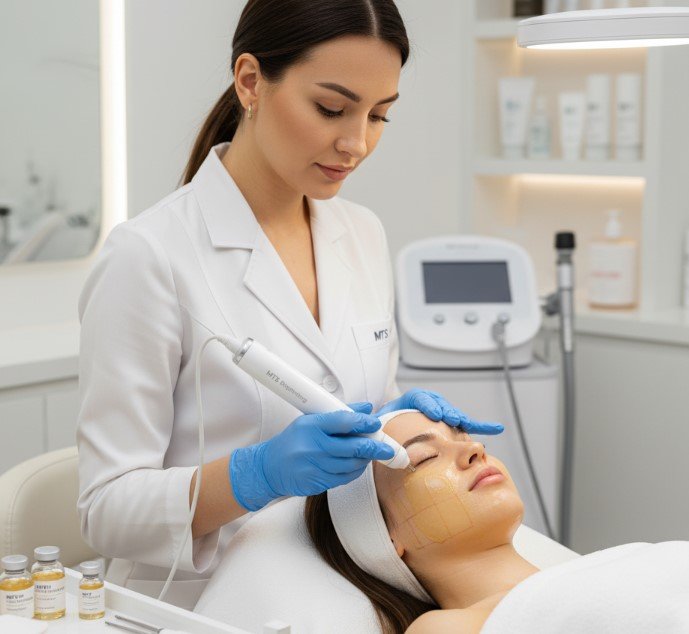
Treatment Overview
MTS, or Microneedle Therapy System, is a dermatology procedure performed in Korean skin clinics to treat oily, acne-prone skin, enlarged pores, and post-acne texture issues. It uses fine microneedles to create controlled micro-injuries in the skin, stimulating collagen production, skin regeneration, and sebum regulation.
Unlike surface treatments, MTS penetrates deeper into the dermis, helping to reduce oil production, shrink pore size, smooth scars, and improve overall skin clarity. In Korea, it is often combined with serum infusions, exosome therapy, or LED treatment for enhanced acne management and skin healing.
Purpose & Benefits
- Sebum Regulation: Microneedling stimulates dermal remodeling that balances oil production.
- Pore Refinement: Reduces enlarged pores commonly seen in oily skin.
- Acne Reduction: Improves acne-prone skin by reducing congestion and inflammation.
- Scar Improvement: Stimulates collagen to smooth acne scars and rough texture.
- Serum Infusion: Channels created by microneedles allow deeper delivery of active ingredients (whitening, acne-fighting, regenerative boosters).
- Skin Rejuvenation: Brightens and evens out dull, congested skin.
Ideal Candidates
MTS in Korea is recommended for:
- Patients with oily, acne-prone skin and frequent breakouts.
- Individuals with enlarged pores and rough skin texture.
- Those suffering from post-acne scars or uneven skin tone.
- Patients who want a minimally invasive treatment with regeneration benefits.
- Individuals seeking long-term sebum control combined with skin repair.
Possible Risks & Complications
MTS is safe when performed by dermatologists, but mild side effects may occur:
- Redness & Swelling: Lasts 1–2 days post-treatment.
- Mild Dryness or Flaking: Common during healing phase.
- Temporary Breakouts: Rare, as pores purge impurities.
- Rare Risks: Infection if aftercare is neglected (minimized in Korean clinical settings).
Surgical Techniques Used
- Microneedling Device: Automated pen with sterile microneedles.
- Depth Control: Needles adjusted (0.25–2.5 mm) based on skin thickness and concern.
- Serum Infusion: Active serums (vitamin C, growth factors, exosomes, whitening agents) applied and absorbed via microchannels.
- Optional Add-Ons: LED red/blue light therapy for acne and healing.
Protocol: Typically 3–5 sessions, spaced 4–6 weeks apart.
Recovery & Aftercare
Immediately: Skin appears flushed, similar to a mild sunburn.
1–2 Days: Redness and sensitivity subside.
1–2 Weeks: Oiliness decreases, pores refine, acne improves.
Aftercare Tips:
- Apply soothing moisturizers and recovery creams.
- Avoid makeup for 24 hours.
- Use SPF 50+ sunscreen daily.
- Avoid retinoids, scrubs, or harsh acids for 5–7 days.
- Stay hydrated and follow clinic-provided aftercare serums.
Results & Longevity
- After 1 Session: Fresher, tighter skin with less oiliness.
- After 2–3 Sessions: Pore size reduced, acne activity controlled, improved texture.
- After 4–5 Sessions: Long-term sebum balance, refined skin tone, smoother scars.
Maintenance sessions every 6–12 months are common for acne-prone patients.
Treatment Process in Korea
Consultation & Skin Diagnosis
Dermatologist evaluates acne activity, pore size, scars, and skin type.
Preparation
Gentle cleansing followed by topical numbing cream for comfort.
MTS Session
- Step 1: Microneedling device applied across face in controlled passes.
- Step 2: Customized serums (acne control, whitening, regenerative boosters) infused into microchannels.
- Step 3: LED therapy or cooling mask applied for calming.
Duration: 40–60 minutes.
Post-Treatment Care
Barrier cream and sunscreen applied; redness lasts 1–2 days.
Follow-Up
3–5 treatments recommended for optimal results.
Unique Korean Advantages
- Customized Serums: Infused with exosomes, growth factors, or whitening drips.
- Safe & Precise Devices: Advanced microneedling systems approved for Asian skin.
- Holistic Acne Programs: Combined with carbon peel, LED therapy, or glutathione drips.
- Affordable Packages: Bundled pricing for multi-session MTS programs.
Cost Range (Estimated)
- Single MTS Session: USD 150 – 250
- MTS + Serum Infusion (Vitamin C, Whitening, Acne Control): USD 180 – 300
- MTS + Exosome/PRP/LED Therapy: USD 250 – 400
Example Korean Packages:
- Standard Program (3 sessions): USD 400 – 700
- Acne Care Program (3–5 sessions with LED/Whitening serums): USD 700 – 1,200
- Premium Program (5 sessions with Exosome/PRP/Glutathione Drip add-ons): USD 1,500 – 2,200
Popular Clinics in Seoul
- Oracle Dermatology: Microneedling + acne scar and pore protocols.
- Banobagi Dermatology: Customized MTS with regenerative boosters.
- Renewme Skin Clinic: MTS + exosome/LED therapy combinations.
- View Dermatology: Multi-step acne and pore refinement packages.
- Chaum Anti-Aging Center: Premium MTS with advanced skin boosters.


