
Treatment Overview
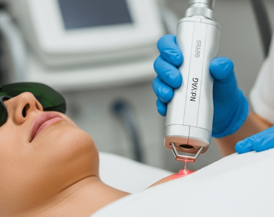
Nd:YAG Laser Therapy is a Korean dermatology treatment used for managing rosacea-related redness, flushing, and visible blood vessels (telangiectasia). The Nd:YAG laser emits light at a 1064 nm wavelength, penetrating deeper than pulsed dye lasers, making it effective for stubborn or deeper blood vessels often associated with rosacea.
In Korea, Nd:YAG lasers (such as long-pulsed Nd:YAG or Genesis laser) are performed in specialized dermatology clinics. They are often combined with cooling care, Centella infusions, or anti-redness protocols to enhance results while minimizing downtime.
For rosacea, Nd:YAG Laser Therapy:
- Reduces persistent vascular redness and flushing.
- Treats dilated or deeper blood vessels resistant to other lasers.
- Improves skin texture and collagen support.
- Offers gradual improvement with repeated sessions.
Purpose & Benefits
- Vascular Reduction: Targets dilated blood vessels causing redness.
- Deep Penetration: More effective for deeper vessels compared to V-beam or IPL.
- Flare Reduction: Minimizes frequency and severity of rosacea flare-ups.
- Skin Rejuvenation: Stimulates mild collagen production for stronger barrier.
- Combination-Friendly: Often paired with cooling masks or soothing infusions.
- Safe for Sensitive Skin: Adjustable settings for rosacea-prone skin.
Ideal Candidates
Nd:YAG Laser Therapy in Korea is recommended for:
- Patients with vascular rosacea and visible blood vessels.
- Individuals with persistent redness not fully controlled by topicals.
- Adults with deeper telangiectasia unsuitable for surface lasers.
- Patients combining therapy with topical or oral rosacea medications.
- Those seeking long-term redness reduction with professional care.
Comparison with Other Treatments
- Nd:YAG Laser: Best for deeper vessels and long-term vascular improvement.
- V-Beam Laser (PDL): Effective for surface redness and fine capillaries.
- IPL (Intense Pulsed Light): Improves redness, pigmentation, and texture.
- Dual Toning: Targets redness + pigmentation in one session.
- Brimonidine Gel: Temporary redness reduction only.
- Ivermectin / Metrogel: Treats inflammatory lesions but not vascular redness.
- Centella Therapy: Soothes inflammation but does not shrink vessels.
Possible Risks & Complications
Nd:YAG Laser is safe in Korean dermatology clinics, but may include:
- Temporary Redness & Swelling: Common immediately after treatment.
- Mild Bruising: Possible at treated blood vessels.
- Heat Sensation: Warmth or tingling during treatment.
- Rare Pigment Changes: Hypo/hyperpigmentation in darker skin if unprotected.
Treatment Techniques Used
- Long-Pulsed Nd:YAG Laser: Shrinks deeper blood vessels in rosacea skin.
- Laser Genesis (Nd:YAG mode): Gentle, repeated passes for diffuse redness.
- Combination Protocols: Often paired with cooling care, Centella, or hydrating boosters.
- Session Protocol: Typically 3–6 treatments spaced 3–4 weeks apart.
Recovery & Aftercare
- Immediately: Mild redness or warmth, soothed with cooling therapy.
- 1–2 Days: Skin feels calmer, redness begins to soften.
- Weeks of Consistency: Noticeable improvement in vascular redness and texture.
Aftercare Tips:
- Apply SPF 50+ sunscreen daily to protect treated skin.
- Avoid hot baths, alcohol, and strenuous activity for 48 hours.
- Use gentle, non-irritating skincare (Centella, hyaluronic acid creams).
- Avoid exfoliation or retinoids for 5–7 days.
Results & Longevity
- Short-Term (1–2 Sessions): Redness slightly reduced, skin feels more even.
- Medium-Term (3–4 Sessions): Significant improvement in vascular redness and flushing.
- Long-Term: Results last 9–12 months with maintenance sessions once or twice a year.
Treatment Process in Korea
- Consultation & Analysis – Dermatologist examines vascular rosacea severity.
- Preparation – Cleansing, numbing cream if needed.
- Nd:YAG Laser Session – Long-pulsed or Genesis laser applied to redness.
- Cooling Care – Cryotherapy or cooling masks reduce post-laser heat.
- Post-Care – Barrier-repair serums and sunscreen applied.
- Follow-Up – 3–6 sessions spaced monthly for optimal results.
Why Korea is a Top Destination
- Korean dermatologists excel at vascular-focused rosacea protocols.
- Clinics use advanced Nd:YAG devices (long-pulsed & Genesis).
- Emphasis on cooling recovery care to reduce downtime.
- Affordable pricing compared to Western clinics, with package deals.
- Multi-step rosacea programs (laser + cooling + topical) ensure long-term relief.
Cost Range (Detailed Breakdown)
Pricing for Nd:YAG Laser Therapy in Korea for rosacea:
- Single Nd:YAG Session: USD 200 – 400.
- 3–5 Session Package: USD 900 – 1,600.
- Premium Rosacea Package (Nd:YAG + Cooling Care + Soothing Infusions): USD 1,800 – 3,000 (4–6 sessions).
Additional Costs in Korea:
- Consultation: USD 20 – 40.
- Add-ons (Centella infusion, hyaluronic acid boosters): USD 100 – 250.
💡 Patients often call Nd:YAG Laser the “deep redness solution”, since it targets stubborn vessels and long-lasting redness.
Popular Clinics in Seoul
- Oracle Dermatology – Nd:YAG laser programs with cooling care.
- Banobagi Dermatology – Vascular rosacea care with Nd:YAG + IPL.
- Renewme Skin Clinic – Redness protocols combining Nd:YAG and Centella boosters.
- View Plastic & Dermatology – Nd:YAG (Genesis) sessions for diffuse redness.
- Chaum Anti-Aging Center – Premium rosacea care with Nd:YAG + multi-step recovery.


