
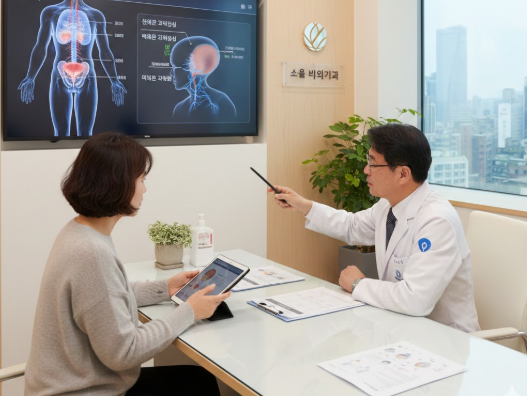
Treatment Overview
Neurogenic bladder occurs when nerve damage affects the bladder’s ability to store or empty urine properly. This condition can result from spinal cord injury, multiple sclerosis, Parkinson’s disease, diabetes, or congenital disorders. Neurogenic bladder consultation in Korea provides comprehensive evaluation, precise diagnosis, and individualized treatment plans.
Korean hospitals utilize advanced imaging, urodynamic testing, and minimally invasive procedures to assess bladder function accurately. Specialists aim to prevent complications such as urinary tract infections, kidney damage, and incontinence while improving quality of life. International patients benefit from Korea’s efficient system that offers same-day testing, expert consultation, and follow-up care.
Purpose & Benefits
The purpose of neurogenic bladder consultation is to restore bladder function, prevent complications, and improve daily living.
Key benefits include:
- Accurate diagnosis using urodynamic studies, ultrasound, and MRI
- Early detection of bladder dysfunction to prevent kidney damage
- Personalized management plans including medications, catheters, or surgery
- Minimally invasive treatment options
- Access to highly trained urologists and rehabilitation specialists
- Continuous monitoring to prevent recurrent infections
- Guidance for self-management and lifestyle modifications
Korean specialists focus on holistic care, combining advanced technology with patient education for long-term bladder health.
Ideal Candidates
Neurogenic bladder consultation in Korea is suitable for individuals who:
- Have difficulty emptying the bladder or experience frequent urination
- Experience urinary incontinence
- Have recurrent urinary tract infections
- Have spinal cord injuries, multiple sclerosis, Parkinson’s disease, or diabetes
- Require assessment after bladder surgery or neurological trauma
- Seek expert evaluation and treatment as international patients
Early consultation can prevent complications and improve bladder control significantly.
Possible Risks & Complications
If left untreated, neurogenic bladder can cause:
- Urinary tract infections
- Kidney damage (hydronephrosis)
- Bladder stones
- Urinary retention
- Incontinence and social or psychological impact
- Possible side effects from medications such as anticholinergics
Korean clinics reduce risks through comprehensive evaluation, accurate diagnosis, and patient-tailored management plans.
Techniques & Technology Used
Korea is recognized for advanced technology in diagnosing and managing neurogenic bladder:
- Urodynamic Testing: measures bladder pressure, capacity, and function
- Ultrasound & CT scans: assess kidney and bladder structure
- MRI: evaluates nerve damage and spinal cord abnormalities
- Cystoscopy: examines bladder interior for abnormalities
- Electromyography (EMG): evaluates nerve-muscle coordination
- Medication Therapy: anticholinergics, beta-3 agonists
- Clean Intermittent Catheterization (CIC) guidance
- Minimally Invasive Surgeries: bladder augmentation, sphincter procedures
- Neuromodulation Therapy: sacral nerve stimulation to restore bladder control
These technologies allow precise diagnosis and effective individualized treatment plans.
Treatment Process in Korea
- Initial Consultation
The urologist reviews medical history, neurological conditions, urinary symptoms, and prior treatments. - Diagnostic Evaluation
Tests may include:
- Urine tests for infection
- Kidney and bladder imaging
- Urodynamic studies to measure bladder function
- MRI or CT scan for nerve evaluation
- EMG for muscle-nerve coordination
- Diagnosis & Individualized Plan
Based on results, a treatment plan is developed. Options may include:
- Medication to improve bladder storage or contraction
- Catheterization training and hygiene education
- Minimally invasive surgical options
- Neuromodulation therapies for severe cases
- Lifestyle modifications and bladder retraining
- Treatment Implementation
Procedures and therapy are provided with high precision and comfort, often with short hospital stays. - Follow-Up & Monitoring
Korean hospitals provide continuous follow-up to monitor bladder function, prevent complications, and adjust therapy as needed. Remote follow-up is available for international patients.
Recovery & After-Care
Recovery depends on the treatment type:
- Medication therapy: no downtime, routine follow-up
- Catheterization: patients are trained, minimal recovery time
- Minimally invasive surgeries: 1–2 weeks of rest, full recovery in 4–6 weeks
- Neuromodulation therapy: gradual improvement over several weeks
After-care recommendations:
- Maintain hydration and bladder hygiene
- Regular catheter use if prescribed
- Monitor urine color, volume, and frequency
- Follow dietary guidelines to prevent stones or infections
- Attend follow-up visits and online consultations if returning home
Korean clinics provide detailed guidance and patient education for long-term bladder health.
Results & Longevity
With advanced diagnosis and treatment, patients experience:
- Improved bladder storage and emptying
- Reduced urinary infections
- Better quality of life and independence
- Long-term preservation of kidney function
- High satisfaction rates among international patients
Results are most durable when patients adhere to therapy, lifestyle modifications, and follow-up schedules.
Why Korea Is a Top Destination
Korea has emerged as a leading country for neurogenic bladder management because of:
- Highly skilled urologists and neuro-urology specialists
- Advanced diagnostic and treatment technologies
- Minimally invasive surgical options
- Comprehensive care including rehabilitation and patient education
- Transparent pricing for medical tourists
- Quick appointment scheduling and efficient care
- English-speaking international patient coordinators
Patients worldwide choose Korea for efficient, high-quality care that combines technology and expertise.
Cost Range
Typical costs for neurogenic bladder consultation and treatment in Korea:
- Initial consultation: USD 40–80
- Urodynamic study: USD 150–300
- Ultrasound or MRI: USD 100–400
- Cystoscopy: USD 200–400
- Medication therapy: USD 50–150 per month
- Neuromodulation therapy: USD 3,000–7,000
- Minimally invasive surgery: USD 4,000–8,000
Most medical tourists spend USD 500–2,000 for evaluation and initial treatment depending on tests and therapy.
Popular Clinics in Korea
Top hospitals and clinics for neurogenic bladder care:
- Seoul National University Hospital – Urology & Neuro-Urology Center
- Asan Medical Center – Bladder Dysfunction Clinic
- Samsung Medical Center – Urology Department
- Yonsei Severance Hospital – Neuro-Urology Program
- CHA Bundang Medical Center – Urology Specialty
- HU Urology Clinic, Gangnam
- Wooridul Hospital – Urology Division
- Himchan Urology Clinic, Seoul
These centers are renowned for precision diagnosis, advanced therapy options, and international patient services.


