
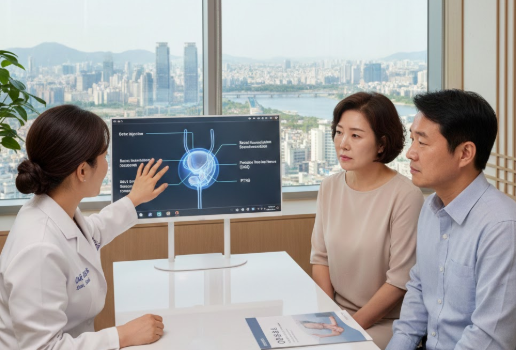
Treatment Overview
Overactive bladder (OAB) is a urological condition characterized by urinary urgency, frequency, nocturia, and urge incontinence. While most OAB cases are managed with non-surgical treatments, surgery may be recommended for patients with severe symptoms, medication resistance, or anatomical complications. In Korea, OAB surgical options are advanced, minimally invasive, and tailored to individual patient needs, offering effective long-term relief while minimizing recovery time and complications.
Purpose & Benefits
The primary purpose of surgical treatment for OAB is to restore bladder function, reduce symptoms, and improve quality of life when conservative therapies are insufficient.
Key benefits of OAB surgery in Korea include:
- Significant reduction or elimination of urinary urgency, frequency, and incontinence.
- Enhanced bladder control and daily functioning.
- Long-term symptom management for medication-resistant OAB.
- Minimally invasive techniques that reduce recovery time and surgical risks.
- Access to world-class surgical expertise and post-operative care.
Surgery provides a definitive solution for patients whose symptoms significantly impact quality of life.
Ideal Candidates
Surgical options are considered for patients who:
- Experience severe OAB symptoms unresponsive to medication or behavioral therapy.
- Have frequent nocturia disrupting sleep and daily activities.
- Suffer from persistent urge incontinence affecting quality of life.
- Have anatomical or neurological conditions contributing to OAB.
- Are healthy enough to undergo surgical procedures with minimal risk.
Both men and women with refractory OAB or complex bladder conditions are suitable candidates for surgical management in Korea.
Possible Risks & Complications
While OAB surgery is generally safe, potential risks include:
- Infection or bleeding at the surgical site.
- Temporary or permanent urinary retention.
- Anesthesia-related complications.
- Bladder or urethral injury (rare).
- Post-operative discomfort, urgency, or frequency during recovery.
Korean hospitals mitigate risks through pre-operative evaluations, sterile techniques, and comprehensive post-operative monitoring.
Techniques & Technology Used
Korean hospitals employ cutting-edge technology and surgical techniques for OAB management:
- Bladder Augmentation (Cystoplasty): Expanding bladder capacity to reduce urgency and frequency.
- Urinary Diversion Procedures: Redirecting urine flow in complex cases.
- Sacral Neuromodulation Surgery: Implantation of devices to stimulate sacral nerves and regulate bladder function.
- Minimally Invasive Laparoscopic or Robotic Surgery: Reduces recovery time, minimizes scarring, and enhances precision.
- Urethral Sling Procedures (Women): Supports the bladder neck to reduce stress and urge incontinence.
- Intraoperative Imaging & Navigation: Ensures precise placement and optimal outcomes.
These advanced techniques allow surgeons to tailor procedures to each patient’s anatomy and symptom severity.
Treatment Process in Korea
The surgical process for OAB in Korea includes:
- Pre-Operative Consultation: Assessment of symptoms, medical history, and previous treatments.
- Diagnostic Testing: Urodynamic studies, bladder imaging, and other evaluations to determine surgical suitability.
- Personalized Surgical Plan: Choosing the optimal surgical technique based on severity, anatomy, and patient needs.
- Surgery & Hospital Stay: Procedures are performed using minimally invasive or robotic methods, with careful monitoring.
- Post-Operative Care & Recovery: Pain management, bladder training, and monitoring for complications.
- Follow-Up & Long-Term Management: Regular check-ups to ensure surgical success and maintain bladder function.
International patients are supported with English-speaking coordinators, hospital navigation, and post-operative guidance.
Recovery & After-Care
Recovery following OAB surgery in Korea focuses on restoring bladder function and minimizing complications:
- Hospital stay varies from 1–5 days depending on the procedure.
- Temporary urinary catheterization may be required for several days.
- Gradual reintroduction of fluids and dietary adjustments to support recovery.
- Follow-up urodynamic studies or imaging to monitor bladder function.
- Education on bladder training, lifestyle modifications, and preventive care.
Korean hospitals provide comprehensive after-care, including digital support and teleconsultation for international patients.
Results & Longevity
Surgical OAB treatments in Korea offer:
- Long-lasting symptom relief, particularly in medication-resistant cases.
- Significant improvement in urinary urgency, frequency, and incontinence.
- Enhanced sleep quality and daily life performance.
- Durable outcomes with proper post-operative follow-up and lifestyle management.
Advanced minimally invasive techniques ensure high success rates with minimal long-term complications.
Why Korea Is a Top Destination
Korea is a preferred destination for OAB surgical management due to:
- Expert Urologists & Surgeons: Specialists trained in advanced, minimally invasive OAB surgeries.
- State-of-the-Art Technology: Robotic surgery, laparoscopic techniques, and neuromodulation devices.
- Comprehensive Patient Care: Pre-operative evaluation, surgery, post-operative care, and long-term monitoring.
- International Patient Support: English-speaking coordinators, teleconsultation, and travel assistance for seamless care.
- Cost-Effective High-Quality Care: Competitive pricing with internationally recognized surgical outcomes and safety standards.
Patients benefit from world-class surgical expertise combined with personalized care and support throughout the treatment journey.
Cost Range
The cost of OAB surgery in Korea varies depending on procedure type:
- Consultation & diagnostic evaluation: $200 – $400
- Minimally invasive or robotic surgery: $5,000 – $12,000
- Sacral neuromodulation implantation: $7,000 – $15,000
- Urethral sling procedures: $3,000 – $6,000
- Post-operative care & follow-up: $500 – $1,500
International patients often have access to bundled packages covering consultation, surgery, hospitalization, and follow-up care.
Popular Clinics in Korea
Top hospitals and clinics for OAB surgical treatment include:
- Samsung Medical Center, Seoul
- Asan Medical Center, Seoul
- Severance Hospital (Yonsei University), Seoul
- Seoul National University Hospital, Seoul
- CHA Bundang Medical Center, Seongnam
These institutions provide internationally accredited care, specialized urology departments, and English-speaking support for safe and effective surgical management of OAB.


