
Treatment Overview
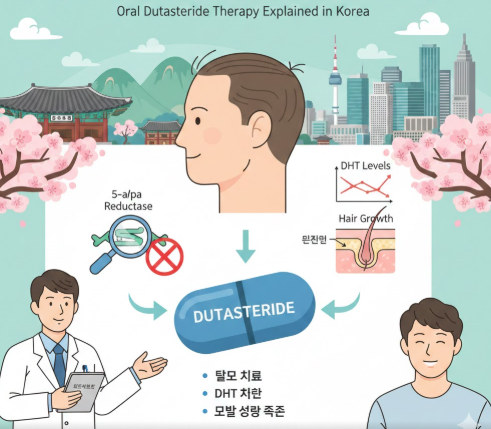
Oral Dutasteride therapy is one of Korea’s most advanced medical approaches for treating androgenetic alopecia (male-pattern and female-pattern hair loss). Dutasteride works by inhibiting both type I and type II 5-alpha-reductase enzymes, significantly reducing DHT (dihydrotestosterone) levels—the hormone most responsible for follicle miniaturization.
Korean dermatology clinics use pharmaceutical-grade Dutasteride with carefully regulated dosages and provide personalized treatment plans based on scalp condition, hormone profile, and hair density analysis. It is widely used in Korea for patients who require stronger results than finasteride or who have advanced thinning.
Purpose & Benefits
The main purpose of oral Dutasteride therapy is to stop further hair loss and promote regrowth by lowering systemic DHT levels.
Key benefits include:
- Stronger DHT suppression compared to finasteride
- Noticeable improvement in hair density within 3–6 months
- Thickening of miniaturized hair strands
- Stabilization of hairline recession
- Effective for both crown and frontal scalp thinning
- Long-lasting effects with continuous use
In Korea, treatment protocols often combine oral Dutasteride with topical regenerative therapies, lasers, or scalp nutrition programs for enhanced outcomes.
Ideal Candidates
Oral Dutasteride therapy is ideal for:
- Men with moderate to severe androgenetic alopecia
- Individuals who did not achieve results with finasteride
- Patients with rapid or aggressive hair loss
- Those experiencing crown thinning or overall density loss
- Women (post-menopausal only) under specialist supervision
- Men planning to undergo or maintain a hair transplant
Korean clinics conduct a complete scalp diagnosis, medical history assessment, and blood tests to determine if oral Dutasteride is the right fit.
Possible Risks & Complications
Although highly effective, oral Dutasteride may involve potential side effects. Possible risks include:
- Decreased libido or mild erectile dysfunction
- Hormonal sensitivity reactions
- Scalp dryness or shedding during the initial phase
- Breast tenderness (rare)
- Drug sensitivity in individuals with liver conditions
Korean clinics monitor patients regularly with checkups, dosage control, and follow-up assessments to minimize risks and ensure safety.
Techniques & Technology Used
Korean medical centers enhance oral Dutasteride therapy through advanced diagnostic technologies such as:
- High-resolution scalp microscopes
- AI-powered hair density analysis
- DHT hormone profiling
- Follicular miniaturization tracking systems
Some clinics combine oral Dutasteride with: - Laser therapy for scalp circulation improvement
- Growth factor injections
- Mesotherapy
- Nutrient-rich scalp programs
This integrated approach improves drug efficacy and promotes faster regrowth.
Treatment Process in Korea
- Consultation & Diagnosis – A detailed scalp scan, medical history review, and hormone evaluation.
- Customized Dosage Planning – Doctors prescribe low-dose or standard-dose oral Dutasteride depending on the patient’s condition.
- Combination Therapy (Optional) – Many patients receive laser sessions, injections, or topical boosters.
- Monthly or Quarterly Follow-Ups – Hair density and follicle activity are tracked to ensure progress.
- Scalp Health Management – Korean clinics emphasize maintaining a healthy scalp environment to maximize Dutasteride’s effects.
- Long-Term Maintenance – Patients typically continue with a consistent plan for sustained results.
Recovery & After-Care
Oral Dutasteride therapy does not require downtime. After-care includes:
- Maintaining consistent daily or alternate-day dosing
- Using clinic-recommended shampoos or serums
- Attending regular checkups every 1–3 months
- Avoiding harsh chemical treatments during the initial phase
- Maintaining stress-reduction and healthy sleep routines
Some clinics also provide nutritional supplements or detox scalp programs to boost hair health.
Results & Longevity
Patients usually begin to see improvements within 3–6 months, with maximum results visible after 9–12 months.
Results include:
- Reduced daily hair shedding
- Thicker and healthier hair strands
- Fuller hairline appearance
- Improved crown volume
With continuous therapy, benefits can last many years. Korean specialists typically recommend long-term maintenance for sustained results.
Why Korea Is a Top Destination
Korea is globally recognized for advanced hair-loss treatments due to:
- Highly experienced dermatologists
- Medical-grade pharmaceutical quality
- Integrative treatment systems (drug + scalp therapy)
- State-of-the-art diagnostic tools
- Affordable pricing compared to Western countries
- Exceptional after-care programs
Patients receive comprehensive support, making Korea a top choice for oral Dutasteride users seeking reliable results.
Cost Range
The cost of oral Dutasteride therapy in Korea varies depending on the clinic and whether combination treatments are included.
Average costs:
- Monthly Dutasteride Medication: USD $20–$50
- Consultation & Scalp Diagnosis: USD $20–$50
- Optional Combo Therapies: USD $80–$200 per session
Full treatment programs typically range from USD $100 to $300 per month, depending on the intensity and additional services.
Popular Clinics in Korea
Some well-known clinics offering oral Dutasteride therapy include:
- DA Plastic Surgery & Hair Clinic
- Moaman Hair Loss Clinic
- NHI Korea (Natural Hair Implant Clinic)
- BIO Hair Clinic Seoul
- Trambien Dermatology Clinic
- Hershe Dermatology & Hair Center
These clinics are recognized for their hair-loss specialization, modern diagnostic systems, and personalized medication plans.


