
Treatment Overview
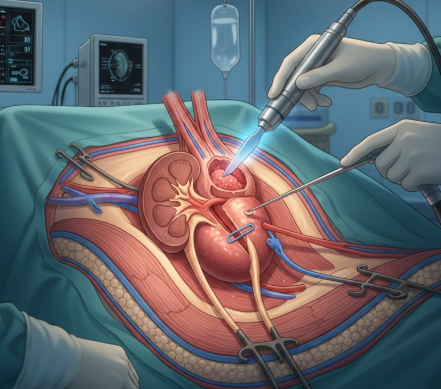
Partial nephrectomy is a specialized surgical procedure that removes a diseased portion of the kidney while preserving healthy tissue. It is commonly recommended for patients with hydronephrosis, a condition where urine buildup causes kidney swelling. Korean hospitals use advanced minimally invasive techniques, including laparoscopic and robotic-assisted surgery, to ensure precision and faster recovery. The main goal is to treat the condition while maintaining kidney function.
Purpose & Benefits
The purpose of partial nephrectomy is to remove obstructed or damaged kidney tissue while keeping the healthy part intact. Benefits include:
- Preserving kidney function and reducing risk of chronic kidney disease.
- Minimally invasive surgery reduces pain and shortens hospital stay.
- High success rate with fewer complications than total nephrectomy.
- Relief from pain, recurrent infections, and urinary obstruction.
- Prevents secondary kidney damage from untreated hydronephrosis.
Ideal Candidates
Ideal candidates include:
- Patients with localized kidney damage due to hydronephrosis.
- Individuals with a single kidney or reduced kidney function.
- Patients with benign kidney tumors or obstructive uropathy.
- Those in good overall health who can tolerate general anesthesia.
- Patients with recurrent kidney infections or stones causing significant swelling.
Possible Risks & Complications
Risks include:
- Bleeding during or after surgery.
- Infection at the surgical site or urinary tract.
- Injury to surrounding organs.
- Urine leakage or fistula formation.
- Temporary decrease in kidney function.
- Rarely, conversion to total nephrectomy if complications occur.
Techniques & Technology Used
Korean hospitals use advanced technology for partial nephrectomy:
- Laparoscopic Partial Nephrectomy – Minimally invasive with small incisions.
- Robotic-Assisted Surgery – Enhances precision and reduces blood loss.
- 3D Imaging & Navigation – Guides surgeons to avoid critical structures.
- Laser & Energy Devices – Precise tissue dissection and bleeding control.
Treatment Process in Korea
The treatment process includes:
- Preoperative Evaluation: Kidney tests, imaging (CT or MRI), and urologist consultation.
- Surgical Planning: Personalized approach based on kidney condition.
- Hospital Admission & Surgery: Performed under general anesthesia, 2–4 hours on average.
- Immediate Recovery: Monitored 2–5 days for complications and kidney function.
- Follow-Up: Imaging and kidney function tests to track recovery.
Recovery & After-Care
Recovery is optimized through:
- Short hospital stay due to minimally invasive surgery.
- Avoiding heavy lifting and strenuous activity for several weeks.
- Pain management and anti-inflammatory medications.
- Monitoring urine output and maintaining hydration.
- Dietary adjustments to support kidney health.
- Return to normal activities in 3–6 weeks.
Results & Longevity
Outcomes include:
- High preservation of kidney function.
- Low recurrence of hydronephrosis.
- Minimal scarring from laparoscopic and robotic techniques.
- Long-term kidney performance similar to total nephrectomy.
- Relief from chronic pain and urinary symptoms, improving quality of life.
Why Korea Is a Top Destination
Reasons Korea is preferred for kidney surgeries:
- World-class urology specialists experienced in minimally invasive surgery.
- Cutting-edge technology and robotic systems.
- High patient safety standards and hospital accreditation.
- Affordable costs compared to Western countries.
- Comprehensive care for international patients, including language support.
- Proven success in complex kidney surgeries.
Cost Range
Estimated costs:
- Laparoscopic Partial Nephrectomy: $6,000–$10,000 USD
- Robotic-Assisted Partial Nephrectomy: $10,000–$15,000 USD
- Preoperative tests, hospital stay, and follow-ups: $1,000–$2,000 USD
- Many hospitals offer packages including surgery, accommodation, and transportation.
Popular Clinics in Korea
Top hospitals include:
- Samsung Medical Center, Seoul – Robotic-assisted kidney surgeries
- Severance Hospital, Yonsei University, Seoul – Kidney preservation expertise
- Asan Medical Center, Seoul – Advanced laparoscopic procedures
- Seoul National University Hospital, Seoul – Cutting-edge imaging and surgery
- Gangnam Severance Hospital, Seoul – Specialized international patient care


