
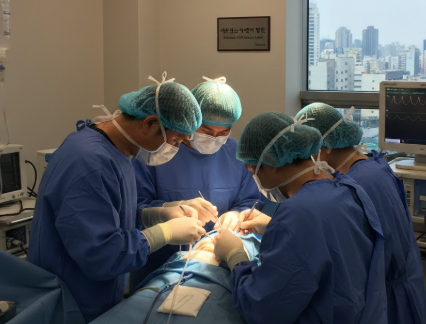
Treatment Overview
Pediatric AUS (Artificial Urinary Sphincter) implant surgery is a specialized urological procedure designed to treat severe stress urinary incontinence in children and adolescents. This minimally invasive procedure involves the placement of an artificial urinary sphincter that mimics the function of a healthy sphincter, restoring bladder control.
Korea is recognized for offering world-class pediatric AUS implantation due to its combination of pediatric urology specialists, advanced surgical technology, and minimally invasive techniques. Hospitals utilize precise imaging and customized implants to accommodate pediatric anatomy, ensuring effective continence outcomes with minimal tissue trauma and long-term durability.
Purpose & Benefits
The primary purpose of pediatric AUS implantation is to improve urinary continence in children with congenital or acquired sphincter deficiencies, neurogenic bladder conditions, or post-surgical incontinence.
Key benefits include:
• Restoration of bladder control and independence
• Minimal scarring and less invasive surgical approach
• Personalized device sizing for pediatric anatomy
• Improved quality of life and psychosocial well-being
• Reduced frequency of pad use or diapers
• Long-term solution for chronic urinary incontinence
• High success rates due to precise placement and advanced devices
Korean hospitals focus on both functional and aesthetic outcomes, creating a child-friendly environment for surgery and recovery.
Ideal Candidates
Pediatric AUS implant surgery is recommended for children and adolescents with significant urinary incontinence that cannot be managed with non-surgical interventions.
Ideal candidates include:
• Children with congenital urinary sphincter deficiency
• Patients with neurogenic bladder from spina bifida or spinal cord injury
• Children with persistent incontinence following prior urological surgery
• Pediatric patients unable to achieve continence with medications or catheterization
• Children whose quality of life is significantly affected by incontinence
Korean specialists conduct thorough evaluations, including urodynamics, renal imaging, and bladder function assessment, to ensure the patient is a suitable candidate for surgery.
Possible Risks & Complications
While pediatric AUS implantation is generally safe, potential risks and complications include:
• Infection at the implant site
• Device malfunction or mechanical failure
• Urethral erosion or atrophy
• Persistent leakage if the device is not optimally calibrated
• Discomfort or swelling at the surgical site
• Rare anesthesia-related risks
Korean hospitals minimize complications with advanced sterile techniques, meticulous surgical planning, and close postoperative monitoring tailored to pediatric patients.
Techniques & Technology Used
Korea uses advanced technology to perform pediatric AUS implantation with precision and safety. Key techniques include:
• Minimally invasive laparoscopic or micro-incision approaches
• Robotic-assisted surgery for enhanced accuracy in small anatomy
• 3D imaging and ultrasound for intraoperative guidance
• Pediatric-sized artificial sphincters for customized fit
• Biocompatible materials to reduce infection and erosion risk
• Pressure-regulated cuffs adapted for pediatric urethra
• Digital mapping for optimal device placement and long-term functionality
These innovations allow surgeons to achieve effective continence outcomes with minimal disruption to surrounding tissues.
Treatment Process in Korea
The treatment journey for pediatric AUS implantation in Korea is carefully coordinated for patient safety and convenience:
- Pre-Arrival Consultation
Parents provide medical history, prior test results, and imaging for initial assessment. - In-Person Evaluation
Upon arrival, children undergo urodynamic studies, renal and bladder imaging, cystoscopy, and lab tests. - Surgical Planning
Pediatric urologists design a personalized surgical plan, including implant sizing, cuff placement, and incision strategy. - Surgery
The procedure typically lasts 1–2 hours under general anesthesia, with small incisions and minimally invasive techniques for precise placement. - Postoperative Monitoring
Children remain in the hospital for 1–2 days for pain management, monitoring of urinary function, and early mobilization. - Healing and Activation
The device is activated 4–6 weeks post-surgery once healing is sufficient. Parents receive detailed instructions on device use and monitoring. - Follow-Up Care
Regular follow-ups include device function assessment, urinary testing, and guidance on long-term care. Telemedicine support may be provided for international families.
Recovery & After-Care
Recovery in pediatric patients is typically smooth due to minimally invasive techniques. Key recovery considerations include:
• Mild postoperative discomfort for a few days
• Gradual return to normal activities within 1–2 weeks
• Avoidance of heavy physical activity or sports for 4–6 weeks
• Adherence to hygiene and care instructions to prevent infection
• Device activation and parent education after healing
• Regular follow-up to ensure proper device function and growth adaptation
Korean hospitals emphasize child-friendly recovery with pain management, play therapy, and parental support.
Results & Longevity
Pediatric AUS implantation has high success rates in restoring continence and improving quality of life. Typical outcomes include:
• Significant reduction or elimination of urinary leakage
• Long-term functionality of 7–10+ years
• Minimal scarring and low complication rates
• Enhanced self-esteem and social confidence
• Durable device performance with proper follow-up and care
Korean surgeons maintain excellent outcomes through precision techniques and child-specific implants.
Why Korea Is a Top Destination
Korea is a preferred destination for pediatric AUS implantation due to:
• Specialized pediatric urology teams with global expertise
• Advanced minimally invasive and robotic surgical techniques
• Child-friendly hospital environments
• Internationally accredited hospitals with high safety standards
• Comprehensive pre- and postoperative care for children
• Short waiting times and streamlined medical tourism processes
• Competitive costs compared to the US and Europe
• High success rates and low complication rates for pediatric patients
These factors make Korea a trusted destination for families seeking advanced pediatric continence solutions.
Cost Range
The cost of pediatric AUS implant surgery in Korea generally ranges from USD 14,000 – 25,000, depending on:
• Device type and pediatric sizing requirements
• Hospital level and surgical technique
• Preoperative diagnostics and imaging
• Length of hospital stay and follow-up care package
• Use of robotic or minimally invasive technology
Many hospitals offer packages tailored to international pediatric patients, including surgery, diagnostics, and follow-up care.
Popular Clinics in Korea
Top hospitals and clinics offering pediatric AUS implantation include:
• Samsung Medical Center
• Asan Medical Center
• Seoul National University Hospital (SNUH)
• Severance Hospital (Yonsei University Health System)
• Korea University Anam Hospital
• W Hospital Pediatric Urology Center
• Chung-Ang University Hospital
• BnU Urology Clinic
These institutions combine pediatric surgical expertise with advanced technologies and international patient support.


