
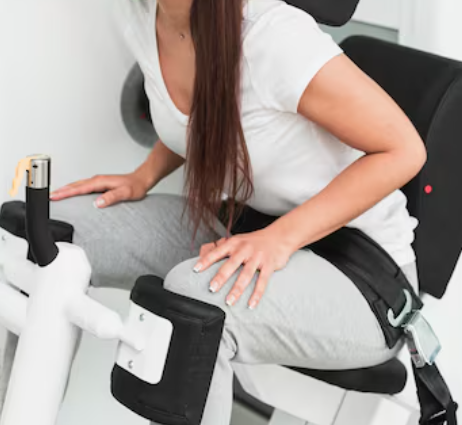
Treatment Overview
The Pelvic EMS Bio Trainer in Korea is a specialised device-assisted therapy utilised within women’s health / OBGYN and pelvic floor & urogynecology settings. The system uses Electrical Muscle Stimulation (EMS) or electromagnetic-based pulses applied to the pelvic floor musculature (via internal probes, external pads, or seated platforms) to trigger contractions and bio-muscular engagement of the pelvic floor muscles. In Korean clinics, the device is integrated into pelvic floor physical therapy programmes, often as a complement to manual therapy, Kegel-exercise training and lifestyle interventions.
Purpose & Benefits
The primary purpose of the Pelvic EMS Bio Trainer is to initiate or accelerate pelvic floor muscle activation, especially when voluntary contractions (via standard Kegel exercises) are weak or ineffective. The benefits include:
- Enhanced pelvic floor muscle strength, endurance and neuromuscular coordination.
- Improved urinary and bowel control (reducing stress or urge incontinence).
- Better pelvic organ support and reduced symptoms of pelvic floor weakness (e.g., heaviness, bulging).
- Efficient muscle training in less time, often enabling deeper muscle engagement than Kegels alone.
- Integration of the device-training into broader pelvic floor rehabilitation improves functional movement (lifting, posture) and accelerates recovery postpartum or after surgery.
Ideal Candidates
Ideal users of the Pelvic EMS Bio Trainer are women who:
- Have urinary leakage (stress, urge or mixed) linked to weakened pelvic floor muscles.
- Have undergone childbirth, pelvic surgery, menopause or other factors that impair pelvic floor activation.
- Find it difficult to perform effective Kegel exercises due to low muscle awareness or inability to contract voluntarily.
- Are participating in a supervised pelvic floor physical therapy programme in Korea and want device-assisted training support.
- Desire a quicker, more guided path to pelvic floor recovery and better functional integration of pelvic-floor strength.
Possible Risks & Complications
While the therapy is non-surgical and relatively safe, potential issues include:
- Temporary pelvic or muscle soreness as previously under-used muscles are engaged.
- Mild discomfort or tingling during EMS sessions, depending on intensity and placement.
- Incorrect placement or use of device could recruit compensatory muscles (hips/glutes) rather than pelvic floor, reducing effectiveness.
- If there is a significant structural pelvic support defect (e.g., advanced prolapse, connective-tissue damage), relying solely on device use without structural assessment may delay optimal care.
- Patients with electronic implants (pacemakers), in early postpartum or with active pelvic infection/inflammation may need additional surveillance.
Device Features & Integration
Typical features of a Pelvic EMS Bio Trainer in Korea include an internal probe or external pad setup, EMS or electromagnetic pulse delivery, adjustable intensity and cycle settings, possibly integrated bio-feedback display, and protocol modes for muscle train/relax cycles. Clinics in Korea integrate the device into physical therapy sessions: initial assessment by a pelvic-floor specialist or physiotherapist, supervised device use, monitoring of muscle response and then transition to home-use or clinic-based maintenance sessions. The device is used alongside traditional pelvic-floor training, core stability work, posture/movement correction, bladder/bowel habit education and lifestyle modification.
Recovery & Aftercare
After initial assessment and device-session(s) in clinic (commonly 1–2 sessions per week for several weeks), the patient transitions to a home-or-clinic maintenance plan using the device less frequently (e.g., once per week or every few weeks) and continuing Kegel and core exercises. Aftercare includes posture/movement training, bladder/bowel habit coaching, avoidance of high intra-abdominal loads, and periodic reassessment of pelvic-floor muscle function and device-feedback metrics. Results are better when device use is combined with active participation in physical therapy and behavioural changes.
Results & Longevity
When used correctly and consistently within a full pelvic floor rehabilitation programme, the Pelvic EMS Bio Trainer often results in stronger pelvic floor contractions, improved coordination, fewer leakage events, better functional movement (lifting, carrying, exercising) and higher confidence in pelvic floor health. The longevity of results depends on: the underlying condition severity, consistency of training, adherence to lifestyle modifications (weight, lifting, chronic cough), structural support status and continuation of maintenance programmes. Korean clinics emphasise long-term follow-up and integration of device-data and physical-therapy progress to sustain benefits.
Cost Range
In Korea, approximate cost estimates for pelvic floor therapy sessions that include EMS device use fall in line with general pelvic floor therapy costs:
- Initial assessment/consultation: about ₩ 50,000 to ₩ 100,000 (around USD 40-75)
- Per supervised device-session or EMS session: around ₩ 70,000 to ₩ 150,000 (USD 50-110)
- Package programmes (e.g., 8-10 sessions including device use + follow-up) may range around ₩ 560,000 to ₩ 1,200,000 (USD 415-900)
Note: Additional costs may include home-device purchase (if applicable), diagnostics (EMG/ultrasound), and international-patient service fees.
Best Clinics in Korea
Here are notable clinics in Korea delivering pelvic floor physical therapy that incorporate device-assisted EMS training:
- Gangnam J Urology Clinic (Seoul, Gangnam District) – A specialized centre for female pelvic-floor dysfunction, incontinence and device-supported rehabilitation.
- Sinsoe Women’s Clinic (Seoul, Gangnam District) – Women’s health clinic offering pelvic floor rehabilitation including device-based EMS training, postpartum recovery and incontinence care.
- Yoonho OB/GYN Hospital (Seoul, Gangnam District) – A comprehensive women’s health hospital where pelvic floor physical therapy, device-based training and urogynecology are integrated for both domestic and international patients.


