
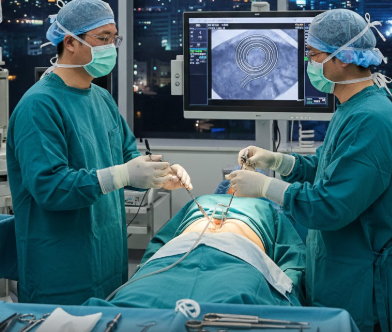
Treatment Overview
Permanent ureteral stent placement is a minimally invasive urological procedure used to maintain long-term urine flow from the kidney to the bladder in cases of chronic or complex ureteral obstruction. Unlike temporary stents, permanent stents are designed to remain in place for extended periods, providing continuous drainage for patients with severe ureteral strictures, malignancies, or recurrent obstruction that cannot be fully resolved surgically.
In Korea, permanent stent placement is performed using high-definition endoscopy and fluoroscopic guidance to ensure precise positioning and optimal long-term function. Korean urology centers specialize in both metallic and polymer stents, offering solutions tailored to individual anatomical and clinical needs. This procedure is especially popular among medical tourists seeking durable, minimally invasive management for chronic ureteral conditions.
Purpose & Benefits
Permanent ureteral stents are intended to relieve long-term obstruction, prevent kidney damage, and improve patient quality of life. Benefits include:
- Continuous urine drainage, reducing hydronephrosis risk
- Preservation of kidney function in chronic ureteral obstruction
- Relief from pain, recurrent infections, and urinary complications
- Minimally invasive procedure with small or no incisions
- Reduced need for repeated interventions compared to temporary stents
- Suitable for patients who are not candidates for reconstructive surgery
Korean hospitals integrate advanced imaging, stent material selection, and expert placement to ensure optimal long-term outcomes.
Ideal Candidates
Permanent ureteral stent placement is suitable for patients who:
- Have chronic ureteral strictures or obstruction from stones, fibrosis, or inflammation
- Suffer from ureteral obstruction due to malignancy (e.g., bladder, prostate, or gynecologic cancers)
- Are not candidates for reconstructive surgery due to age, comorbidities, or previous procedures
- Require long-term ureteral drainage to preserve kidney function
- Need palliative management for obstructive uropathy
Korea offers specialized care for both adult and elderly patients, and international patients benefit from hospitals experienced in managing complex ureteral conditions.
Possible Risks & Complications
While permanent stent placement is generally safe, potential risks include:
- Hematuria or blood in urine
- Urinary tract infection
- Bladder irritation, frequency, or urgency
- Stent migration or malposition
- Encrustation or mineral buildup over time
- Rare ureteral injury during placement
- Stent-related discomfort or pain
Korean urology centers minimize risks through careful imaging, stent selection, and regular follow-up protocols.
Techniques & Technology Used
Korean hospitals employ advanced technology for permanent stent placement:
- Rigid or flexible cystoscopy for accurate stent insertion
- Guidewire-assisted placement for proper ureteral alignment
- Fluoroscopic imaging for real-time visualization
- Dual-J, metallic, or polymer stents depending on patient need
- Coated stents to reduce encrustation and biofilm formation
- High-definition endoscopes for precise placement
- Customized stent sizing for optimal drainage and comfort
These techniques ensure long-term patency and reduce the likelihood of complications.
Treatment Process in Korea
Korean hospitals provide a patient-oriented treatment pathway for permanent ureteral stent placement:
- Consultation & Evaluation
Detailed medical assessment including history, urine analysis, kidney function tests, ultrasound, CT urography, or retrograde pyelography. - Pre-Procedure Planning
Urologists select the appropriate stent type and size based on obstruction severity, anatomy, and expected longevity. - Stent Placement Procedure
- Performed under local anesthesia with sedation or general anesthesia
- Cystoscope inserted through the urethra into the bladder
- Guidewire advanced through the ureter to the obstruction
- Stent placed with one end in the kidney and the other in the bladder
- Fluoroscopy ensures accurate positioning
- Post-Procedure Monitoring
Patients are observed for a few hours to a day, depending on medical condition and comfort. - Follow-Up & Maintenance
Periodic imaging and check-ups are performed to monitor stent function and detect complications such as encrustation. Some stents may require replacement every 6–12 months depending on the material.
Recovery & After-Care
Recovery is usually rapid due to the minimally invasive nature of the procedure. Key after-care guidance includes:
- Drinking plenty of fluids to reduce infection and prevent encrustation
- Managing mild urinary frequency, urgency, or discomfort with medications
- Avoiding heavy lifting or strenuous activity for a few days
- Attending scheduled follow-up appointments to monitor stent condition
- Reporting persistent pain, fever, or abnormal urine immediately
Most patients resume normal activities within 1–2 days after the procedure.
Results & Longevity
Permanent ureteral stents provide continuous relief from obstruction and preserve kidney function. In Korea, outcomes are highly successful due to:
- Advanced imaging and endoscopic guidance
- Experienced urologists with high procedural volumes
- Use of long-lasting, encrustation-resistant stents
While stents are not a permanent cure for underlying disease, they effectively manage obstruction for extended periods, sometimes for several years, depending on patient condition and stent type.
Why Korea Is a Top Destination
Korea is a global leader in permanent ureteral stent placement due to:
- Expert urologists with international training
- State-of-the-art endoscopic and imaging facilities
- Efficient scheduling and care coordination for international patients
- Competitive pricing compared to Western countries
- High safety, hygiene, and low complication rates
- Multilingual support and comprehensive medical tourism services
Patients from Asia, Europe, the Middle East, and North America choose Korea for reliable, long-term ureteral care.
Cost Range
The cost for permanent ureteral stent placement in Korea typically ranges from USD 3,000 to USD 8,000, depending on:
- Hospital tier and location
- Stent material (metallic, polymer, coated)
- Duration of hospitalization or anesthesia
- Additional imaging or interventions required
Korean hospitals provide cost-effective, high-quality care for medical tourists seeking long-term ureteral management.
Popular Clinics in Korea
- Seoul National University Hospital (SNUH)
- Asan Medical Center
- Samsung Medical Center
- Severance Hospital – Yonsei University Health System
- Korea University Anam Hospital
- Wooridul Urology Clinic
- Gangnam Severance International Clinic
These hospitals are recognized for advanced minimally invasive urology, stent technology, and comprehensive international patient services.


