
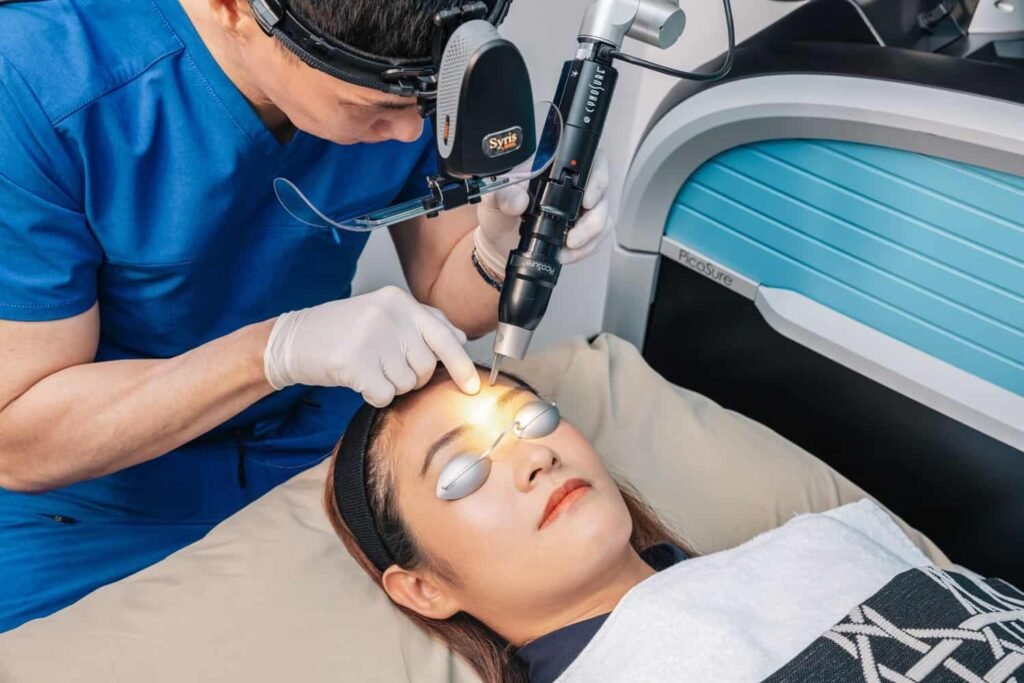
Hyperpigmentation, whether from sun damage, melasma, acne scars, or age spots, is a common skin concern. Two popular treatments are Pico Laser and Chemical Peels, each with unique mechanisms and benefits. Here’s a breakdown of how they compare:
What is Pico Laser?
Pico Laser (short for picosecond laser) uses ultra-short pulses of laser energy to break down pigmentation into tiny particles, which the body naturally clears away. It’s known for targeting pigmentation with high precision without damaging surrounding tissue.
What are Chemical Peels?
Chemical Peels use acids (like glycolic, salicylic, lactic, or TCA) to exfoliate the top layers of skin. This helps remove pigmented or damaged cells and stimulates new skin growth, leading to a brighter, more even complexion.
Pros and Cons of Pico Laser for Pigmentation
✅ Pros:
- Highly Effective on Deep Pigmentation: Great for stubborn pigmentation like melasma, freckles, sun spots, and post-inflammatory hyperpigmentation.
- Minimal Downtime: Patients often return to normal activities quickly, with mild redness that fades in a day or two.
- Safe for Most Skin Types: Especially suitable for darker skin tones when performed by experienced professionals.
- Stimulates Collagen: Offers additional benefits like skin tightening and texture improvement.
- Precision Treatment: Targets pigmentation without harming surrounding skin.
❌ Cons:
- Higher Cost: Pico Laser is more expensive per session compared to chemical peels.
- Multiple Sessions Often Needed: Results are gradual and may require 3–5 sessions.
- Mild Discomfort: Some people experience a snapping sensation during treatment.
- Risk of Temporary Side Effects: Redness, swelling, or darkening of spots (before they lighten) may occur.
Pros and Cons of Chemical Peels for Pigmentation
✅ Pros:
- Cost-Effective: Typically more affordable than laser treatments.
- Variety of Options: Light, medium, and deep peels can be customized based on skin concerns and pigmentation depth.
- Improves Skin Texture and Tone: In addition to treating pigmentation, peels can reduce fine lines and acne.
- Non-Invasive: No devices involved, just topical application.
❌ Cons:
- Downtime Varies: Stronger peels may cause significant peeling, redness, and recovery time.
- Risk of Over-Peeling: Especially in darker skin tones, there’s a risk of post-inflammatory hyperpigmentation (PIH) or scarring if not performed correctly.
- Not as Effective for Deep Pigmentation: Surface-level treatment may not reach deeper pigment as effectively as laser.
- Sun Sensitivity: Increases skin’s sensitivity to UV rays; strict sun protection is required post-treatment.
Which Treatment is Better for You?
| Factor | Pico Laser | Chemical Peels |
|---|---|---|
| Depth of Pigmentation | Effective for deep and stubborn pigment | Best for superficial pigmentation |
| Skin Type Compatibility | Safe for all skin tones with proper settings | Some caution needed with darker skin |
| Downtime | Minimal | Varies (especially with medium/deep peels) |
| Cost | Higher | Lower |
| Number of Sessions | 3–5+ sessions | 3–6 sessions, or ongoing maintenance |
| Additional Benefits | Collagen boost, skin tightening | Improved texture and acne control |
Conclusion
- Choose Pico Laser if you have deeper pigmentation, melasma, or darker skin and want a high-tech solution with less peeling and longer-lasting results.
- Opt for Chemical Peels if you’re treating superficial discoloration, are on a budget, or want an all-over skin refresh.
Both treatments can be effective, and in many cases, dermatologists recommend a combination approach for optimal results. Always consult with a board-certified provider to determine the safest and most effective plan for your skin type and pigmentation concerns.


