
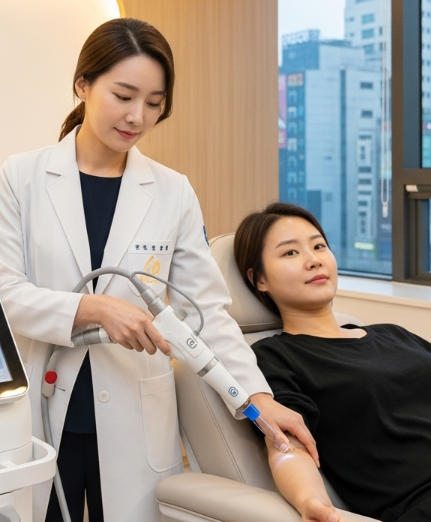
Treatment Overview
Picosecond Laser (Pico Laser) is an advanced laser technology that delivers ultra-short bursts of energy in picoseconds (trillionths of a second). This allows it to shatter melanin pigment particles into tiny fragments that are naturally cleared by the body, while minimizing heat damage to surrounding tissue.
In Korea, Pico Lasers are a gold-standard treatment for hyperpigmentation, including melasma, freckles, age spots, post-inflammatory hyperpigmentation (PIH), and tattoo removal. Compared to traditional Q-switched lasers, Pico Lasers are more effective for stubborn pigmentation and carry a lower risk of rebound pigmentation, which is especially important for Asian skin types.
Popular devices in Korean dermatology clinics include PicoSure, PicoWay, and Discovery Pico, often combined with laser toning, skin boosters, or brightening infusions for optimized results.
Purpose & Benefits
- Precise Pigment Removal: Breaks down melanin clusters without damaging surrounding skin.
- Effective for Stubborn Pigmentation: Works well for melasma, freckles, and PIH.
- Low Risk of PIH: Gentle, non-thermal effect reduces rebound hyperpigmentation.
- Skin Brightening: Improves dullness and restores glow.
- Collagen Remodeling: Stimulates elastin and collagen for smoother texture.
- Multi-Purpose: Can also treat acne scars, enlarged pores, and tattoos.
Ideal Candidates
Picosecond Laser in Korea for hyperpigmentation is recommended for:
- Patients with melasma or resistant pigmentation.
- Individuals with sun spots, freckles, or post-acne dark marks.
- Adults with sensitive skin prone to rebound pigmentation.
- Those seeking a safe, effective, and minimal downtime treatment.
Comparison with Other Treatments:
- Pico Laser: Best for stubborn pigmentation, melasma, PIH, and multi-depth pigment.
- BB Laser / Laser Toning: Good for gradual pigmentation control and melasma.
- Fraxel Dual / CO₂: Better for pigmentation + textural concerns.
- Cosmelan / Dermamelan: Medical peels for severe melasma.
- Glutathione / Vitamin C Infusions: Supportive systemic brightening.
Possible Risks & Complications
While Pico Lasers are safer than older lasers, possible temporary side effects include:
- Redness or Warmth: Fades within hours to a day.
- Mild Swelling: Especially in sensitive areas, resolves quickly.
- Darkening of Spots (Micro-Crusting): Pigments may darken before flaking off.
- Rare Risks: Over-treatment may cause PIH, but minimized in Korean clinics with conservative protocols.
Treatment Techniques Used
- Picosecond Pulses: Ultra-short bursts target melanin precisely.
- Fractional Pico Mode: Creates micro-injuries to stimulate collagen (for scars + wrinkles).
- Customized Settings: Adjusted based on pigment type and depth.
- Session Protocol: Usually 3–6 sessions, spaced 3–4 weeks apart.
- Combination Therapy: Often paired with skin boosters (Rejuran, exosomes) or Vitamin C infusion.
Recovery & Aftercare
- Immediately: Redness, mild tingling, or warmth.
- 1–3 Days: Pigmented spots may darken slightly (“frosting” effect).
- 1–2 Weeks: Brighter skin as pigment fragments are cleared.
Aftercare Tips:
- Apply soothing moisturizers or serums.
- Avoid harsh skincare (retinol, acids) for 3–5 days.
- Use SPF 50+ daily to prevent rebound pigmentation.
- Avoid sunbeds, saunas, or hot yoga for a few days.
Results & Longevity
- Short-Term (1–2 Sessions): Fresher, brighter skin.
- Medium-Term (3–4 Sessions): Significant reduction in pigmentation and dark spots.
- Long-Term (6–12 Months): Maintenance sessions recommended once or twice a year.
Treatment Process in Korea
- Consultation & Pigment Analysis – Doctor assesses pigmentation type (melasma, freckles, PIH).
- Preparation – Skin cleansing and protective eyewear.
- Pico Laser Session – Ultra-short pulses applied to pigmentation areas.
- Optional Add-Ons – Skin boosters, PRP, or Vitamin C infusion.
- Post-Care – Cooling mask and hydration therapy.
- Follow-Up – Sessions repeated every 3–4 weeks until results achieved.
Why Korea is a Top Destination
- Korean dermatologists are leaders in pigmentation care with Pico technology.
- Clinics use authentic KFDA-approved Pico devices (PicoSure, PicoWay, Discovery Pico).
- Treatments are tailored with low-fluence, safe protocols for Asian skin.
- Clinics often include multi-step pigmentation management (lasers + peels + boosters).
- Pricing is more affordable than in Western countries.
Cost Range (Detailed Breakdown)
Pricing for Picosecond Laser in Korea for hyperpigmentation:
- Single Session (localized area): USD 200 – 400
- Full Face Session: USD 400 – 700
- 3-Session Package: USD 1,000 – 1,500
- Premium Pigmentation Package (Pico + Rejuran/Exosome + Vitamin Infusion): USD 1,800 – 3,000 (3–5 sessions)
Additional Costs in Korea:
- Consultation: USD 20 – 40
- Add-ons (Rejuran, Exosomes, PRP, Vitamin C Infusion): USD 150 – 500
💡 Many patients call Pico Laser the “precision pigmentation eraser”, since it removes dark spots effectively while minimizing downtime and risks.
Popular Clinics in Seoul
- Banobagi Dermatology – Pico Laser for melasma + freckles.
- Oracle Dermatology – Pico Laser + exosome or PRP recovery.
- Renewme Skin Clinic – Pico Laser + pigmentation-focused brightening protocols.
- View Plastic & Dermatology – Premium Pico + skin booster packages.
- Chaum Anti-Aging Center – Luxury Pico Laser pigmentation programs.


