
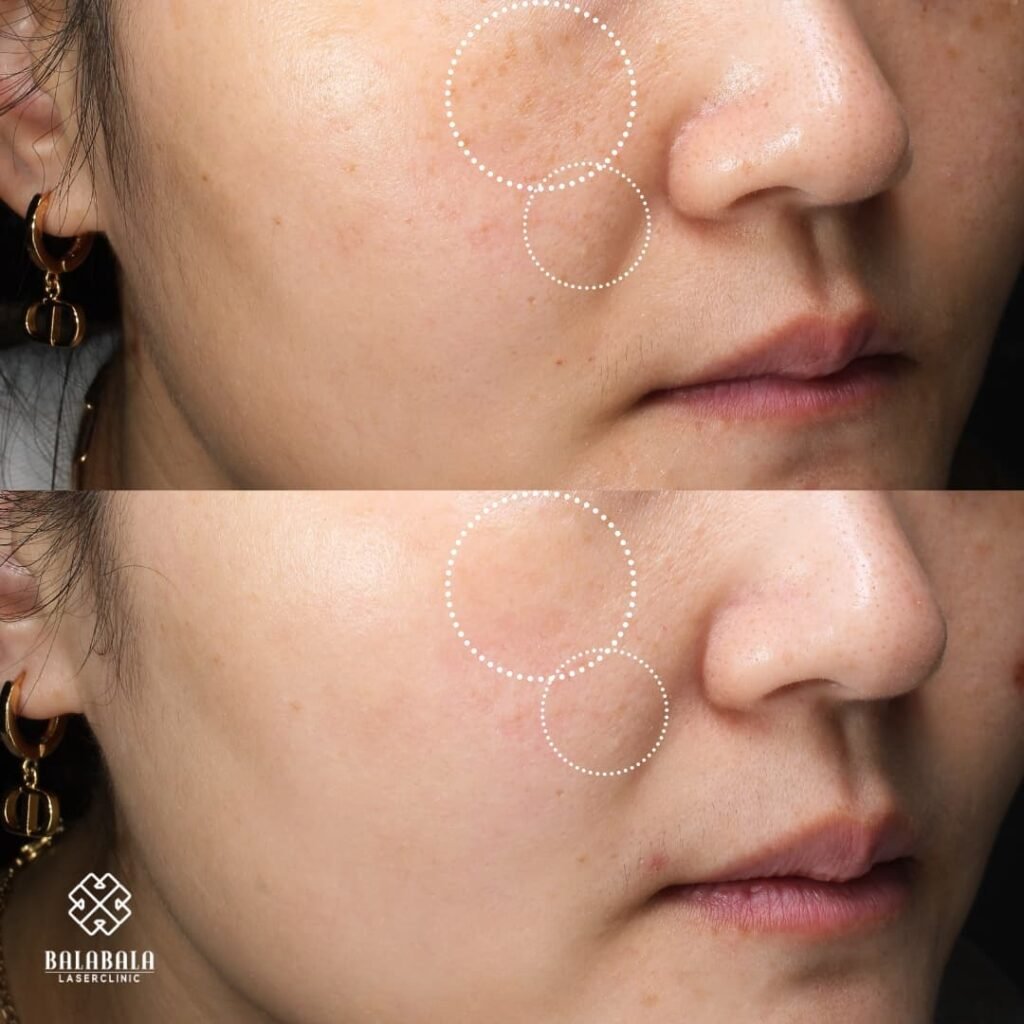
Treatment Overview
The PicoSure Laser by Cynosure is the world’s first picosecond aesthetic laser, operating at 755 nm Alexandrite + 532 nm wavelengths. It delivers ultra-short pulses in trillionths of a second, shattering melanin into tiny particles while minimizing thermal damage.
In Korea, the PicoSure Laser is used to treat pigmented birthmarks such as café-au-lait spots, Ota nevus, congenital nevi, and epidermal pigmentation disorders. It is also highly effective for tattoo removal, acne scars, and skin rejuvenation, making it a versatile device in Korean dermatology clinics. PicoSure is particularly favored for patients with stubborn pigmentation or congenital marks who want effective results with minimal downtime.
It belongs to the Birthmark & Pigmentation Treatment family (PicoSure, PicoPlus, PicoCare, Q-Switched Nd:YAG, Alexandrite, Ruby, CO₂ Fractional):
- PicoSure: Best for pigmented birthmarks, scars, and tattoos.
- PicoPlus: Best for multi-wavelength pigment clearance.
- PicoCare: Best for resistant pigmentation and acne scars.
- Q-Switched Nd:YAG: Best for melasma and dermal pigment.
- Alexandrite (755 nm): Best for congenital pigmented birthmarks.
- Ruby (694 nm): Best for resistant pigmented lesions.
- CO₂ Fractional: Best for surface lesions with textural issues.
Purpose & Benefits
- Birthmark Removal: Effective for congenital pigmented marks like café-au-lait and Ota nevus.
- Pigmentation Clearance: Targets freckles, sunspots, and dermal pigmentation.
- Scar & Texture Improvement: Collagen stimulation improves acne scars and pores.
- Tattoo Removal: Highly effective across multiple ink colors.
- Safe for Asian Skin: Minimal heat reduces PIH (post-inflammatory hyperpigmentation).
- Minimal Downtime: Patients return to normal activities quickly.
- Skin Rejuvenation: Restores clarity, elasticity, and glow.
Ideal Candidates
PicoSure Laser in Korea is recommended for:
- Children and adults with pigmented congenital or acquired birthmarks.
- Patients with Ota nevus, café-au-lait spots, or dermal pigmentation disorders.
- Individuals with stubborn pigmentation or resistant lesions.
- Men and women comparing treatments:
- PicoSure: Best for pigmented birthmarks + tattoos + rejuvenation.
- PicoPlus: Best for multi-wavelength stubborn pigment.
- PicoCare: Best for resistant pigment + acne scars.
- Nd:YAG: Best for dermal pigment and melasma.
- Alexandrite: Best for congenital pigmented lesions.
- Ruby: Best for resistant pigment.
- CO₂ Fractional: Best for superficial lesions with textural issues.
Possible Risks & Complications
PicoSure is safe and FDA/KFDA-approved, but mild side effects may include:
- Redness or Warmth: Temporary, subsides within hours.
- Dryness or Flaking: As skin renews.
- Temporary Pigment Darkening: Common before fading.
- Rare Risks: PIH or hypopigmentation (rare in expert Korean clinics).
Surgical Techniques Used
The PicoSure Laser uses PressureWave™ technology for pigment shattering:
- 755 nm Alexandrite: Targets melanin and tattoo pigments.
- 532 nm Wavelength: Effective for superficial pigmentation.
- Focus Lens Array (Optional): Stimulates collagen and improves scars.
- Protocol:
- Birthmarks: 3–8 sessions spaced 3–4 weeks apart.
- Pigmented lesions: 2–5 sessions depending on depth.
- Scars & rejuvenation: Fractional mode for collagen remodeling.
Recovery & Aftercare
- Immediately: Mild redness, tingling, or warmth.
- 1–3 Days: Temporary darkening or crusting of pigment.
- 1–2 Weeks: Birthmark visibly lightens.
Aftercare Tips:
- Apply SPF 50+ daily to protect results.
- Use hydrating and barrier-strengthening creams.
- Avoid scrubbing or picking at scabs.
- Avoid strong exfoliants or retinoids for 5–7 days.
Results & Longevity
- After First Session: Brighter tone and early pigment fading.
- Short-Term (2–4 Sessions): Visible lightening of birthmarks.
- Medium-Term (4–6 Sessions): Significant clearance of congenital or dermal pigmentation.
- Long-Term: Many results are permanent, though resistant lesions may require maintenance.
Treatment Process in Korea
- Consultation & Skin Analysis – Doctor evaluates birthmark type and pigment depth.
- Preparation – Cleansing, protective eyewear, and numbing cream if necessary.
- PicoSure Session – Picosecond pulses delivered at 755 and/or 532 nm.
- Post-Care: Cooling gel, hydrating serums, or antioxidant boosters.
- Follow-Up: Multi-session plan tailored for congenital or resistant marks.
Why Korea is a Top Destination
- Korea is a global leader in pigmentation and birthmark treatment with PicoSure.
- Dermatologists are experienced in treating congenital lesions safely in Asian skin.
- Clinics offer combination therapy (PicoSure + Nd:YAG/PicoPlus/boosters) for better outcomes.
- Affordable compared to Western pigmentation programs.
- Seoul is internationally recognized for “glass skin” pigmentation correction programs.
Cost Range (Detailed Breakdown)
Pricing for PicoSure Laser in Korea:
- Single Session (small birthmark area): USD 250 – 500
- Medium to Large Birthmark (per session): USD 400 – 900
- 3–6 Session Package: USD 1,200 – 3,500
Additional Costs in Korea:
- Consultation: USD 20 – 50
- Add-ons (Exosomes, PN boosters, Rejuran, Vitamin infusions): USD 100 – 500
💡 The PicoSure Laser is often called “the versatile birthmark eraser” in Korea, thanks to its dual ability to treat congenital pigmentation safely and rejuvenate skin with minimal downtime.
Popular Clinics
- Banobagi Dermatology (Seoul): PicoSure for congenital pigment + boosters.
- Oracle Dermatology (Seoul): Specialized PicoSure protocols for Ota nevus + café-au-lait.
- Renewme Skin Clinic (Seoul): PicoSure fractional mode for pigment + scars.
- View Plastic & Dermatology (Seoul): PicoSure for resistant pigmentation + rejuvenation.
- Chaum Anti-Aging Center (Seoul): Premium PicoSure with regenerative add-ons.


