
Treatment Overview
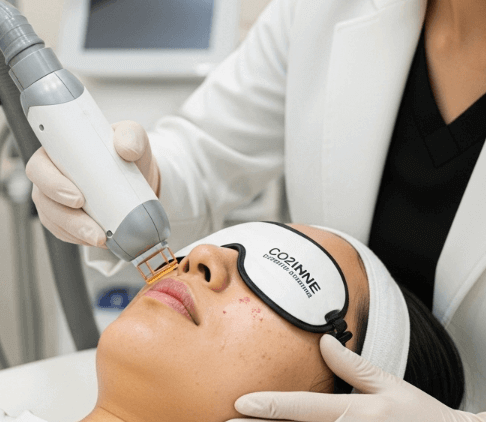
Pigment Control CO₂ is a fractional ablative CO₂ laser protocol used in Korean dermatology clinics to target stubborn pigmentation issues such as melasma, freckles, sunspots, and post-inflammatory hyperpigmentation (PIH). By delivering precise fractional microbeams into the skin, it removes pigmented cells while stimulating collagen renewal and improving skin clarity.
Unlike purely resurfacing lasers, Pigment Control CO₂ focuses on melanin regulation and pigment breakdown. It is frequently combined with other brightening therapies in Korea, including Pico lasers, tranexamic acid infusion, exosomes, and PRP, to enhance pigment clearance while minimizing recurrence.
It belongs to the Skin Concerns: Pigmentation, Melasma, Sunspots, PIH, Uneven Tone family (Pigment Control CO₂, Hyperpigmentation CO₂, Glowing CO₂, Pico Toning, Baby CO₂):
- Pigment Control CO₂: Best for overall pigmentation control and prevention.
- Hyperpigmentation CO₂: Best for resistant melasma and stubborn dark spots.
- Glowing CO₂: Best for skin brightening + texture glow.
- Pico Toning: Best for pigmentation with zero downtime.
- Baby CO₂: Best for mild pigmentation + preventive care.
Purpose & Benefits
- Melanin Regulation: Breaks down and removes pigmented cells.
- Skin Brightening: Evens out dull and blotchy skin.
- Spot Fading: Improves sunspots, freckles, and PIH.
- Collagen Renewal: Repairs photo-damaged skin and strengthens dermis.
- Texture Smoothing: Refines pores and surface roughness.
- Preventive Effect: Helps reduce recurrence of pigmentation.
Ideal Candidates
Pigment Control CO₂ in Korea is recommended for:
- Patients with melasma, sunspots, or uneven pigmentation.
- Individuals struggling with acne-induced PIH.
- Adults with dull skin tone or patchy complexion.
- Men and women who want long-term pigment control with skin renewal.
Comparison with Other Treatments
- Pigment Control CO₂: Best for balanced pigment regulation + maintenance.
- Hyperpigmentation CO₂: Best for stubborn melasma and dark patches.
- Glowing CO₂: Best for overall glow + clarity.
- Pico Toning: Best for pigment reduction with no downtime.
- Baby CO₂: Best for mild cases + preventive care.
Possible Risks & Complications
While generally safe in Korean expert clinics, possible risks include:
- Redness & Swelling: Mild, lasts 2–5 days.
- Flaking & Peeling: Normal as pigmented cells shed.
- Temporary Darkening (PIH): Controlled with sunscreen and proper aftercare.
- Rare Risks: Over-treatment may worsen melasma if protocols are not adjusted properly.
Surgical Techniques Used
Pigment Control CO₂ uses gentle fractional ablation with pigment-targeting focus:
- Laser Device: CO₂ fractional systems (eCO₂, UltraPulse).
- Epidermal Resurfacing: Removes melanin clusters in the top skin layer.
- Fractional Channels: Stimulate new cell turnover.
- Combination Therapy: Often paired with Pico toning, tranexamic acid, or exosomes.
- Protocol: 2–4 sessions spaced 4–6 weeks apart; maintenance every 6–12 months.
Recovery & Aftercare
- Immediately: Mild redness and sensitivity.
- 2–5 Days: Pigments darken, flake, and shed naturally.
- 2–4 Weeks: Visible clearing and brighter tone.
- 3–6 Months: Continued pigment control and smoother skin.
Aftercare Tips:
- Apply SPF 50+ daily without fail.
- Avoid direct sun, saunas, and heat exposure.
- Use pigment-lightening topicals (tranexamic acid, niacinamide, arbutin).
- Avoid exfoliants and retinoids until cleared.
- Follow doctor’s aftercare plan carefully for melasma/PIH-prone skin.
Results & Longevity
- Immediate: Darkened spots begin flaking off.
- Short-Term (2–4 Weeks): Pigments fade, skin looks clearer.
- Medium-Term (3–6 Months): More uniform, brighter complexion.
- Long-Term: Results last 1–2 years with consistent sun protection and maintenance.
Treatment Process in Korea
- Consultation & Pigment Analysis – Doctor evaluates pigment type and skin tone.
- Preparation – Cleansing + numbing cream.
- Laser Session – Fractional CO₂ beams applied to pigment zones.
- Optional Add-Ons – Tranexamic acid, exosomes, PRP for pigment suppression.
- Post-Care – Cooling mask, brightening serums, sunscreen.
- Follow-Up – Multi-session plan ensures stable pigment control.
Why Korea is a Top Destination
- Korean dermatologists specialize in melasma and pigmentation on Asian skin.
- Clinics use authentic FDA/KFDA-approved CO₂ devices.
- Combination therapy approach (CO₂ + Pico + regenerative boosters).
- More affordable pigment protocols compared to Western clinics.
- Seoul is renowned for pigmentation-focused skin programs.
Cost Range (Detailed Breakdown)
Pricing for Pigment Control CO₂ in Korea:
- Single Session (full face): USD 350 – 700
- 2–3 Session Package: USD 900 – 1,800
- CO₂ + Brightening Boosters (Exosomes/Tranexamic/PRP): USD 500 – 1,200 per session
- Premium Pigment Package (CO₂ + Pico + Exosomes): USD 2,000 – 3,800
Additional Costs in Korea:
- Consultation: USD 20 – 50
- Add-ons (Exosomes, PN, Tranexamic infusion): USD 150 – 400
💡 Sometimes referred to as the “CO₂ Pigment Balancer”, this treatment clears dark spots while maintaining long-term pigment control.
Popular Clinics
- Oracle Dermatology (Seoul): CO₂ + Pico toning pigment protocols.
- Banobagi Dermatology (Seoul): Pigment management with CO₂ + tranexamic boosters.
- Renewme Skin Clinic (Seoul): Known for melasma/PIH treatment.
- View Plastic & Dermatology (Seoul): CO₂ pigment + brightening combo programs.
- Chaum Anti-Aging Center (Seoul): Premium pigment-control CO₂ with regenerative therapy.


