
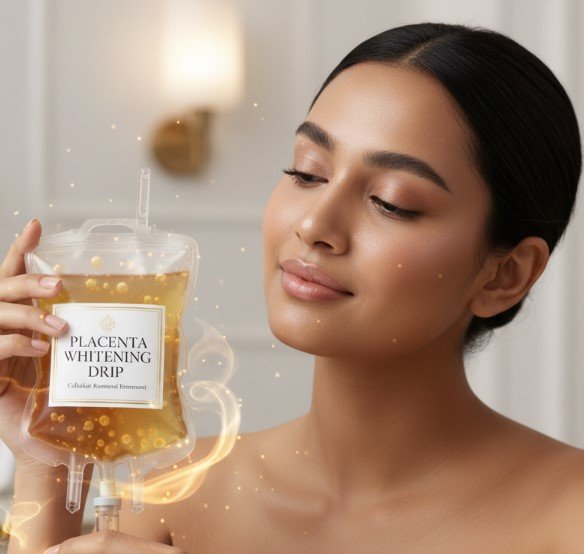
Treatment Overview
The Placenta Whitening Drip is a regenerative IV infusion therapy that combines placental extracts with glutathione, vitamin C, amino acids, and antioxidants. Widely used in Korean dermatology and anti-aging clinics, this infusion is designed to promote skin whitening, rejuvenation, and cellular repair.
Placenta extracts are known for their rich content of growth factors, peptides, amino acids, and bioactive compounds, which help stimulate collagen production, improve skin elasticity, and regulate melanin formation. In Korea, the Placenta Whitening Drip is often offered to patients with melasma, PIH (post-inflammatory hyperpigmentation), sunspots, and dull or aging skin, and is frequently combined with Pico lasers, whitening peels, or regenerative boosters for a comprehensive pigmentation program.
Purpose & Benefits
- Skin Whitening & Brightening: Suppresses melanin formation and lightens pigmentation.
- Pigmentation Control: Helps fade melasma, freckles, PIH, and sunspots.
- Cellular Regeneration: Placental extracts support healing and rejuvenation.
- Anti-Aging: Improves elasticity, firmness, and fine lines.
- Whole-Body Benefits: Enhances vitality, energy, and systemic skin glow.
Ideal Candidates
Placenta Whitening Drip in Korea is recommended for:
- Patients with melasma, PIH, freckles, or sun damage.
- Adults seeking both whitening and anti-aging benefits.
- Individuals with dull, dehydrated, or aging skin.
- Patients undergoing laser pigmentation programs who want regenerative support.
- Those preferring a whitening infusion with added rejuvenation effects.
Possible Risks & Complications
- Injection Site Effects: Temporary redness, bruising, or swelling.
- Mild Fatigue or Dizziness: Occasionally occurs during infusion.
- Allergic Reactions: Rare, but possible with placenta extract.
- Variable Whitening Results: Depend on consistency and patient metabolism.
- Not Suitable For: Patients with severe liver, kidney, or immune-related conditions.
Surgical Techniques Used
- IV Infusion Therapy: Delivered directly into the bloodstream.
- Key Ingredients:
- Placenta Extracts – bioactive compounds for rejuvenation and whitening.
- Glutathione – antioxidant and skin lightener.
- Vitamin C – enhances glutathione function and brightens skin.
- Amino Acids & Peptides – support collagen and healing.
- Other Antioxidants – such as alpha-lipoic acid or minerals.
- Combination Therapy: Often paired with Pico lasers, whitening peels, or regenerative injectables (PRP, Rejuran).
- Protocol: Typically 4–10 sessions, weekly or bi-weekly, followed by maintenance every 1–2 months.
Recovery & Aftercare
- Immediately: No downtime; patients can return to daily activities.
- 1–2 Days: Hydrated, fresher skin appearance.
- After Several Sessions: Noticeable whitening, radiance, and improved firmness.
Aftercare Tips:
- Drink plenty of water before and after infusion.
- Apply SPF 50+ sunscreen daily to prevent melanin rebound.
- Combine with topical brightening products for synergy.
- Maintain a balanced lifestyle (healthy diet, sleep, no smoking/excessive alcohol).
Results & Longevity
- After 1 Session: Slight glow and hydration.
- After 3–5 Sessions: Visible brightening and improved clarity.
- After 8–10 Sessions: Significant whitening, reduced pigmentation, firmer skin.
- Long-Term: Maintenance drips every 1–2 months keep results stable.
Treatment Process in Korea
1. Consultation & Skin Evaluation
- Dermatologist evaluates pigmentation, skin aging, and patient goals.
- Custom formula prepared with placenta extract and whitening agents.
2. Preparation
- Patient comfortably seated; IV line inserted.
- Infusion mixture blended fresh.
3. Placenta Whitening Drip Session
- Step 1: Infusion administered over 30–45 minutes.
- Step 2: Patient monitored throughout for safety.
- Step 3: Optional add-ons like LED therapy, whitening masks, or Pico laser.
4. Post-Treatment Care in Clinic
- Hydration and sun protection emphasized.
- Cooling mask or antioxidant serum may be applied if combined with facial treatments.
5. Follow-Up
- 4–10 initial sessions recommended for visible pigment reduction.
- Maintenance every 1–2 months for lasting results.
Unique Korean Advantages
- Regenerative Whitening Approach: Combines pigment fading with anti-aging benefits.
- Asian-Safe Protocols: Adjusted dosing reduces risk of PIH rebound.
- Combination-Oriented: Integrated into pigment + rejuvenation programs.
- Holistic Benefits: Enhances skin tone, texture, and systemic vitality.
- Premium Whitening Option: Positioned as a higher-end drip for patients wanting both whitening and anti-aging.
Cost Range (Estimated)
- Single Placenta Whitening Drip Session: USD 150 – 300
- 4–10 Session Package: USD 600 – 2,000
- Premium Program (Placenta Drip + Laser + Whitening Peel): USD 1,800 – 3,500
Additional Costs:
- Consultation: USD 20 – 50
- Add-ons (Extra Glutathione, Vitamin C, TXA infusion): USD 80 – 200
- Regenerative Boosters (PRP, Rejuran, Exosomes): USD 200 – 700
- LED or Cooling Mask Therapy: USD 30 – 80
Popular Clinics in Seoul
- Oracle Dermatology: Placenta Drip with whitening protocols for melasma.
- Banobagi Dermatology: Whitening + regenerative programs including placenta infusions.
- Renewme Skin Clinic: Placenta Whitening Drip with glutathione boosters.
- View Plastic & Dermatology: Pigmentation laser + placenta IV therapy.
- Chaum Anti-Aging Center: Premium placenta drip combined with regenerative care.


