
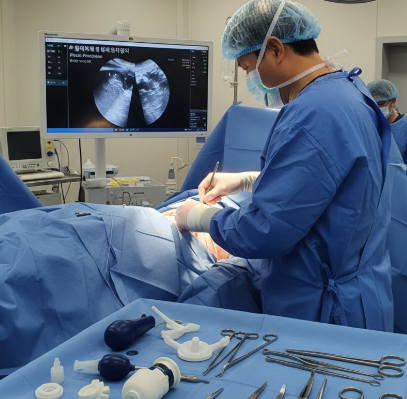
Treatment Overview
Post-prostatectomy AUS (Artificial Urinary Sphincter) implantation is a specialized procedure designed to treat stress urinary incontinence (SUI) that occurs after prostate surgery. Men who have undergone radical prostatectomy or other prostate procedures often experience urinary leakage due to sphincter damage. The AUS restores continence by mechanically replicating the function of the natural urinary sphincter.
Korea is recognized for excellence in post-prostatectomy AUS surgery due to its combination of advanced surgical technology, experienced urologists, and minimally invasive techniques. Hospitals employ precision imaging, robotic-assisted surgery, and high-quality AUS devices to achieve optimal outcomes, ensuring both functional restoration and minimal complications.
Purpose & Benefits
The primary purpose of post-prostatectomy AUS implantation is to restore urinary control in men who experience incontinence following prostate surgery.
Key benefits include:
• Effective restoration of urinary continence
• Minimally invasive surgery with reduced tissue trauma
• High precision device placement for optimal results
• Faster recovery compared to traditional methods
• Reduced risk of infection and other complications
• Improved quality of life and psychological well-being
• Durable long-term solution for post-surgical incontinence
Korean hospitals focus on individualized surgical planning to maximize the functional and long-term outcomes for each patient.
Ideal Candidates
This procedure is recommended for men who suffer from persistent urinary incontinence after prostate surgery and have not responded to conservative treatments such as pelvic floor exercises, medications, or urethral bulking.
Ideal candidates include:
• Men with moderate to severe post-prostatectomy incontinence
• Patients with intrinsic sphincter deficiency due to surgery
• Individuals with persistent leakage affecting daily life
• Patients in good general health and suitable for anesthesia
• Those seeking a long-term, reliable continence solution
Korean specialists conduct comprehensive preoperative assessments, including urodynamic testing and imaging, to determine patient suitability.
Possible Risks & Complications
Although AUS implantation is generally safe, potential risks include:
• Infection at the surgical site
• Device malfunction or mechanical failure
• Urethral erosion or atrophy from cuff pressure
• Persistent leakage if the device is not correctly calibrated
• Mild postoperative pain, swelling, or bruising
• Rare anesthesia-related complications
Korean hospitals minimize these risks through sterile techniques, precise device placement, and close postoperative monitoring.
Techniques & Technology Used
Korea uses advanced techniques and technology to ensure precision and safety in post-prostatectomy AUS implantation:
• Robotic-assisted or laparoscopic surgery for accurate placement
• Minimally invasive approaches with small incisions
• High-resolution imaging and ultrasound for intraoperative guidance
• Pressure-regulated, biocompatible AUS devices
• Customized cuff sizing based on urethral and pelvic anatomy
• 3D imaging for preoperative surgical planning
• Digital mapping to optimize device function and durability
These technologies allow surgeons to achieve high success rates while minimizing complications and recovery time.
Treatment Process in Korea
The process for post-prostatectomy AUS implantation in Korea is patient-focused and well-coordinated:
- Pre-Arrival Consultation
Patients provide medical history, prior prostate surgery details, and test results. - In-Person Diagnostics
Urodynamic studies, cystoscopy, imaging, and lab tests are performed to assess suitability. - Surgical Planning
Surgeons customize the surgical plan, including implant size, cuff placement, and incision strategy. - Surgery
The procedure typically lasts 1–2 hours under general or regional anesthesia, using minimally invasive techniques for precise device placement. - Hospital Recovery
Patients usually stay 1–2 days for monitoring, pain management, and early mobilization. - Device Activation
The AUS is activated 4–6 weeks postoperatively after tissue healing. - Follow-Up Care
Regular follow-ups are scheduled to monitor device function, adjust pressure if needed, and ensure optimal continence outcomes.
Multilingual support and medical tourism coordinators are available for international patients.
Recovery & After-Care
Recovery from post-prostatectomy AUS implantation is typically smooth:
• Mild discomfort or swelling for a few days
• Gradual return to daily activities within 1–2 weeks
• Avoidance of heavy lifting or strenuous activity for 4–6 weeks
• Device activation after full tissue healing
• Regular follow-up appointments to ensure proper function
Korean hospitals provide structured after-care programs, including education on device management and long-term follow-up for optimal results.
Results & Longevity
Post-prostatectomy AUS implantation offers excellent outcomes:
• Significant reduction or elimination of urinary leakage
• High long-term success rates, typically 85–90% continence
• Durable device performance for 7–10+ years
• Improved daily function, confidence, and quality of life
• Minimal scarring due to minimally invasive techniques
Korean expertise in precision placement and high-quality devices ensures predictable and reliable results for post-prostatectomy patients.
Why Korea Is a Top Destination
Korea is a leading destination for post-prostatectomy AUS surgery due to:
• Expert urologists specializing in AUS implantation
• Advanced minimally invasive and robotic-assisted techniques
• Internationally accredited hospitals with high safety standards
• Short waiting times and efficient medical tourism services
• Competitive costs compared to the US and Europe
• Comprehensive postoperative care and telemedicine support
• Integration of functional restoration with patient-centered care
These factors make Korea an ideal choice for men seeking high-quality AUS surgery after prostate procedures.
Cost Range
The cost of post-prostatectomy AUS implantation in Korea typically ranges from USD 13,000 – 23,000, depending on:
• AUS device type and manufacturer
• Use of robotic or minimally invasive techniques
• Hospital category (general or premium)
• Preoperative diagnostics and imaging
• Length of hospital stay and follow-up care
Many hospitals provide all-inclusive packages for international patients covering surgery, diagnostics, and postoperative care.
Popular Clinics in Korea
Top hospitals offering post-prostatectomy AUS implantation in Korea include:
• Samsung Medical Center
• Asan Medical Center
• Seoul National University Hospital (SNUH)
• Severance Hospital (Yonsei University Health System)
• Korea University Anam Hospital
• W Hospital Urology Center
• BnU Urology Clinic
• Chung-Ang University Hospital
These institutions combine expert surgeons, advanced technology, and international patient services to ensure high-quality outcomes.


