
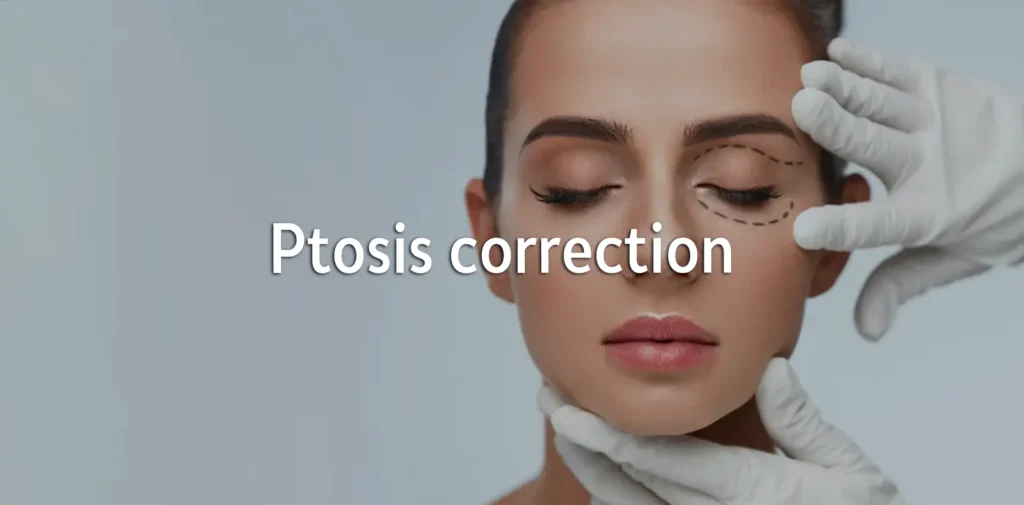
Treatment Overview
Posterior Approach Ptosis Surgery is a minimally invasive technique used to correct drooping upper eyelids (ptosis) by tightening the Müller’s muscle and levator aponeurosis through an incision made on the inside of the eyelid. Unlike the external approach, this procedure does not require a visible skin incision, which means no external scar and a faster recovery.
In Korea, this method is especially popular for patients with mild to moderate ptosis who also want a natural double eyelid crease. Korean surgeons are globally recognized for their precision in eyelid surgery, combining aesthetic artistry with functional correction to create brighter, more youthful-looking eyes while improving vision when necessary.
Purpose & Benefits
- Corrects mild to moderate drooping of the eyelids.
- Leaves no visible external scar, as the incision is inside the eyelid.
- Creates a natural, refreshed, and brighter appearance.
- Can be combined with double eyelid surgery for cosmetic enhancement.
- Shorter recovery time compared to external approaches.
- Improves visual field obstruction caused by ptosis.
Ideal Candidates
- Individuals with mild to moderate ptosis caused by weak levator or Müller’s muscle function.
- Patients who want natural-looking results with no external scar.
- People with good eyelid elasticity and minimal excess eyelid skin.
- Those seeking simultaneous ptosis correction and double eyelid formation.
- Adults in good overall health without uncontrolled eye conditions.
Possible Risks & Complications
While generally safe, there are potential risks including:
- Temporary swelling and bruising inside the eyelid.
- Mild discomfort when blinking in the early healing phase.
- Asymmetry of eyelid height or crease formation.
- Overcorrection or undercorrection of drooping.
- Rare complications such as infection or prolonged dryness of the eyes.
Surgical Techniques Used in Korea
Korean surgeons employ some of the most advanced techniques for posterior ptosis correction, including:
- Conjunctival Incision – A hidden incision is made inside the eyelid to access the Müller’s muscle and levator aponeurosis.
- Müller’s Muscle Resection or Advancement – A portion of the Müller’s muscle is shortened or tightened to lift the eyelid.
- Levator Adjustment – In some cases, the levator aponeurosis is also advanced for stronger correction.
- Double Eyelid Creation – Many Korean patients combine ptosis surgery with crease formation for a more defined look.
- Microsurgical Suturing – Ultra-fine sutures ensure precise correction and a natural outcome.
Recovery & Aftercare
- Swelling and redness last about 1–2 weeks, but recovery is generally faster than external ptosis surgery.
- Most patients return to daily activities within 5–7 days.
- Final eyelid position and crease definition stabilize in 1–2 months.
- Korean clinics often provide specialized aftercare such as anti-swelling laser therapy, cooling treatments, and scar management (even though scars are hidden).
- Follow-up visits ensure eyelid symmetry and proper healing.
Results & Longevity
- Eyelids appear naturally lifted and symmetrical, with no visible external scars.
- Eyes look brighter, larger, and more youthful.
- Functional benefits include improved vision if eyelid drooping was obstructing sight.
- Results are long-lasting, though natural aging continues to affect eyelid tissues over time.
- Korean surgeons emphasize creating balanced, natural eyelids rather than an artificial or overly high crease.
Treatment Process in Korea
Korea is one of the top destinations for ptosis correction, especially posterior approaches, due to its precision-focused techniques and artistry. The treatment process usually involves:
- Comprehensive Eye Evaluation – Assessment of levator and Müller’s muscle strength, eyelid position, and crease preference.
- Customized Planning – Surgeons design eyelid height and crease shape to match facial proportions.
- Minimally Invasive Surgery – No external scar, shorter downtime, and refined correction.
- Scar-Free Aesthetics – Hidden incisions ensure natural, scarless results.
- Medical Tourism Services – International patients benefit from coordinators, interpreters, and luxury recovery packages.
Cost Range
The cost of Posterior Approach Ptosis Surgery in Korea typically ranges from ₩2,500,000 to ₩5,500,000 KRW (USD $1,900 – $4,200) depending on:
- Clinic reputation and surgeon’s expertise.
- Whether one or both eyelids require correction.
- Combination with double eyelid surgery or fat repositioning.
- Inclusion of medical tourism packages and post-operative care.
Popular Clinics in Korea
- ID Hospital – Specializes in natural-looking ptosis correction with hidden incisions.
- Banobagi Plastic Surgery – Known for refined posterior techniques and aesthetic results.
- View Plastic Surgery – Offers combined ptosis and double eyelid surgery with precision.
- JW Plastic Surgery – Internationally accredited, catering to global patients.
- GNG Hospital – Skilled in minimally invasive posterior eyelid procedures with scarless results.


