
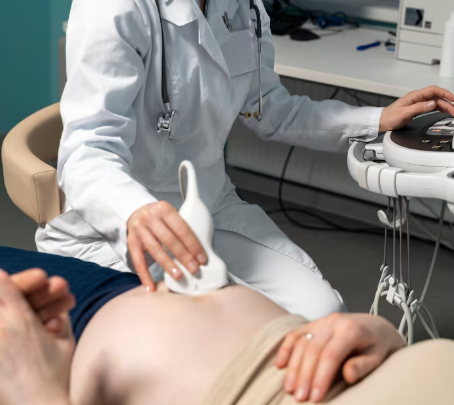
Treatment Overview
Preconception Pelvic Ultrasound Screening in Korea is an advanced diagnostic service designed to assess the health of the female pelvic organs before conception. This thorough evaluation helps identify structural, functional, or hormonal issues that may impact fertility or pregnancy outcomes.
Korea is renowned for its state-of-the-art pelvic ultrasound technologies, combining high-resolution 3D/4D imaging, Doppler ultrasound, and AI-enhanced diagnostics. These advanced systems enable gynecologists to conduct an in-depth evaluation of the uterus, ovaries, fallopian tubes, and cervix. By offering such comprehensive preconception screening, Korea ensures that couples enter pregnancy with the best possible health foundation.
This screening is especially important for women planning conception after a history of reproductive complications, irregular cycles, or pelvic health issues. It is a vital part of proactive women’s health care under Korea’s OBGYN specialty.
Purpose & Benefits
The primary purpose of preconception pelvic ultrasound screening is to evaluate the pelvic environment for optimal fertility and healthy pregnancy.
Key benefits include:
- Early detection of abnormalities such as fibroids, polyps, ovarian cysts, or adhesions that could interfere with conception.
- Assessment of ovarian reserve and follicular health.
- Detailed uterine evaluation for structural anomalies or endometrial health.
- Evaluation of fallopian tube patency when combined with related tests.
- Baseline assessment of pelvic blood flow and organ function.
- Peace of mind for prospective parents before conception.
- Personalized fertility and conception planning based on detailed findings.
By identifying potential barriers to conception early, this screening helps reduce fertility delays and improves the chances of a healthy pregnancy.
Ideal Candidates
Preconception pelvic ultrasound screening is recommended for:
- Women planning pregnancy who want a thorough health evaluation.
- Couples experiencing delayed conception or infertility.
- Women with a history of pelvic surgery, endometriosis, or pelvic infections.
- Women with irregular menstrual cycles or hormonal imbalances.
- Individuals with a history of recurrent miscarriages.
- Women over 35 or those with known reproductive health conditions.
Korean clinics customize the screening schedule based on individual health needs and reproductive plans.
Possible Risks & Complications
Preconception pelvic ultrasound screening is a safe, non-invasive procedure without the use of ionizing radiation. Risks are minimal, but may include:
- Mild discomfort during transvaginal ultrasound.
- Temporary pelvic cramping.
- Slight anxiety if unexpected findings are discovered.
Korean medical facilities prioritize patient comfort, ensuring a smooth, stress-free examination.
Techniques Used
Korea employs the most advanced ultrasound techniques to ensure accurate preconception pelvic evaluation:
- Transvaginal Ultrasound: Provides detailed imaging of the uterus, ovaries, and endometrium.
- Transabdominal Ultrasound: Useful for a broader overview of pelvic structures.
- 3D/4D Imaging: Offers volumetric views for accurate structural assessment.
- Color Doppler Ultrasound: Measures blood flow to the uterus and ovaries, assessing organ function.
- AI-Assisted Imaging: Enhances diagnostic accuracy and reduces interpretation errors.
- Digital Image Archiving: Allows for longitudinal comparison in case follow-up is required.
These cutting-edge techniques make Korea a global leader in preconception screening.
Recovery & Aftercare
Preconception pelvic ultrasound screening is an outpatient procedure requiring no recovery time. Patients can resume normal activities immediately after the scan.
Aftercare includes:
- A consultation to review ultrasound results.
- Recommendations for further tests if abnormalities are detected.
- Advice on fertility optimization and conception planning.
- Lifestyle and health recommendations to enhance reproductive outcomes.
Korean clinics provide a holistic aftercare approach, ensuring patients fully understand their results and next steps.
Results & Longevity
Results are usually available immediately or within a short period after the procedure. The report will typically include:
- Detailed images of the uterus, ovaries, and pelvic structures.
- Measurements of ovarian follicles and cysts.
- Endometrial thickness and quality assessment.
- Blood flow analysis for uterine and ovarian arteries.
- Recommendations for conception planning or further evaluation.
These results serve as a baseline for fertility planning and help guide the patient toward optimal reproductive health.
Treatment Process in Korea
Korea’s preconception pelvic ultrasound screening process is streamlined for efficiency and patient comfort:
- Initial Consultation: Medical history review, discussion of reproductive goals.
- Preparation: Minimal preparation is required; some cases may require a full bladder.
- Ultrasound Examination: Performed with advanced imaging technology by experienced sonographers.
- Image Analysis: Using AI-assisted software and expert interpretation.
- Follow-Up Consultation: Discuss results, recommendations, and potential next steps.
Korean clinics combine state-of-the-art technology with personalized care, ensuring accurate diagnosis and effective preconception planning.
Cost Range
The cost of preconception pelvic ultrasound screening in Korea varies based on the techniques used:
- Basic ultrasound screening: ₩200,000–₩400,000 KRW ($160–$320 USD).
- Advanced imaging including 3D/4D and Doppler: ₩500,000–₩900,000 KRW ($400–$700 USD).
Many Korean hospitals offer bundled preconception packages that include ultrasound screening, hormonal testing, and fertility consultation for a comprehensive assessment.
Popular Clinics
- CHA Fertility Center Seoul – Specializes in advanced preconception and fertility screening.
- Banobagi Women’s Clinic – Offers personalized preconception ultrasound programs.
- Seoul National University Hospital (OBGYN Department) – Known for precision pelvic ultrasound services.
- Samsung Women’s Health Clinic – Integrates AI-assisted imaging for enhanced evaluation.
- Mirae Women’s Hospital – Offers holistic preconception care packages.
- Ewha Womans University Medical Center – Combines innovative imaging with fertility expertise.


