
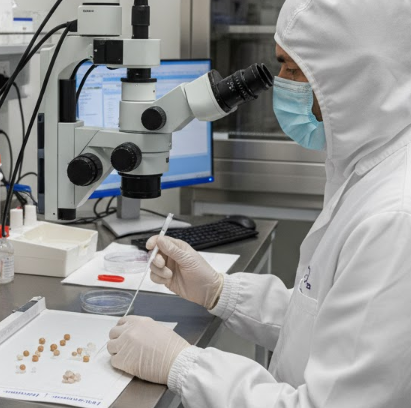
Treatment Overview
Preimplantation Embryo Freeze in Korea represents one of the most advanced approaches in assisted reproductive technology (ART). This procedure combines in vitro fertilization (IVF) with preimplantation genetic testing (PGT) and subsequent embryo freezing (vitrification) to ensure that only genetically healthy embryos are preserved for future transfer. By performing genetic screening before implantation and cryopreserving embryos at their healthiest stage, Korean fertility centers enable patients to plan pregnancies with higher success rates and lower risks of genetic disorders.
In this process, embryos are cultured to the blastocyst stage (typically five to six days after fertilization), biopsied for genetic testing, and then rapidly frozen using cutting-edge vitrification techniques. Once the test results confirm the embryo’s chromosomal normality, it remains safely stored until the patient is ready for transfer.
Korea’s reproductive medicine field is globally recognized for integrating precision genetic testing, AI-based embryo grading, and biobank-level cryogenic systems. These innovations, combined with Korea’s high clinical standards and patient-centered care, make it one of the world’s leading destinations for preimplantation embryo freezing.
Purpose & Benefits
The main purpose of preimplantation embryo freezing is to combine genetic assurance with reproductive flexibility. This method allows fertility specialists to identify the healthiest embryos before pregnancy and preserve them for future use when the patient’s body and lifestyle are optimally aligned for implantation.
Key benefits include:
- Improved pregnancy success rates: Only chromosomally normal embryos are frozen and transferred, increasing the likelihood of successful implantation and full-term pregnancy.
- Reduced miscarriage risk: Genetic screening significantly lowers the chance of early pregnancy loss caused by chromosomal abnormalities.
- Healthy family planning: Couples with hereditary conditions can screen out embryos carrying genetic diseases.
- Flexible timing: Embryos can be stored safely and used later, offering patients the freedom to plan pregnancies around health, career, or personal schedules.
- Efficient IVF cycles: By freezing screened embryos, patients can use multiple embryos from one stimulation cycle, avoiding repeated egg retrievals.
- Safe long-term preservation: Using advanced vitrification systems, embryos can remain viable for 15–20 years or more without losing quality.
Preimplantation embryo freezing not only improves the clinical outcome of IVF but also reduces the emotional and physical strain associated with multiple failed cycles.
Ideal Candidates
This treatment is ideal for patients who wish to enhance the safety and success of their fertility journey, including:
- Couples at risk of genetic disorders who wish to prevent transmission to offspring.
- Women of advanced maternal age, for whom chromosomal abnormalities are more common.
- Couples who have experienced recurrent miscarriages or failed IVF cycles.
- Patients planning cancer treatment or other medical therapies that could affect fertility.
- Individuals or couples seeking to delay pregnancy while preserving embryo quality.
- Patients pursuing donor egg or sperm IVF where genetic testing and storage provide additional assurance.
By identifying and freezing genetically healthy embryos, these patients gain greater control over reproductive outcomes and family planning.
Laboratory & Clinical Techniques
Korean fertility clinics follow international best practices and strict quality standards in performing preimplantation embryo freezing. The procedure involves several key steps:
- Ovarian Stimulation and Egg Retrieval – Hormonal stimulation encourages multiple eggs to mature. The eggs are collected through ultrasound-guided aspiration.
- Fertilization (IVF or ICSI) – Eggs are fertilized using sperm in the laboratory, forming embryos that begin to develop.
- Embryo Culture – The embryos are grown for five to six days until the blastocyst stage. Advanced incubators maintain optimal temperature, oxygen, and nutrient conditions.
- Embryo Biopsy for Genetic Testing – A few cells are carefully extracted from each blastocyst for genetic testing. The biopsy does not damage the embryo’s ability to develop.
- Preimplantation Genetic Testing (PGT) – Using next-generation sequencing or chromosomal microarray techniques, the embryo’s DNA is analyzed to detect genetic abnormalities or hereditary conditions.
- Vitrification (Rapid Freezing) – Embryos confirmed to be genetically normal are flash-frozen using vitrification, which prevents ice crystal formation and preserves cellular integrity.
- Cryogenic Storage – Embryos are stored at −196°C in cryogenic tanks equipped with dual backup systems and continuous temperature monitoring.
- Thawing and Transfer – When the patient is ready, the frozen embryo is thawed under controlled conditions and transferred to the uterus during a hormonally optimized cycle.
Each stage is handled with precision to ensure the highest possible survival and success rates.
Results & Longevity
Preimplantation embryo freezing in Korea has demonstrated exceptional results. Top centers report:
- Embryo survival after thaw: 98–99%
- Pregnancy rate per transfer: 60–75% in women under 35
- Reduced miscarriage rates: Due to improved genetic selection and uterine synchronization
- Storage viability: Up to 20 years without loss of embryo quality
These outcomes reflect Korea’s commitment to combining advanced technology with personalized reproductive care.
Aftercare & Patient Support
After embryo freezing, patients focus on recovery and preparation for future transfer. Clinics provide comprehensive aftercare programs that include:
- Hormonal balance monitoring after ovarian stimulation.
- Nutritional and lifestyle counseling to promote uterine health.
- Psychological support and stress management for emotional well-being.
- Regular consultations to plan the ideal time for embryo transfer.
This holistic approach ensures that both body and mind are well-prepared for conception when the time arrives.
Leading Clinics in Korea
Korea is home to several internationally recognized fertility centers that specialize in preimplantation embryo freezing and genetic testing. Some of the top institutions include:
- CHA Fertility Center – A pioneer in advanced IVF, embryo freezing, and genetic screening, known for high success rates and modern biobank systems.
- Hamchoon Women’s Clinic – Highly regarded for expertise in reproductive genetics and infertility treatment, integrating laboratory precision with personalized care.
- MizMedi Women’s Hospital – A major women’s hospital offering comprehensive IVF programs, including genetic testing and cryopreservation.
- Seoul National University Hospital, Fertility Department – A leading academic center specializing in reproductive endocrinology and preimplantation testing.
- Gachon University Gil Medical Center – Known for its integration of clinical research and patient-centered fertility care.


