
Treatment Overview
Progesterone testing measures the level of progesterone, a key hormone involved in reproductive health, menstrual cycle regulation, pregnancy maintenance, and overall hormonal balance. Both men and women can benefit from progesterone testing—women for fertility, pregnancy, or menstrual issues, and men to evaluate hormonal balance and estrogen-progesterone ratio.
Purpose & Benefits
The main purposes of progesterone testing include:
- Assessing ovulation and menstrual cycle health
- Evaluating fertility potential and pregnancy support
- Monitoring hormone replacement therapy (HRT) effectiveness
- Detecting hormonal imbalances contributing to mood swings, fatigue, or sleep disturbances
Benefits of progesterone testing:
- Accurate insight into reproductive and hormonal health
- Early detection of progesterone deficiency or excess
- Guidance for fertility treatments, supplementation, or therapy adjustments
- Improved overall wellness through hormone optimization
Ideal Candidates
Progesterone testing is recommended for:
- Women with irregular menstrual cycles or unexplained infertility
- Women undergoing IVF or other assisted reproductive treatments
- Pregnant women requiring progesterone monitoring
- Men experiencing hormonal imbalance, fatigue, or low libido
- Patients on hormone replacement therapy seeking proper dose adjustments
Possible Risks & Complications
Progesterone testing involves a simple blood draw, so risks are minimal:
- Mild pain or bruising at the puncture site
- Rare risk of minor infection
There are no long-term complications from progesterone testing.
Techniques & Technology Used
Korean clinics use advanced laboratory methods for precise progesterone assessment:
- Immunoassay testing: Fast and commonly used for routine evaluation
- LC-MS/MS (Liquid Chromatography–Mass Spectrometry): Highly accurate, particularly for low-level detection
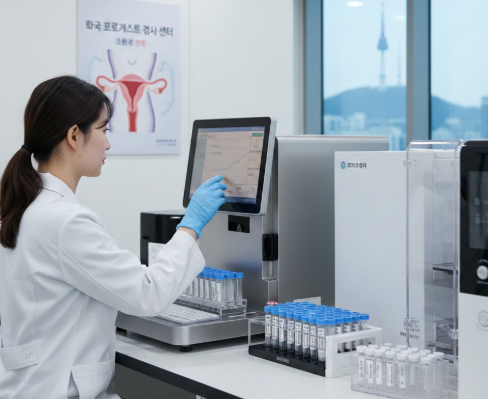
- Automated analyzers: Ensure rapid, reliable, and reproducible results
These methods ensure accurate readings for fertility planning, therapy monitoring, and hormone optimization.
Treatment Process in Korea
The progesterone testing process is straightforward:
- Scheduling an Appointment: Many clinics provide online booking with English support
- Blood Sample Collection: Usually performed at a specific phase of the menstrual cycle for women
- Laboratory Analysis: Results are available within 24–48 hours
- Medical Consultation: Specialists interpret results and recommend next steps, such as supplementation, therapy, or lifestyle modifications
Recovery & After-Care
There is no recovery needed as the procedure is minimally invasive. After-care includes:
- Keeping the puncture site clean and dry
- Applying a bandage if minor bleeding occurs
- Resuming normal activities immediately
Results & Longevity
Progesterone test results provide valuable insight into hormonal health:
- Identify deficiencies or imbalances early
- Guide fertility treatments and hormone therapy adjustments
- Track changes over time for therapy monitoring
Regular monitoring is recommended for patients undergoing fertility treatments or hormone therapy.
Why Korea Is a Top Destination
Korea is a top choice for progesterone testing due to:
- Advanced laboratories and precise diagnostic equipment
- Experienced endocrinologists, gynecologists, and fertility specialists
- English-friendly services for international patients
- Competitive pricing compared to Western countries
- Integration with fertility clinics and hormone therapy centers for seamless care
Cost Range
Progesterone testing in Korea typically costs $50 to $120 USD, depending on the clinic, type of test, and whether it’s part of a hormonal panel or fertility package.
Popular Clinics in Korea
Some top clinics for progesterone testing include:
- CHA Fertility Center – Specialized in reproductive hormones and IVF support
- Seoul National University Hospital (SNUH) Fertility Clinic – Advanced hormonal evaluation for fertility and pregnancy
- Banobagi Medical Group – Comprehensive hormone testing and therapy guidance
- Grand Seoul Hospital – Full endocrine assessment and patient-centered care


