
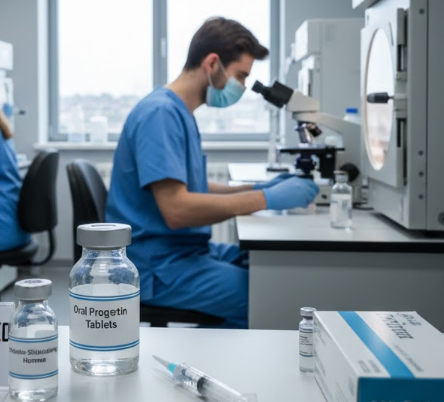
Treatment Overview
Progestin-Primed Ovarian Stimulation (PPOS) is an advanced IVF stimulation protocol that uses oral progestins to suppress premature ovulation during ovarian stimulation. Instead of using injectable GnRH antagonists or agonists to prevent an LH surge, oral progestins—such as medroxyprogesterone acetate or dydrogesterone—are administered alongside gonadotropins.
This method simplifies treatment by reducing injections, providing a more comfortable, cost-effective, and flexible approach for patients undergoing IVF, oocyte freezing, or fertility preservation. Since progestins advance endometrial development, a freeze-all strategy is used, meaning embryos are frozen and transferred in a later cycle.
In Korea, fertility centers have embraced PPOS as part of the country’s commitment to precision hormone control, patient comfort, and innovation in reproductive technology.
Purpose & Benefits
PPOS was developed to simplify ovarian stimulation and provide a patient-friendly alternative without compromising outcomes.
Key benefits include:
- Prevention of premature LH surge: Maintains cycle control and prevents early ovulation.
- Fewer injections: Replaces daily GnRH antagonist injections with easy-to-take oral medication.
- Comfort and convenience: Ideal for patients seeking a less invasive stimulation experience.
- Lower medication cost: Progestins are generally less expensive than GnRH antagonists.
- Effective for freeze-all cycles: Perfectly suited for modern IVF strategies where embryos are cryopreserved.
- Flexible scheduling: Can be initiated at various times during the menstrual cycle, offering flexibility for fertility preservation or time-sensitive treatments.
- Comparable pregnancy rates: Studies show that PPOS yields similar embryo and pregnancy outcomes to conventional stimulation methods in appropriate candidates.
Korean reproductive specialists often integrate PPOS into advanced IVF programs where patient comfort and hormonal control are prioritized.
Ideal Candidates
Progestin-Primed Stimulation is best suited for:
- Women planning a freeze-all IVF cycle (due to endometrial advancement under progestin).
- Patients undergoing fertility preservation (egg freezing).
- Women with regular cycles who prefer oral suppression instead of multiple injections.
- Patients at risk for OHSS (Ovarian Hyperstimulation Syndrome), as PPOS reduces hormone fluctuations.
- Younger women or normal responders who produce good-quality eggs with lower stimulation.
- Patients who require flexible scheduling or who need to start stimulation outside the early follicular phase.
- Individuals who want a cost-effective and comfortable IVF experience without compromising laboratory outcomes.
PPOS is generally avoided in cycles where fresh embryo transfer is desired, as endometrial synchrony is disrupted by progestin exposure.
Possible Risks & Complications
Although PPOS is generally safe and effective, some considerations include:
- No fresh embryo transfer: Embryos must be frozen for later transfer, extending the treatment timeline.
- Potential for higher gonadotropin doses: Some patients may need slightly increased stimulation doses to achieve optimal follicular development.
- Reduced euploidy rate in older patients: Some studies suggest slightly lower chromosomal normality rates in women over 40.
- Cycle cancellation risk: Rare cases of incomplete suppression leading to early ovulation.
- Mild hormonal side effects: Breast tenderness, bloating, or mood fluctuations from progesterone.
- Added cost for embryo freezing and storage: Although medication costs are lower, cryopreservation adds additional expenses.
In Korean fertility centers, these risks are minimized through close hormone monitoring, ultrasound tracking, and AI-assisted timing algorithms that ensure precise control over stimulation and trigger phases.
Techniques & Protocols Used
Progestin-Primed Stimulation protocols typically follow these steps:
- Baseline Evaluation: Hormone tests (FSH, LH, estradiol, AMH) and ultrasound to assess ovarian reserve.
- Ovarian Stimulation: Daily gonadotropin injections (FSH or hMG) begin early in the cycle.
- Progestin Administration: Oral progestin is started simultaneously or after a few days of stimulation to suppress premature LH surge.
- Monitoring Phase: Serial blood hormone testing (estradiol, progesterone, LH) and ultrasound follicle tracking.
- Trigger: When follicles reach maturity, an ovulation trigger (hCG or GnRH agonist) is given.
- Oocyte Retrieval: 34–36 hours after trigger, eggs are retrieved under sedation.
- Fertilization & Embryo Culture: IVF or ICSI is performed in advanced embryology labs.
- Cryopreservation: Embryos are frozen for later transfer in a hormonally prepared cycle.
Korean clinics may modify timing and dosage based on hormone profiles and response rates, offering personalized protocols that optimize follicular growth and egg quality.
Recovery & Aftercare
Recovery from PPOS cycles is straightforward:
- Patients can resume normal activities within one to two days after egg retrieval.
- Mild bloating or abdominal discomfort may occur briefly.
- Clinics provide luteal support or supplemental care based on post-retrieval hormone levels.
- Embryo transfer is scheduled in a later, hormonally balanced cycle for optimal endometrial receptivity.
- Emotional and nutritional support are often part of Korean fertility aftercare programs, ensuring holistic patient well-being.
Results & Effectiveness
Progestin-Primed Stimulation has demonstrated comparable clinical outcomes to standard GnRH antagonist protocols when used in suitable candidates.
Typical results observed in clinical studies and Korean IVF practice:
- Egg yield: Similar to conventional stimulation, with high-quality mature oocytes.
- Embryo development: Comparable fertilization and blastocyst formation rates.
- Implantation and pregnancy rates: Equivalent to antagonist protocols when using frozen embryo transfer.
- Low cancellation rates: Effective prevention of premature LH surge.
- Patient satisfaction: High comfort scores due to reduced injection burden and cost efficiency.
In Korea, the integration of AI-driven hormone monitoring systems and rapid-response laboratory testing enhances the precision and reliability of PPOS outcomes.
Treatment Process in Korea
Step 1 – Consultation & Hormone Mapping
Patients undergo hormone evaluation, ultrasound, and medical history review to determine candidacy.
Step 2 – Tailored Stimulation Plan
Korean clinics create individualized stimulation plans using small, calculated doses of gonadotropins and progestins.
Step 3 – Monitoring & Adjustment
Frequent hormone and ultrasound monitoring ensures proper follicular development and timely trigger scheduling.
Step 4 – Egg Retrieval & Embryo Culture
Mature oocytes are collected and fertilized using state-of-the-art IVF or ICSI methods.
Step 5 – Embryo Freezing & Deferred Transfer
Embryos are vitrified and stored for transfer in a subsequent cycle under optimal endometrial conditions.
Why Korea Is a Global Leader in PPOS
- Advanced fertility labs with world-class cryopreservation systems.
- Personalized hormone control using real-time hormone monitoring and AI decision models.
- Patient comfort focus: Replacement of injections with oral medication.
- Integrated care systems: Seamless coordination between diagnostics, embryology, and patient support.
- Affordable excellence: High success rates with competitive costs compared to Western fertility centers.
- Experience and innovation: Korean specialists are pioneers in combining PPOS with precision IVF and fertility preservation programs.
Cost Range
Costs depend on clinic, medication type, and monitoring frequency. Approximate price range in Korea:
- Progestin-Primed IVF cycle: USD 3,500 – 6,000
- With ICSI or advanced lab add-ons: USD 5,000 – 7,000
- Embryo freezing and storage: USD 500 – 1,000 additional
Because PPOS uses fewer injections, medication expenses are lower than standard IVF, though cryopreservation adds modest costs. Many Korean clinics offer all-inclusive packages for international patients.
Popular Fertility Clinics in Korea
- CHA Fertility Center (Seoul, Bundang): Renowned for customized IVF protocols and hormone-optimized cycles.
- Maria Fertility Hospital: Known for affordable, innovative IVF programs integrating PPOS.
- MizMedi Women’s Hospital: Offers advanced hormone-controlled IVF and reproductive endocrinology services.
- Hamchoon Women’s Clinic: Specializes in diagnostic precision and patient-centered fertility care.
- Seoul Women’s Hospital: Provides international fertility services with modern lab and patient support systems.


