
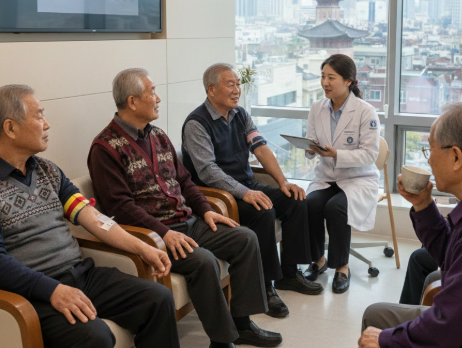
Treatment Overview
PSA monitoring for elderly men is a preventive and diagnostic approach to assess prostate-specific antigen (PSA) levels in men typically aged 65 and above. This monitoring helps detect prostate enlargement, inflammation, or early-stage prostate cancer, ensuring timely intervention while minimizing unnecessary procedures.
In Korea, PSA monitoring for elderly men is performed in advanced urology clinics and hospitals, using high-precision PSA assays and interpreted by experienced urologists, providing accurate and safe care for international and local patients.
Purpose & Benefits
The purpose of PSA monitoring for elderly men is to:
- Track PSA levels over time to detect potential prostate abnormalities
- Detect early-stage prostate cancer when intervention may still be effective
- Guide decisions on further diagnostic testing or treatment
Benefits include:
- Early detection of prostate conditions, improving outcomes
- Minimally invasive and safe, using only blood tests
- Supports personalized follow-up and risk management
- Integration with Free PSA, PHI, 4Kscore, and mpMRI for precise assessment
- Reduces unnecessary biopsies or interventions in low-risk elderly patients
Ideal Candidates
PSA monitoring for elderly men is recommended for:
- Men aged 65 years or older
- Those with family history or genetic predisposition to prostate cancer
- Individuals with previous elevated PSA or abnormal prostate findings
- Men experiencing urinary symptoms such as frequent urination, weak stream, or nocturia
- International patients seeking standardized, high-quality prostate monitoring in Korea
Korean urologists design individualized monitoring schedules based on age, health status, PSA history, and risk factors.
Possible Risks & Complications
PSA monitoring is very safe. Potential considerations include:
- Minor discomfort or bruising from blood draws
- Rare anxiety while awaiting results
- Slight variability in PSA due to infection, recent ejaculation, or prostate manipulation
Techniques & Technology Used
Korean hospitals use advanced methods for PSA monitoring in elderly men:
- High-precision total PSA immunoassays
- Optional Free PSA, PHI, or 4Kscore tests for enhanced risk stratification
- Integration with mpMRI or 3D ultrasound for further evaluation if indicated
- Certified laboratories with international quality standards
- Electronic record-keeping for accurate longitudinal tracking
These technologies ensure accurate, reliable, and safe monitoring over time.
Treatment Process in Korea
- Consultation & Risk Assessment – Review medical history, prior PSA levels, and risk factors
- Blood Sample Collection – High-precision PSA measurement performed in outpatient settings
- Optional Additional Testing – Free PSA, PHI, 4Kscore, or mpMRI conducted if indicated
- Result Interpretation – Urologist evaluates PSA trends and overall risk
- Follow-Up Recommendations – Guidance on monitoring frequency, additional diagnostics, or preventive care
Medical tourism coordinators assist international patients with scheduling, translation, and follow-up management.
Recovery & After-Care
- No recovery required
- Resume normal activities immediately
- Minor soreness at the blood draw site may occur
- Maintain records of PSA results for trend tracking and longitudinal assessment
Results & Interpretation
PSA monitoring for elderly men provides:
- Quantitative PSA levels for ongoing prostate health evaluation
- Early detection of enlargement, inflammation, or prostate cancer
- Support for personalized monitoring and preventive strategies
- Guidance on further testing or imaging if PSA trends indicate risk
Regular PSA monitoring ensures timely interventions and improves long-term outcomes for elderly men.
Why Korea Is a Top Destination
- High-precision laboratories for reliable PSA testing
- Experienced urologists specializing in elderly patient care
- Integration with advanced diagnostics such as Free PSA, PHI, 4Kscore, and mpMRI
- Fast, accurate, and internationally-friendly service
- English-language support and medical tourism coordination
- Cost-effective and high-quality care compared to Western countries
Cost Range
Typical costs for PSA monitoring in elderly men in Korea:
₩60,000 – ₩250,000 KRW (~$50–$200 USD)
Costs vary depending on:
- Additional tests performed (Free PSA, PHI, 4Kscore, mpMRI)
- Hospital or clinic grade
- Consultation and follow-up services
Popular Clinics in Korea
- Seoul National University Hospital – PSA Monitoring for Elderly Men
- Samsung Medical Center – Advanced Urology Diagnostics
- Asan Medical Center – Preventive Prostate Health Evaluation
- Gangnam Severance Hospital – International Patient PSA Monitoring
- Korea University Anam Hospital – Personalized Elderly PSA Assessment
- JK Urology & Men’s Health Clinics – Longitudinal PSA Tracking & Care


