
Treatment Overview
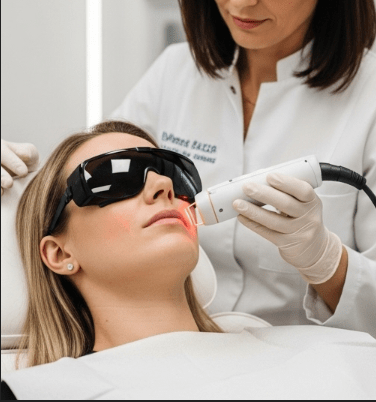
The Q-Switched Nd:YAG Laser is one of the most advanced dermatology treatments in Korea for melanin reduction, pigmentation control, and overall skin brightening. This laser emits short, high-energy pulses that specifically target melanin granules in the skin, breaking them down without damaging surrounding tissue. In Korea, dermatologists often combine Q-Switched Nd:YAG Laser therapy with other whitening modalities, such as chemical peels, infusion therapies, or topical brightening agents, to maximize results. Korea is recognized globally for its cutting-edge technology, highly skilled dermatologists, and personalized whitening protocols.
Purpose & Benefits
The primary purpose of Q-Switched Nd:YAG Laser treatment is to reduce hyperpigmentation and enhance skin tone. Benefits include:
- Effective reduction of melasma, freckles, sunspots, age spots, and post-acne pigmentation
- Brighter, more even skin tone
- Stimulation of collagen and elastin for improved skin texture and elasticity
- Minimal downtime compared to traditional resurfacing lasers
- Safe and precise targeting of pigmented areas
- Can be combined with other Korean whitening therapies for enhanced results
Ideal Candidates
Q-Switched Nd:YAG Laser is suitable for individuals who:
- Have uneven pigmentation, dark spots, or melasma
- Seek a non-invasive, non-surgical whitening procedure
- Want gradual and natural-looking melanin reduction
- Can follow post-treatment care instructions and sun protection
- Have normal to moderately sensitive skin
It is generally not recommended for pregnant women, individuals with photosensitive conditions, or those with very dark skin tones without prior consultation.
Possible Risks & Complications
Although the treatment is generally safe, potential side effects include:
- Temporary redness, swelling, or mild discomfort
- Rare bruising or pinpoint bleeding
- Slight risk of hyperpigmentation or hypopigmentation if post-care is neglected
Korean dermatologists minimize risks using precise laser settings, individualized protocols, and careful monitoring.
Surgical Techniques Used
Q-Switched Nd:YAG Laser is non-surgical but utilizes advanced Korean techniques for optimal results:
- Low-fluence, high-frequency pulses – Gentle melanin breakdown without epidermal damage
- Multi-pass technique – Ensures uniform coverage and effective pigmentation removal
- Combination therapy – Often paired with topical whitening agents, chemical peels, or infusion therapies
- Cooling and protective devices – Minimize discomfort and protect the skin during treatment
Recovery & Aftercare
Recovery is generally quick, with mild redness or warmth resolving within hours to a day. Korean dermatologists recommend:
- Applying broad-spectrum sunscreen daily to prevent pigmentation rebound
- Gentle cleansing and moisturizing
- Avoiding harsh exfoliants or chemical products for at least one week
- Optional soothing masks or LED therapy to accelerate healing
Results & Longevity
Visible improvements are typically seen after 1–2 sessions, with optimal results achieved after 4–6 sessions spaced 2–4 weeks apart. Long-term melanin reduction is maintained with proper sun protection, skincare, and periodic touch-up sessions. Korean clinics often combine Q-Switched Nd:YAG with other whitening treatments to enhance and prolong results.
Treatment Process in Korea
Korean clinics follow a precise protocol for Q-Switched Nd:YAG Laser therapy:
- Detailed skin analysis to determine pigmentation depth and laser settings
- Cleansing and preparation of the treatment area
- Laser application with customized energy, frequency, and wavelength
- Cooling and soothing post-treatment to reduce redness and irritation
- Optional combination therapies – Topical whitening agents, chemical peels, or infusion therapy may be applied for enhanced melanin reduction
Korea’s global reputation stems from highly trained dermatologists, advanced laser technology, personalized protocols, and integration with complementary whitening treatments.
Cost Range
The cost of Q-Switched Nd:YAG Laser treatment in Korea varies depending on the clinic, treatment area, and session count:
- Single session: 150,000 – 350,000 KRW (USD $110 – $260)
- Package of 4–6 sessions: 500,000 – 1,200,000 KRW (USD $375 – $900)
- Premium combination programs (with topical or infusion whitening therapies): 900,000 – 1,500,000 KRW (USD $680 – $1,100)
Popular Clinics
Top clinics in Korea for Q-Switched Nd:YAG Laser include:
- Banobagi Dermatology – Known for advanced pigmentation and whitening protocols
- ID Dermatology Clinic – Offers precise laser treatment combined with other whitening therapies
- Oracle Dermatology Clinic – Specializes in multi-modality whitening programs including Q-Switched Nd:YAG
- Cinderella Plastic Surgery & Dermatology – Provides integrated laser and infusion whitening treatments
- REGEN Dermatology Clinic – Combines laser therapy with chemical peels and topical brightening for optimal results


